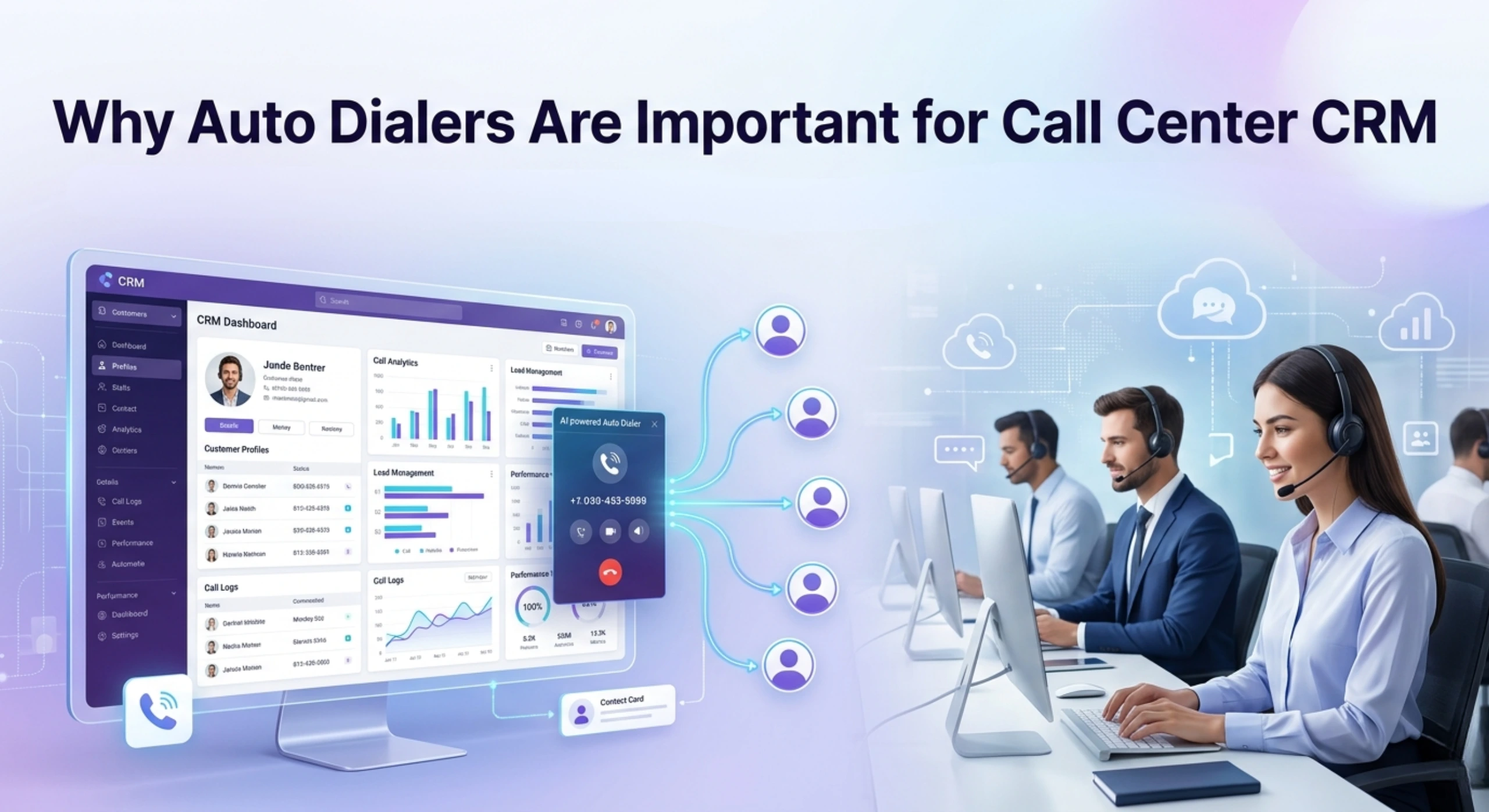



A Loan DSA CRM helps DSA and NBFC tele-sales teams follow up with leads faster, manage loan applications, and track every customer from enquiry to loan approval.
This is exactly the problem a Loan DSA CRM solves. It gives loan sales teams one place to capture leads, call them without delay, and track every file’s stage. In addition, managers can see which agent, product, or lead source actually brings in disbursals. Teams evaluating this kind of system can look at how a purpose-built Loan DSA CRM handles the full loan sales cycle, from the first enquiry to the sanctioned file.
What Is a Loan DSA CRM?
A Loan DSA CRM is a customer relationship management system built for loan sourcing teams. This includes DSAs, loan aggregators, and NBFC or bank tele-sales desks. Specifically, it combines lead capture, an auto dialer, a loan-specific sales pipeline, and follow-up tracking. As a result, agents can call leads quickly, log eligibility details on the call, and move files through stages such as eligibility check, document collection, sanction, and disbursal.
A generic sales CRM doesn’t do this. Instead, a Loan DSA CRM builds around how loan sales actually work: multiple products (personal, home, business, LAP), income and CIBIL checks during the call, and a documentation-heavy process where files stall if nobody follows up.
Why Loan Lead Management Is Harder Than It Looks
Loan sourcing has a few traits that make lead management genuinely difficult. Moreover, this gets worse once a team grows beyond a handful of agents.
- Leads arrive from many places at once. Facebook and Google ad campaigns, loan comparison portals, referral partners, and walk-ins all need to land in one pipeline, not scattered WhatsApp chats and Excel sheets.
- Speed decides conversion. A loan enquiry usually goes to more than one lender or DSA at the same time. Whoever calls first often wins the conversation.
- Every file has a paperwork stage. Income proof, bank statements, and KYC documents pile up, and files quietly go cold when nobody reminds the customer or the agent to chase a missing document.
- Compliance matters. Agents must respect Do Not Call (DNC) registrations under TRAI regulations, and teams often need to keep call records for audit purposes.
- Managers need visibility across agents and branches. Without a shared system, it’s hard to know which agent converts well, which lead source justifies the ad spend, and which files are stuck.
In short, these are structural problems. Therefore, hiring more telecallers or asking agents to “follow up better” won’t fix a process that has no shared pipeline or automated reminders.
How a Loan DSA CRM Handles the Loan Sales Cycle
A loan-focused CRM generally organizes itself around a pipeline that mirrors how a loan file actually progresses. In other words, it doesn’t follow a generic “lead to customer” flow.
1. Lead capture and de-duplication
First, the system pulls leads from ad campaigns, website forms, loan portals, and referral partners into one place automatically. It then flags duplicate enquiries, where the same person applies twice through different channels. Meanwhile, it also screens out DNC-registered numbers before an agent ever dials them.
2. Instant assignment and dialing
Next, new leads get auto-assigned to an agent, by branch, product, or workload. The system then queues them in an auto dialer, so the agent calls while the customer’s interest is still fresh. After all, manual dialing wastes time between calls; an auto dialer removes that gap.
3. Capturing loan-specific data on the call
Meanwhile, while talking to the applicant, the agent logs details that matter for loan qualification. This includes loan type, requested amount, monthly income, employer, city, and CIBIL band. As a result, this turns a call log into usable data instead of a note scribbled on paper.
4. Moving files through a loan-specific pipeline
A typical pipeline looks like this:
| Stage | What Happens |
|---|---|
| New Lead | Enquiry received and assigned to an agent |
| Eligibility Check | Income, CIBIL band and loan amount discussed on the call |
| Documents Collected | KYC, income proof and bank statements gathered |
| Logged / Applied | File submitted to the lender or processing team |
| Sanctioned | Loan approved, pending disbursal |
| Disbursed | Loan amount released to the customer |
| Rejected | File does not proceed, reason logged for reporting |
In addition, each lead carries a deal value. As a result, managers can see how much loan value sits at each stage, not just how many leads exist.
5. Following up until the file closes
Loans rarely close on the first call. That’s why reminders for pending documents, scheduled callbacks, and overdue alerts keep a file with one missing document from sitting untouched for two weeks.
6. Reporting on what’s actually working
Finally, conversion rate by lead source, by agent, and by loan product shows a manager where to spend more on advertising. It also flags where a script or an agent needs coaching.
Practical Use Cases
DSA agents working multiple lenders. A DSA sourcing personal and business loans for several NBFCs needs to know, at a glance, which lender each file is with and where it’s stuck. Tagging leads by loan type and tracking pipeline stage per file replaces the mental math of remembering “whose file is where.”
NBFC in-house tele-sales desks. An NBFC running its own outbound calling team on Facebook and Google leads benefits most from speed. For example, auto-dialing fresh leads within minutes, and capturing income and CIBIL details on that first call, moves hot files to processing right away instead of waiting for a callback the next day.
Document follow-up teams. In many loan sales operations, part of the team’s job is purely chasing pending paperwork. A dedicated “documents pending” stage with automated reminders keeps these follow-ups on schedule, instead of depending on someone remembering.
These are illustrative examples of how loan teams commonly structure their process, not case studies of specific customers.
Benefits of Using a Loan DSA CRM
- Faster response to fresh leads, since auto-dialing removes manual delay between calls.
- Fewer leads lost to duplication or scattered spreadsheets, because everything sits in one pipeline.
- Clear visibility into where every file is stuck, at eligibility, documentation, or sanction.
- Better DNC compliance, since the system checks registered numbers automatically before dialing.
- Revenue visibility, with disbursed value attributed to the agent who closed the file.
- Accountability across a growing team, through live agent activity, talk time, and leaderboards.
Common Mistakes Loan Teams Make Without a Proper System
- Treating every lead the same. A hot personal loan lead and a slow-moving LAP enquiry need different follow-up cadences. A flat spreadsheet can’t tell them apart.
- Losing track of document status. Without a dedicated stage or reminder for pending paperwork, files stall silently.
- Not tracking lead source performance. Spending on ad campaigns without knowing which source converts to disbursal wastes budget.
- Manual dialing. The time lost between calls, finding the number, dialing, waiting, adds up to fewer conversations per day, per agent.
- No DNC checks. Calling numbers registered under India’s Do Not Call framework risks compliance complaints.
- No visibility for managers. Without live reporting, a manager only learns a target was missed at month-end, when it’s too late to course-correct.
How TeleCalling CRM Supports Loan & DSA Teams
TeleCalling CRM includes a Loan & DSA-specific setup. Specifically, it has a pipeline built around eligibility, document collection, sanction, and disbursal, plus lead fields for loan type, amount, income, CIBIL band, and lead source. In addition, it pulls leads from Facebook and Google Ads, website forms, referral partners, and Google Sheets automatically, then deduplicates and assigns each one to an agent.
The platform also runs a smart auto dialer that skips DNC-registered numbers. Furthermore, it handles follow-up scheduling with reminders for pending documents, a live war room showing agent activity in real time, and pipeline reporting with deal value tracked at every stage. TeleCalling CRM includes these features across all its plans, which start at a flat monthly rate instead of charging per user. Teams comparing loan-sales CRM options can review the full feature set for loan sales teams to see how lead capture, dialing, and pipeline tracking fit together.
That said, this isn’t the only way to manage a loan sourcing pipeline. Some smaller teams manage with well-organized spreadsheets for a while. However, as lead volume and team size grow, a dedicated system generally becomes necessary to keep leads and follow-ups from falling through the cracks.
FAQs
What is a Loan DSA CRM used for?
Teams use it to capture loan enquiries from multiple sources, call leads quickly through an auto dialer, and track eligibility and documentation on a loan-specific pipeline. It also reports on which agents, products, and lead sources convert best to disbursal.
Is a Loan DSA CRM only for large NBFCs?
No. Individual DSAs managing files across multiple lenders use it too, along with small tele-sales teams. The main goal is avoiding lost leads and forgotten documents as volume grows.
Can a Loan DSA CRM track different loan products separately?
Yes. Teams typically tag leads by loan type, personal, home, business, or LAP, so they can filter pipeline and conversion reports by product.
Does it help with pending document follow-up?
Yes. Teams commonly use a dedicated pipeline stage and follow-up reminders to chase files with missing documents until they’re complete, instead of letting them get forgotten.
How is a Loan DSA CRM different from a general lead management software?
A general lead management software handles leads for any business. In contrast, a Loan DSA CRM adds loan-specific fields, such as loan amount, income, CIBIL band, and lender, plus a sanction-to-disbursal pipeline and DNC compliance built around outbound loan sales calling.
Does using a CRM guarantee more loan approvals?
No system can guarantee approvals, since sanction depends on the lender’s credit policy. However, a CRM improves response speed, follow-up consistency, and visibility into where files get stuck. As a result, more eligible applicants tend to actually reach disbursal.
Can loan leads from Facebook or Google Ads be connected automatically?
Yes. Most loan-focused telecalling CRMs, including TeleCalling CRM, support automatic lead capture from ad platforms, website forms, and referral partners, so leads reach an agent without manual entry.
Conclusion
Loan sourcing is a volume business built on speed and follow-through. Ultimately, a DSA or NBFC tele-sales team that calls faster, tracks documents properly, and knows exactly where every file stands will consistently get more applicants to disbursal than one relying on spreadsheets and memory. If your team is evaluating a system, compare plans on the Loan DSA CRM pricing page against how much time your team currently loses to manual dialing and missed document follow-ups.