


Introduction
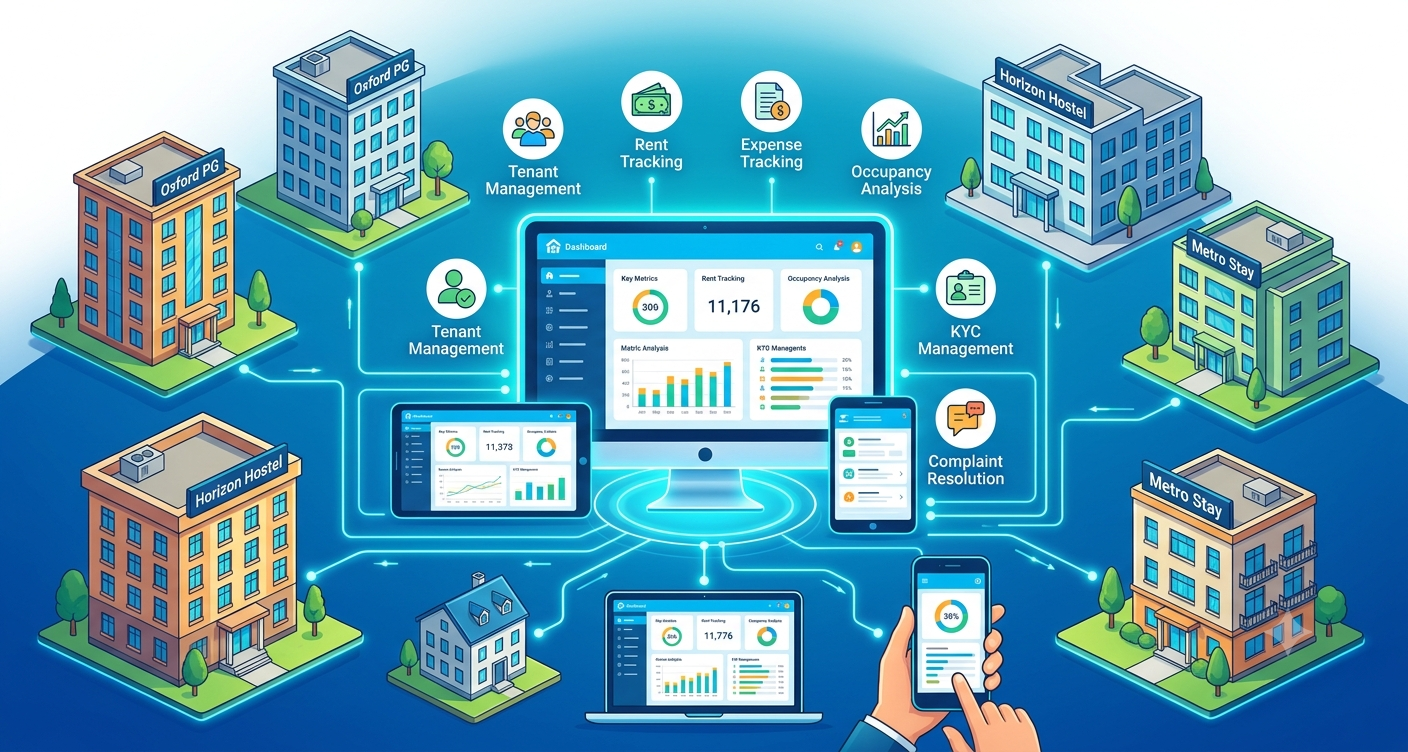
Running a PG in India has traditionally meant a lot of manual work collecting rent in person, maintaining tenant records in registers, and relying on memory to track vacancies and complaints. As tenant expectations shift and PG businesses grow, PG management technology is changing how owners handle these daily responsibilities. Instead of juggling notebooks, spreadsheets, and phone calls, owners can now centralise tenant records, rent tracking, and occupancy management through a single PG and hostel management software.
This article explores how technology is reshaping PG operations in India, which areas benefit most, and what owners should consider when adopting digital tools for their property.
Why PG Management Technology Matters in India’s Growing PG Market
Direct answer: PG management technology matters because India’s PG and co-living sector has grown alongside rising student and working-professional migration to cities, making manual, register-based tracking harder to sustain as tenant numbers and turnover increase.
Urban centres with large student populations and job hubs have seen consistent demand for PG accommodation. As competition among PGs increases, owners who rely on outdated tracking methods often struggle to match the responsiveness that tenants now expect: quick complaint resolution, clear rent records, and easy communication.
Key Areas Where Technology Simplifies PG Operations
1. Rent Collection and Tracking
Direct answer: Technology simplifies rent collection by allowing owners to track payment status digitally, send automated reminders, and record both cash and UPI payments in one place instead of maintaining separate manual registers.
In India, where cash and UPI payments often coexist within the same PG, having a unified digital record helps avoid confusion about who has paid and through which method.
2. Tenant and KYC Management
Digital tenant management allows owners to store contact details, identity documents, and move-in/move-out dates in one accessible system. This is particularly useful in India, where KYC documentation is a standard part of onboarding new tenants and needs to be readily available for verification or compliance purposes.
3. Occupancy and Room/Bed Management
Technology makes it easier to track which beds are occupied, vacant, or reserved especially important for PGs with shared rooms, where occupancy changes frequently as tenants move in and out on different dates.
4. Complaint and Maintenance Tracking
Instead of complaints being reported verbally and potentially forgotten, digital complaint tracking creates a record of issues and their resolution status. This is especially valuable in larger PGs where multiple tenants may report different concerns simultaneously.
5. Expense and Financial Tracking
Technology allows owners to track recurring expenses – electricity, water, maintenance, and staff costs – alongside rent income, giving a clearer view of actual profitability rather than relying on rough manual estimates.
6. Reports and Data-Driven Decisions
With centralised data, owners can review occupancy trends, rent collection patterns, and expense summaries to make more informed decisions, rather than relying on memory or scattered notes.
Manual PG Operations vs Technology-Enabled Operations
| Operational Area | Manual Approach | Technology-Enabled Approach |
|---|---|---|
| Rent collection | Registers, in-person collection | Digital tracking, reminders |
| Tenant records | Physical files or notebooks | Centralised digital records |
| Occupancy tracking | Manual updates, prone to errors | Real-time visibility |
| Complaints | Verbal, easy to forget | Logged and tracked to resolution |
| Expenses | Separate manual calculations | Tracked alongside income |
| Reporting | Time-consuming manual summaries | Generated directly from data |
How PG Management Technology Fits India’s Specific Context
Supporting Mixed Payment Preferences
India’s PG sector often sees a mix of cash and UPI payments, depending on tenant demographics. Technology that accommodates both, while maintaining a single record, is particularly relevant compared to solutions built around a single payment method.
Handling High Tenant Turnover
Cities with large student and working-professional populations often see frequent tenant turnover, especially around academic sessions or job relocations. Digital tracking makes it easier to manage rapid move-ins and move-outs without losing track of deposits, agreements, or KYC documentation.
Managing Compliance-Related Documentation
KYC and tenant verification are common expectations for PG operators in India. Centralised digital storage makes it easier to retrieve documents quickly when needed, compared to searching through physical files.
How to Start Adopting PG Management Technology
Step 1: Identify Your Biggest Operational Pain Point
Before adopting any tool, pinpoint what’s causing the most friction — missed rent, lost documents, unclear occupancy, or unresolved complaints.
Step 2: Start With Core Features
Focus on essentials first: tenant management, rent tracking, and occupancy tracking. These typically address the most common day-to-day challenges.
Step 3: Expand as Your PG Grows
As tenant numbers or property count increases, additional features like complaint management, expense tracking, and reporting become more valuable.
Step 4: Maintain Consistency
Technology only helps if it’s used consistently. Regularly updating occupancy status, logging complaints, and reviewing rent records ensures the system reflects reality.
How PG Management Software Supports This Shift
Using PG management software such as PGCRM can help owners centralise tenant records, rent tracking, occupancy information, and daily operations, bringing together the areas where manual tracking often creates the most friction.
Specifically, this kind of platform typically supports:
- Tenant management and KYC management, keeping records organised and accessible.
- Rent tracking and rent reminders, reducing missed or delayed payments.
- Room and bed management, maintaining accurate occupancy visibility.
- Complaint management, ensuring maintenance issues are tracked and resolved.
- Expense tracking and reports, giving owners a clearer financial picture.
Rather than replacing an owner’s judgement, technology simply reduces the manual effort needed to stay organised as a PG grows.
Common Barriers to Adopting PG Management Technology
- Comfort with existing manual methods, even if they’re inefficient at scale.
- Uncertainty about which features are actually necessary, leading to either underuse or over-investment.
- Limited digital literacy among staff or caretakers, requiring some onboarding time.
- Hesitation around switching from familiar registers or spreadsheets.
These barriers are common but typically ease once owners experience the time saved on daily tracking tasks.
Frequently Asked Questions
How is technology changing PG management in India? Technology is shifting PG operations from manual registers and spreadsheets to centralised digital tracking for rent, tenant records, occupancy, and complaints. This is especially relevant as PGs handle mixed cash/UPI payments and frequent tenant turnover in urban areas.
Is PG management technology only useful for large PGs? No. Even small PGs benefit from basic digital tracking of rent and tenant records, since manual methods can become error-prone as tenant turnover increases, regardless of property size.
What’s the most useful technology feature for PG owners in India? Rent tracking with reminders is often the most immediately useful feature, since missed or delayed payments directly affect cash flow. Combined with tenant and occupancy management, it addresses the most common daily operational challenges.
Does PG management technology help with KYC compliance? Yes, centralised digital storage of tenant identity documents makes it easier to maintain and retrieve KYC records compared to physical files, supporting faster verification when needed.
Can PG management technology handle both cash and UPI payments? Many platforms support recording both cash and UPI payments within the same system, which is particularly relevant in India, where PGs often accept a mix of both depending on tenant preference.
How difficult is it to switch from manual methods to digital PG management? The transition is usually manageable, especially when starting with core features like rent tracking and tenant records. Most owners find the initial learning curve worthwhile once they experience reduced manual effort.
Conclusion
PG management technology is helping Indian PG owners move away from manual registers and scattered records toward centralised, easier-to-manage systems for rent, tenants, occupancy, and complaints. As the PG sector continues to grow, this shift supports more efficient, less error-prone daily operations. Explore PGCRM to simplify your PG and hostel management, and see how centralised tracking can reduce the manual workload of running a PG in India.