

Choosing the wrong development partner for your online store can cost you more than money. It can cost you months of delays, a clunky checkout experience, and customers who leave before they buy. If you’re trying to figure out what makes a good ecommerce development company, the short answer is this: a strong track record of building scalable, secure, and conversion-focused online stores, backed by technical expertise across platforms, transparent communication, and a genuine understanding of your business model.
That answer, though, only scratches the surface. Ecommerce is not a one-size-fits-all discipline. A company that’s great at building a Shopify store for a fashion brand may not be the right fit for a B2B wholesale platform that needs custom pricing rules and ERP integration. This article breaks down exactly what to look for, the red flags to avoid, and how to evaluate potential partners so you can make a confident, informed decision.
Why Choosing the Right Ecommerce Development Company Matters
Your online store isn’t just a website – it’s your sales engine, your brand experience, and often your primary source of revenue. A poorly built ecommerce platform can lead to:
- Slow page load times that hurt conversions and SEO rankings
- Security vulnerabilities that put customer data at risk
- Systems that can’t handle traffic spikes during sales events
- Integration failures with payment gateways, inventory, or shipping tools
- High long-term maintenance costs due to poor code quality
On the other hand, the right development partner sets you up for sustainable growth, fewer technical headaches, and a platform that can evolve as your business does.
Key Qualities of a Good Ecommerce Development Company
1. Proven Experience Across Ecommerce Platforms
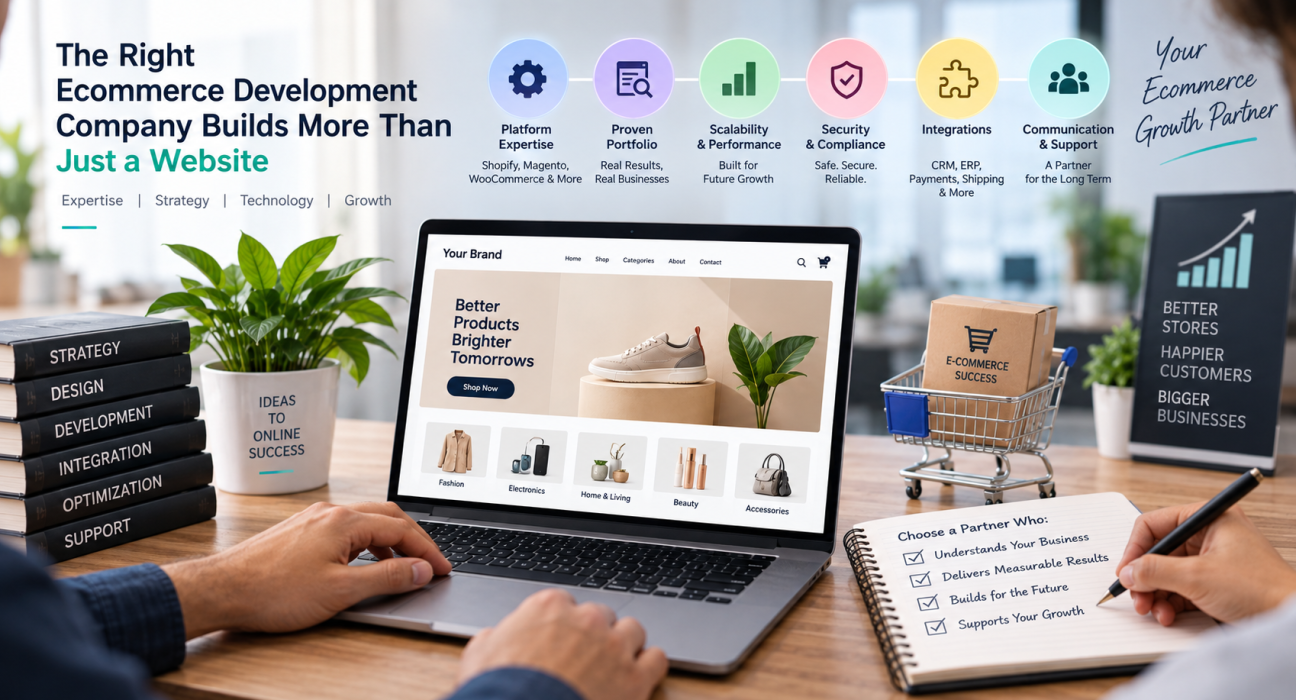
A capable ecommerce development company should have hands-on experience with major platforms such as Shopify, Shopify Plus, WooCommerce, Magento (Adobe Commerce), BigCommerce, and custom-built solutions using frameworks like React, Next.js, or Node.js. Platform expertise matters because each one has different strengths:
- Shopify/Shopify Plus – fast to launch, ideal for D2C brands and mid-size retailers
- Magento/Adobe Commerce – highly customizable, suited for complex catalogs and B2B needs
- WooCommerce – flexible and cost-effective for WordPress-based businesses
- Custom-built platforms – best for unique business logic or large-scale enterprise needs
A good agency won’t just push their preferred platform. They’ll ask about your business model, catalog size, budget, and growth plans before recommending a technology stack.
2. A Strong Portfolio of Relevant Work
Look beyond visually appealing screenshots. Ask for case studies that show measurable outcomes – improved page speed, higher conversion rates, reduced cart abandonment, or successful platform migrations. A portfolio that includes stores in your industry or with a similar business model (B2C, B2B, marketplace, subscription) is a strong signal of relevant experience.
3. Focus on Performance and Scalability
Ecommerce sites need to perform well under pressure, especially during high-traffic periods like holiday sales or flash promotions. A good development company should be able to explain how they handle:
- Website speed optimization
- Server and hosting architecture
- Caching strategies
- Load testing before major sales events
- Mobile performance, since most ecommerce traffic is mobile-first
4. UI/UX Design That Supports Conversions
Development and design should work together, not in silos. A well-built store with poor navigation, confusing checkout flow, or inconsistent branding will still underperform. Good ecommerce developers understand core UX principles such as:
- Simplified, low-friction checkout
- Clear product categorization and filtering
- Mobile-responsive design
- Trust signals like reviews, secure payment badges, and clear return policies
5. Secure Payment and Data Handling
Security isn’t optional in ecommerce. A reliable development partner should follow PCI DSS compliance standards for payment processing, implement SSL encryption, and have clear protocols for data protection. Ask specifically how they secure customer data and what measures they take against common vulnerabilities.
6. Integration Capabilities
Most ecommerce businesses rely on a broader tech ecosystem – CRM tools, ERP systems, inventory management, email marketing platforms, shipping and fulfillment services, and analytics tools. A good development company should have experience integrating with common platforms like Salesforce, HubSpot, NetSuite, Klaviyo, and various shipping APIs, so your store doesn’t operate in isolation.
7. Transparent Communication and Project Management
Technical skill alone isn’t enough. Reliable ecommerce partners typically offer:
- Clear project timelines and milestones
- Regular status updates
- A defined point of contact
- Documented processes for change requests
- Realistic estimates rather than overpromising
Ask how they handle scope changes, delays, or unexpected technical issues. Their answer will tell you a lot about how they’ll handle your project when things don’t go exactly as planned.
8. Post-Launch Support and Maintenance
Launching the store is just the beginning. Ongoing needs include bug fixes, security patches, feature updates, and performance monitoring. Ask potential partners:
- What does your support plan include after launch?
- What are your response times for critical issues?
- Do you offer ongoing optimization, or only one-time builds?
A company that disappears after launch is a liability, not a partner.
Red Flags to Watch For
| Red Flag | Why It Matters |
|---|---|
| Vague or generic proposals | Suggests limited understanding of your specific business needs |
| No case studies or references | Makes it hard to verify real-world results |
| Unusually low pricing | Often signals cut corners, offshore quality issues, or hidden costs later |
| No clear post-launch support plan | Leaves you stranded after the site goes live |
| Pushing one platform regardless of fit | Suggests a template-based approach rather than a tailored solution |
| Poor communication during the sales process | A preview of what project communication will likely look like |
How to Evaluate an Ecommerce Development Company: A Simple Checklist
- Define your requirements first – catalog size, expected traffic, integrations needed, and budget.
- Shortlist companies with relevant platform experience for your specific use case.
- Review portfolios and case studies with measurable results, not just design screenshots.
- Ask about their development process – discovery, design, development, QA, and launch.
- Request references and, where possible, speak with past clients.
- Clarify pricing structure – fixed price, hourly, or retainer – and what’s included.
- Confirm post-launch support terms before signing anything.
- Evaluate communication during the proposal stage as an indicator of future collaboration.
Where to Start Your Search
Finding the right technology partner often starts with research, not cold outreach. Instead of relying on generic search results or unverified referrals, businesses can use platforms like GoFirms to discover, compare, and evaluate ecommerce and web development companies based on their focus areas, service offerings, and client work. This kind of structured comparison can help narrow down a shortlist before you start detailed conversations with potential partners.
Frequently Asked Questions
What should I look for first when hiring an ecommerce development company? Start with relevant experience. Look for a company that has built stores similar to yours in scale and complexity, whether that’s a small D2C shop or a large B2B catalog. Platform expertise, a solid portfolio, and clear communication during initial conversations are strong early indicators of overall fit.
How much does it cost to hire an ecommerce development company? Costs vary widely based on platform, customization level, and project scope, ranging from a few thousand dollars for a simple Shopify store to well over six figures for a fully custom enterprise platform. Request detailed quotes from multiple companies so you can compare pricing structures and what’s included.
Should I choose a local or offshore ecommerce development company? Both options can work well. Local teams may offer easier collaboration and time-zone alignment, while offshore teams can provide cost efficiency. What matters most is proven experience, clear communication processes, and quality of past work, regardless of location.
How long does it take to build an ecommerce website? Timelines depend on complexity. A basic store on a platform like Shopify might take 4-8 weeks, while a custom enterprise ecommerce platform with multiple integrations can take several months. Ask potential partners for a realistic timeline based on your specific requirements.
Which ecommerce platform is best for my business? It depends on your catalog size, customization needs, and budget. Shopify works well for many small to mid-size brands, Magento suits complex or B2B catalogs, and custom builds fit businesses with unique requirements that off-the-shelf platforms can’t support. A good development company will help you choose based on your actual needs, not their preferred stack.
What’s the difference between a web development company and an ecommerce development company? An ecommerce development company specializes specifically in online store functionality – payment processing, product catalogs, checkout flows, and inventory systems – whereas a general web development company may focus more broadly on websites without deep commerce-specific expertise. For online stores, commerce-specific experience is usually more valuable.
Do I need ongoing support after my ecommerce site launches? Yes. Ecommerce platforms require regular updates, security patches, and performance monitoring. Choosing a company that offers post-launch support helps avoid downtime, security risks, and outdated functionality as your business and customer expectations evolve.
Conclusion
A good ecommerce development company brings together technical expertise, platform knowledge, design sensibility, and reliable communication. The right partner won’t just build a store – they’ll help you understand trade-offs, plan for growth, and support you after launch. Before committing to any agency, take the time to review their portfolio, ask detailed questions about their process, and clarify what happens after the site goes live.
If you’re in the research phase, comparing multiple ecommerce and web development companies side by side on GoFirms can make it easier to identify a partner that genuinely fits your business needs.