


You’re selling a perfectly good refrigerator. It works fine, looks decent, and you’ve priced it fairly.You list it online and wait. A few people message asking if you can ship it to another city. One person wants detailed videos.
Someone else asks about courier options but never follows up. Days turn into weeks, and the fridge is still taking up space in your home.Here’s what’s happening: distance is killing buyer interest before it even starts.Most buying and selling platforms connect you with people from all over the country. Sounds good in theory, but in practice, it creates hesitation.
Buyers see your listing, realize you’re far away, and move on to something closer. Sellers waste time responding to inquiries that go nowhere.Sympl classifieds that focus on local buyers and sellers work differently. They connect you with people nearby who can actually act on their interest quickly.
Why Distance Creates Hesitation
When a buyer finds something they want but the seller is far away, doubts creep in immediately.Can I trust someone I’ll never meet? Will the item actually look like the photos? What if it arrives damaged? How much will shipping cost? Is it even worth the hassle?
These questions don’t come up when you’re buying from someone in your own city. You can meet, inspect the item, and decide on the spot.But with distance, every transaction carries extra risk and effort. Buyers have to trust descriptions and photos alone. Sellers have to manage packaging, shipping, and the possibility of returns.
For most everyday items furniture, appliances, bikes, electronics this extra complexity just isn’t worth it. Buyers lose interest and look for local options instead.
What Happens When Buyers Are Far Away
Serious inquiries drop off: Someone from another state messages about your dining table. They ask questions, seem interested, then disappear. Why? Because arranging transport for furniture across cities is complicated and expensive. The initial interest fades once they realize the practical challenges.
Shipping costs change the equation: You’re selling a laptop for ₹15,000. A buyer from a distant city wants it, but shipping will cost ₹800-1,200 depending on the courier. Suddenly, your fair price doesn’t look as attractive. The buyer starts comparing local options or new products online.
Trust becomes harder to establish: A buyer in your city can visit, see the laptop working, check its condition, and make a decision in an hour. A buyer from far away has to rely entirely on your word, photos, and hope. Many people simply aren’t comfortable with that level of uncertainty.
Delays frustrate both sides: Even when a distant buyer commits, the process drags. Coordinating courier pickup, waiting for delivery, handling payment it all takes time. Meanwhile, another local buyer might’ve closed the deal in a day.
How Proximity Increases Serious Interest
When your listing reaches people nearby, buyer behaviour changes completely.
They can act immediately: A student sees your bike listed in the same neighbourhood. They message, you agree to meet that evening, they check the bike, and the deal is done. No waiting, no uncertainty, no logistics to manage.
Inspection removes doubt: Distance forces buyers to gamble. Proximity lets them verify. When someone can physically see and test what they’re buying, their interest converts to action much faster.
Local context matters: Someone in your area understands the local market. They know what things typically cost. They recognize neighbourhoods and landmarks when you suggest meetup spots. There’s an implicit familiarity that makes the transaction feel safer and simpler.
Buyers make faster decisions: When there’s no shipping delay or complexity, buyers don’t overthink. If they like what they see and the price is fair, they commit. The barrier between interest and purchase is much lower.
Real Examples: Distance vs. Proximity
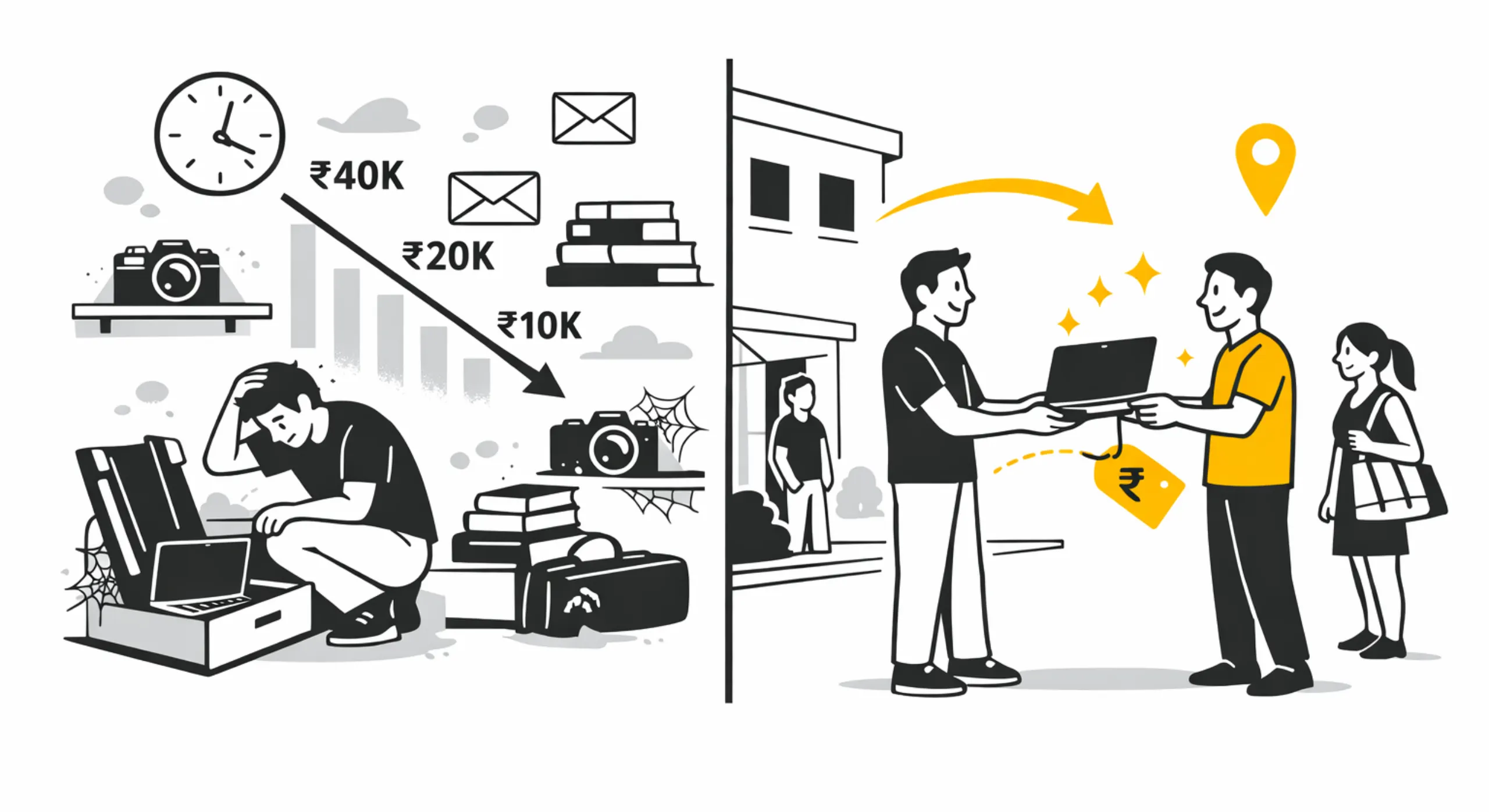
Selling a washing machine: You list a semi-automatic washing machine. A buyer from another city messages, asks about shipping, then vanishes. A week later, someone from your locality sees the ad, comes over the next day, checks that it works, and takes it home immediately.
The distant buyer was interested but not enough to deal with the hassle. The local buyer converted interest into a completed transaction within 24 hours.
Buying study material: A student needs coaching books for competitive exams. They find a listing from someone in another state. Shipping will cost extra, delivery will take days, and they can’t verify the book condition beforehand.
They find another listing from someone in their own city. They meet at a café, flip through the books, see they’re in good condition, and buy them on the spot. Instant satisfaction, zero risk.
Selling office furniture: A company is offloading old office chairs. Buyers from distant locations inquire but back out when they realize transport costs as much as the chairs themselves.
A small startup from the same industrial area sees the listing, sends someone to inspect, and buys the entire lot in one go. They even arrange pickup themselves since it’s just across town.
Why Local Classifieds Solve This Problem
Platforms that focus on connecting nearby buyers and sellers eliminate the distance issue from the start.
When you list something, people in your city or neighbourhood see it first. They’re the ones who can actually follow through not someone three states away who’s just browsing out of curiosity.
How it works in practice:
- Location-based listings show items near the buyer
- Both parties can meet without travel complications
- Inspection happens before payment, reducing risk
- Deals close faster because there’s less to coordinate
- Sellers get serious inquiries, not just window shopping
This isn’t about fancy technology or algorithm magic. It’s simply about matching people who are close enough to make transactions practical.
The Psychology of Nearby Transactions
Buyers behave differently when they know the seller is local.There’s less hesitation. If something seems off during the conversation, they can just skip the meetup. If everything checks out, they can close the deal immediately.
For sellers, local interest means genuine interest. When someone messages about your item and they’re in the same city, there’s a much higher chance they’ll actually show up and complete the transaction.Distance adds friction. Proximity removes it.
Cost and Time Advantages for Both Sides
Sellers avoid shipping expenses: Every local sale means you don’t pay for packaging materials, courier charges, or insurance. For heavier items like furniture or appliances, these costs can run into thousands of rupees.
Buyers get better value Without shipping markups or platform fees inflating the price, local deals stay affordable. A buyer can negotiate directly with the seller and settle on a fair amount that works for both.
Faster turnaround for sellers:
When you need to sell items fast because you’re moving, need cash, or just want to declutter, waiting for distant buyers doesn’t work. Local buyers can close deals within days, sometimes hours.
Buyers save time on decision-making: No waiting for delivery. No anxious tracking of shipments. No dealing with damaged goods or return logistics. You see it, you like it, you buy it.
Who Benefits Most from Selling Locally
Students: Buying and selling textbooks, electronics, bikes, or furniture near campus. Quick transactions between semesters or when moving to different cities for jobs or higher studies.
Families: Selling children’s items they’ve outgrown toys, strollers, study desks. Buying second-hand appliances or furniture from people in the neighbourhood they can trust and verify.
Working professionals: Selling gadgets after upgrades, or furniture when relocating. Buying items for short-term needs without paying full retail prices. Meeting sellers on weekends at convenient nearby locations.
First-time sellers: People new to online selling prefer the simplicity and safety of meeting buyers in person. Less confusion, more control over the process.
Anyone relocating: When you’re moving cities and need to sell items fast, local buyers are your best option. They can come quickly, make decisions on the spot, and take things off your hands immediately.
Building Trust Through Proximity
Trust isn’t just about reviews or ratings. It’s also about accountability.When you’re meeting someone from your own city, there’s a natural layer of responsibility. You’re not anonymous strangers coordinating across state lines.
Sellers can’t misrepresent items easily when buyers will see them in person. Buyers can’t claim non-delivery when they’ve collected items themselves.This doesn’t mean you should skip basic precautions always meet in public places, bring someone along if needed, and trust your instincts. But the local nature of the transaction inherently reduces many common risks.
Why Sympl Beats Complicated
Most people selling used items aren’t running businesses. They just want to sell items fast, get fair value, and move on.Complex platforms with shipping integrations, payment gateways, and multi-city reach sound impressive but add unnecessary steps for everyday transactions.
Sympl classifieds focused on local buyers and sellers strip away the complexity. You list what you have. Nearby people see it. They reach out. You meet and close the deal.
That directness is exactly what works for low-cost buying and selling of everyday items.
When Distance Still Makes Sense
There are exceptions where distance doesn’t matter as much.Rare collectibles, specialized equipment, or unique items that aren’t commonly available might justify shipping and logistics because alternatives are limited.
But for everyday items phones, bikes, furniture, appliances, books, home goods there are usually similar options available locally. Buyers prioritize convenience and certainty over marginal differences.
If you’re selling something common, focusing on local buyers and sellers gives you better results than casting a wide net and hoping distant interest converts.