

You list your old bike for sale. Someone messages immediately, agrees to your price without haggling, and says they’ll send a courier to pick it up. They just need you to click a payment link first to “verify the transaction.”
It sounds convenient, but something feels off. Online selling scams are more common than most people realise. They’re designed to look legitimate, and they often target people who are new to buying and selling online or simply trying to close a deal quickly.
The problem is worse on large, crowded platforms where you’re dealing with strangers from across the country and have no way to verify who they are. Sympl classifieds that focus on local buyers and sellers naturally reduce these risks, but it helps to know what to watch for.
Why Scams Thrive on Busy Online Marketplaces
Scammers depend on volume and distance. On platforms where thousands of listings go up every day, it’s easy for them to contact dozens of sellers with the same fake story. They’re counting on a few people falling for it before anyone notices a pattern.
Distance makes it easier to disappear. If someone’s messaging you from another city or state, you can’t meet them in person to verify anything. The entire transaction relies on trust, and scammers exploit that.
Common tactics include:
- Fake payment confirmations that look like bank messages or app notifications
- Requests to share OTPs or click on links to “complete” the payment
- Overpayment scams where they send extra money and ask you to refund the difference
- Courier pickup scams where they claim to send someone but ask for advance payment or personal details first
- Phishing messages pretending to be from the platform asking you to verify your account
These tricks work because they create urgency and pressure. Scammers make it seem like you’ll lose the sale if you don’t act fast.
Most Common Scams Sellers Face
Let’s go through the ones you’re most likely to encounter.
The fake payment scam: Someone agrees to buy your item and says they’ve transferred the money. They send you a screenshot of a payment or a message that looks like it’s from your bank or payment app. They ask you to hand over the item or share an OTP to “release” the funds. The payment never actually happened.
The OTP trick: A buyer asks for your phone number to “confirm” details. Then they try to log into your payment app or bank account using your number and ask you to share the OTP that arrives, claiming it’s for payment verification. If you share it, they get access to your account.
The overpayment con: They say they’ve accidentally sent more money than agreed and ask you to refund the difference before picking up the item. The original payment is fake, so you end up sending real money to them.
The link scam: They send a link for you to click to “receive payment” or “verify the sale.” The link takes you to a fake page that steals your login details or installs malware.
The advance fee request: For larger items like bikes or electronics, they say they’ll send a courier but ask you to pay a small “processing fee” or “insurance” first. Once you pay, they vanish. These scams rely on you not double-checking or acting in a hurry.
How to Spot a Scam Before It Happens
Most scams reveal themselves if you know what to look for
Immediate agreement without questions: Genuine buyers ask about condition, want to see more photos, or negotiate a bit. If someone agrees to your price instantly without even asking basic questions, be cautious.
Refuses to meet in person: If you’re selling locally and they insist on courier pickup or digital payment without meeting, that’s a red flag. Local buyers and sellers typically prefer face-to-face transactions.
Urgency and pressure: “I need it today,” “My courier is already on the way,” “Send the OTP now or the payment will cancel.” Scammers create fake urgency to stop you from thinking clearly.
Requests for OTPs, links, or personal details: No legitimate buyer needs your OTP, your email password, or access to your payment app. If they’re asking for these, stop the conversation.
Generic or copy-pasted messages: If their messages sound scripted or identical to what others might be sending to hundreds of sellers, they’re likely running a scam operation.
Practical Steps to Protect Yourself When Selling
Here’s how to sell items fast without falling for these tricks.
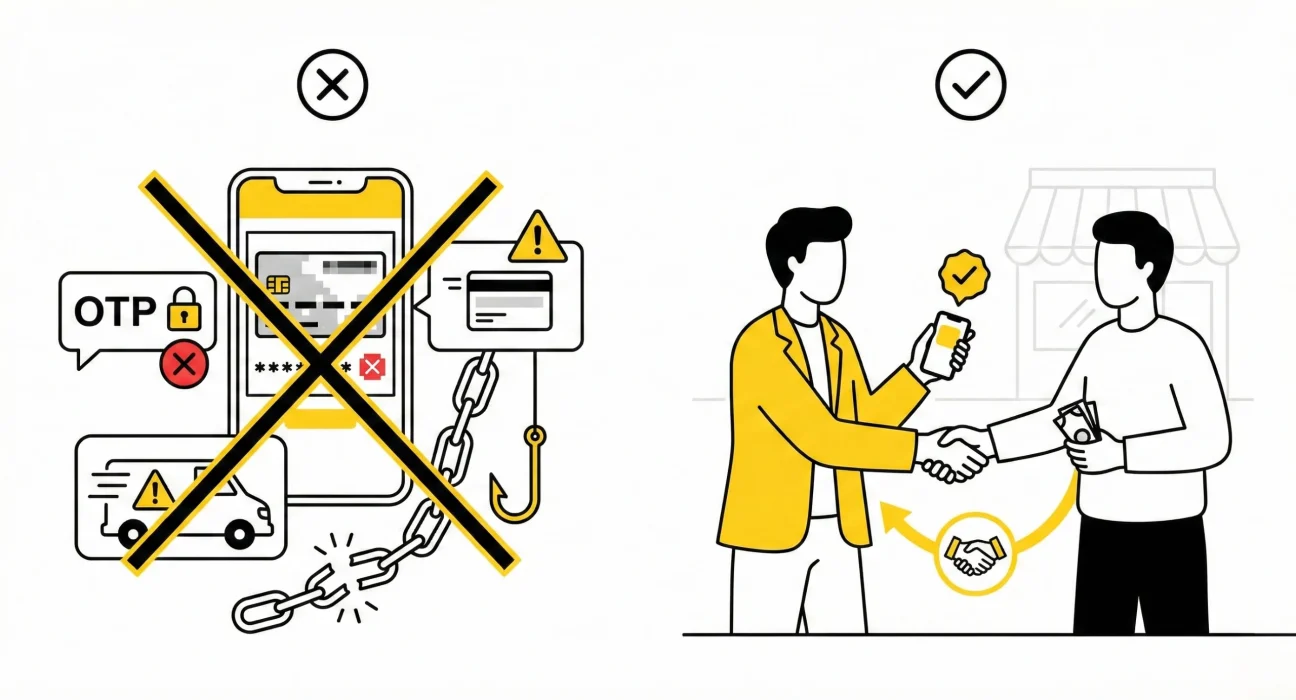
Meet in person whenever possible: For local transactions, meeting the buyer face-to-face is the safest option. You hand over the item, they hand over cash, done. No payment links, no OTPs, no confusion.
Accept cash or verified instant transfers: Cash is simple and immediate. If you’re accepting digital payment, check your actual bank or payment app (not a screenshot they send you) to confirm the money has arrived before handing over the item.
Never share OTPs: No buyer needs your OTP for any reason. If they ask, end the conversation. OTPs are meant to verify your identity sharing them gives someone else access to your accounts.
Don’t click on links from buyers: If they send a payment link or ask you to verify something through a URL, ignore it. Legitimate payments don’t require you to click external links.
Verify payment before pickup: If someone insists on courier pickup, tell them you’ll only hand over the item once the payment reflects in your account. No advances, no exceptions.
Use simple, direct communication: Stick to the basics: price, condition, when and where to meet. If the conversation starts getting complicated with talk of couriers, verifications, or third-party services, step back. The simpler you keep things, the harder it is for scammers to manipulate you.
Why Local Buying and Selling Reduces Scam Risk
When you buy and sell locally, many common scams just don’t apply.
Face-to-face transactions: Meeting someone in person to exchange an item for cash eliminates the need for online payments, OTPs, or payment confirmations. There’s nothing digital to fake.
No shipping or courier complications: Scammers often use courier pickup as an excuse to avoid meeting or to request advance payments. Local sales don’t involve couriers, so that entire category of scams is irrelevant.
Immediate accountability: When someone knows they’ll meet you in person, they’re far less likely to attempt anything dishonest. There’s a level of accountability that doesn’t exist in purely online transactions.
Simpler process: Sympl classifieds focus on direct, straightforward exchanges. The fewer steps involved, the fewer opportunities for scammers to insert themselves into the process.
This doesn’t mean local selling is completely risk-free, but it significantly reduces exposure to the most common online scams.
Real Example: A Scam Avoided
A student in Chennai posted an ad to sell his gaming console. Within hours, he got a message from someone claiming to be from Bangalore, offering full price without negotiation.
The buyer said he’d arrange courier pickup and sent a “payment confirmation” screenshot. Then he asked the student to share an OTP that had just arrived on his phone to “activate the transfer.”
The student paused. Why would a local sale need a courier? Why was a stranger asking for an OTP?
He checked his bank app no payment had arrived. He ignored the OTP request and stopped responding.
Later, he got a genuine enquiry from someone in his own neighbourhood. They met at a nearby cafe, the buyer checked the console, paid in cash, and took it home. The whole thing took less than half an hour.
Simple, local, and safe.
Who Should Be Most Careful
Certain groups are more vulnerable to scams, not because they’re careless, but because they’re less familiar with how these tricks work.
First-time sellers who don’t know what normal buyer behaviour looks like. They might assume that requests for OTPs or payment links are standard procedure.
Students sell items like phones, laptops, or bikes to make quick money. Scammers target them because they’re often in a hurry and may not double-check details.
Families trying to sell appliances or furniture while managing other responsibilities. They might rush through the process and miss red flags.
Anyone selling high-value items like electronics or vehicles. Scammers focus on expensive listings because the potential payoff is bigger.
If you fall into any of these groups, take extra time to verify who you’re dealing with before proceeding.
What to Do If You Suspect a Scam
If you think someone’s trying to scam you, the first step is simple: stop engaging.
You don’t owe anyone an explanation. If their messages seem off, if they’re pushing too hard, or if they’re asking for things that don’t make sense, just stop replying.
If you’ve already shared some information but haven’t completed the transaction, don’t panic. Change your passwords, watch your bank account for unusual activity, and report the conversation to the platform if there’s an option to do so.
If you’ve been scammed if you’ve handed over money or an item and realised it was fake, file a complaint with your local police and your bank. Many scams can be traced if reported quickly.
The important thing is not to feel embarrassed. Scammers are skilled at what they do, and even cautious people can be caught off guard. Learn from it and move forward.
Time and Cost Savings of Avoiding Scams Through Local Sales
Here’s something people don’t talk about enough: the time and money you save by avoiding scams isn’t just about not losing money.
When you sell locally and meet buyers in person, you eliminate hours spent vetting online messages, checking payment screenshots, and worrying whether someone’s genuine.
You don’t waste time dealing with fake enquiries from people who were never serious buyers. You’re not navigating complicated refund processes or filing complaints when something goes wrong.
And because local classifieds naturally limit who can see your ad to people nearby, you’re dealing with a smaller, more relevant pool of buyers. This makes it easier to spot the genuine ones and ignore the rest.
The simplicity of the process itself is a safeguard.
How Sympl Supports Safer Selling
Sympl is built around straightforward, local transactions.
By focusing on Sympl classifieds that connect local buyers and sellers, the platform reduces many of the conditions that scammers rely on distance, complexity, and anonymity.
There’s no requirement to link bank accounts, share payment details, or navigate multi-step verification processes. You post what you’re selling, buyers contact you, and you arrange to meet.
This simplicity makes it harder for scammers to insert fake payment confirmations, phishing links, or courier pickup stories into the process.
It’s not that scams can’t happen on any platform but the design of local, face-to-face selling naturally filters out many of the most common tricks.
Building Awareness Without Paranoia
The goal isn’t to make you afraid of selling online. It’s to make you aware of what to watch for so you can sell items fast without unnecessary risk.
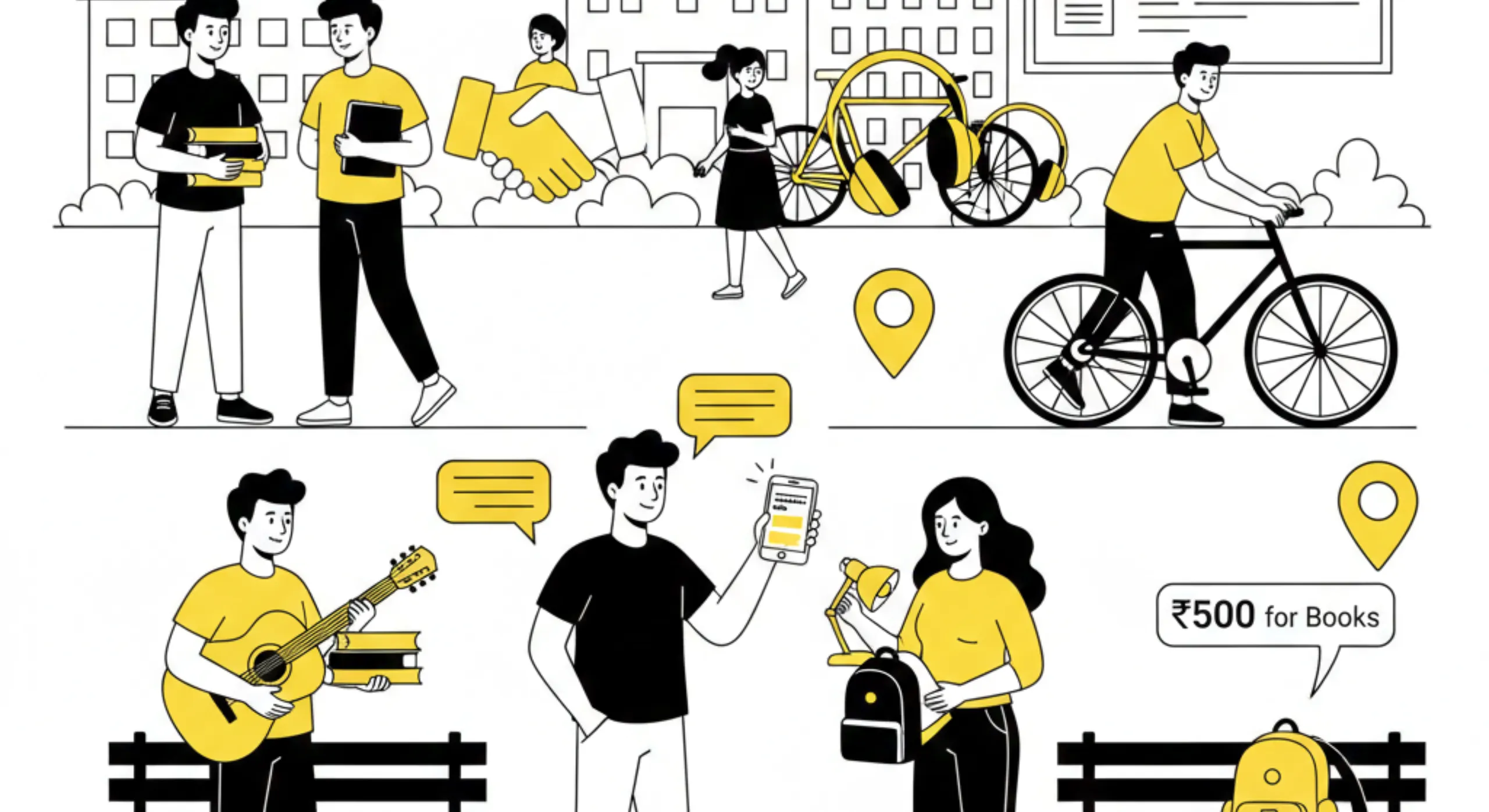
Most people you’ll deal with are genuine. They want what you’re selling, they’ll pay a fair price, and they’ll meet you at a reasonable time and place. These transactions happen every day without incident.
Scammers are the minority, but they’re persistent. Knowing their tactics doesn’t mean assuming everyone’s dishonest, it just means you’re prepared to recognise the warning signs when they appear.
And when you’re selling locally through Sympl classifieds, those warning signs are easier to spot because the process itself is more transparent.
Conclusion:
Online selling scams aren’t going away, but they don’t have to stop you from buying and selling locally with confidence. Stick to face-to-face transactions when possible. Accept cash or verify payments in your actual bank app before handing over items. Never share OTPs or click on links from buyers. And trust your instinct if something feels wrong, walk away.
For students clearing out old electronics, families selling furniture, or working professionals offloading items they no longer need, local classifieds offer a simpler, safer way to transact. You get the speed and convenience of direct communication with nearby buyers without the complications that make large platforms attractive to scammers. That’s the practical value of keeping things local, simple, and grounded in real, human interaction.
Stay alert, stay sensible, and you’ll be fine.