

Introduction
Running a PG business is profitable only when you manage costs carefully and maximise revenue. Many PG owners struggle to identify where money is being wasted and how to increase their PG business profit margins. Operating costs- from utilities and maintenance to staffing and marketing-quickly add up and cut into your bottom line. Therefore, understanding how to reduce these expenses is critical for long-term success. This guide reveals practical strategies to lower your operating costs, boost revenue, and improve your overall profitability. You’ll learn which expenses matter most, where to find cost-saving opportunities, and how to make smarter financial decisions. Additionally, using PG and hostel management software can help you track expenses, identify cost patterns, and optimise operations for maximum profit.
Understanding PG Operating Costs
Before you can reduce costs, you need to understand what consumes your money. Therefore, let’s break down the major expense categories in a PG business.
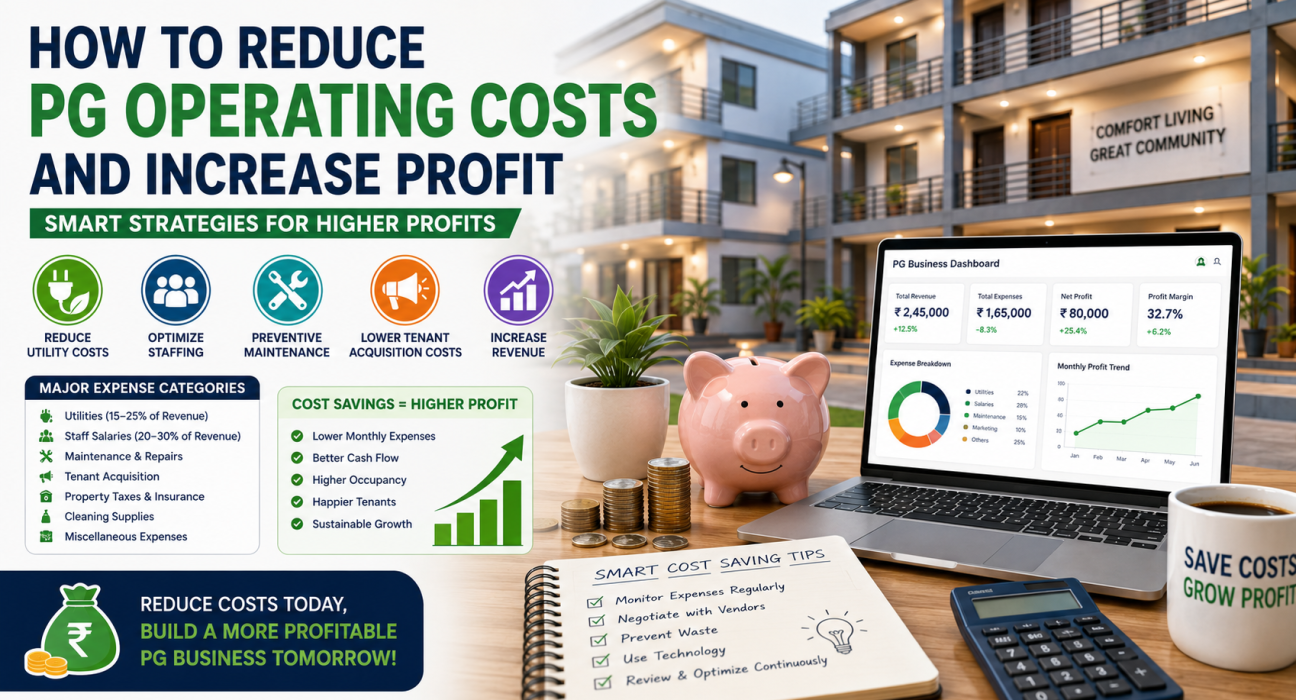
Major Expense Categories
PG operating costs typically fall into these areas:
- Utilities – electricity, water, gas, internet (often 15-25% of revenue)
- Staff salaries – housekeeping, maintenance, management (20-30% of revenue)
- Maintenance and repairs – property upkeep, emergency fixes, renovations
- Tenant acquisition – marketing, advertising, referral commissions
- Property taxes and insurance – fixed annual costs
- Cleaning supplies – detergents, sanitisers, waste management
- Miscellaneous – licenses, permits, contingency expenses
Moreover, understanding these categories helps you identify where you can make cuts without harming your property or tenant satisfaction.
Strategies to Reduce Operating Costs
1. Optimise Utility Consumption
Utilities often represent the largest controllable expense in a PG business. Therefore, reducing electricity, water, and internet costs directly improves your PG business profit.
Practical steps:
- Install energy-efficient LED lighting – LED bulbs use 75% less electricity than incandescent bulbs
- Use motion sensors – Automatic lights in common areas reduce waste
- Upgrade to inverter air conditioning – Modern ACs consume 30% less energy
- Fix water leaks immediately – Even small drips waste hundreds of litres monthly
- Set water heater temperature – Lower temperatures reduce heating costs
- Optimise internet plans – Review your plan quarterly; consider shared broadband to split costs
- Encourage tenant awareness – Display monthly utility costs; tenants use less when aware
Furthermore, implementing these changes reduces your monthly expenses without affecting tenant comfort. In fact, many tenants appreciate cost-conscious management and stay longer.
2. Streamline Staffing Costs
Staff salaries typically consume 20-30% of your revenue. Therefore, optimising your staffing structure directly boosts profit margins.
Cost-reduction strategies:
- Hire smart – Choose multi-skilled staff who can handle both cleaning and minor maintenance
- Outsource specialised work – Instead of full-time electricians, hire only when needed
- Use part-time staff – For cleaning, hire part-time workers instead of full-time employees
- Implement efficiency systems – Clear cleaning schedules and checklists reduce time wastage
- Cross-train employees – Staff who handle multiple tasks require fewer total workers
- Invest in training – Well-trained staff work faster and make fewer mistakes
However, cutting staff should never compromise on service quality. Therefore, focus on efficiency, not just reduction.
3. Reduce Maintenance Expenses
Maintenance costs spike when problems are ignored until they become emergencies. Therefore, preventive maintenance saves money in the long run.
Cost-effective maintenance approach:
- Conduct monthly inspections – Catch small issues before they become expensive
- Create a maintenance schedule – Regular servicing prevents breakdowns
- Handle minor repairs in-house – Train staff to fix small issues
- Bulk purchase supplies – Buy cleaning materials and spare parts in bulk for discounts
- Negotiate with vendors – Build relationships for better pricing on services
- Keep maintenance records – Track what breaks to identify patterns
Moreover, preventive maintenance typically costs 50% less than emergency repairs. As a result, investing time in regular upkeep saves significant money annually.
4. Lower Tenant Acquisition Costs
Marketing and tenant acquisition consume budget without directly generating revenue. Therefore, reducing these costs while maintaining occupancy improves profit margins.
Cost-effective tenant acquisition:
- Leverage referrals – Offer small commissions to existing tenants for referrals (typically cheaper than ads)
- Use free platforms – List on local classified sites and community groups instead of paid ads
- Build online presence – Create a simple website or social media presence for visibility
- Optimise your existing platform – Get high ratings on local directories (Google Maps, 99acres)
- Build a waiting list – During high-occupancy periods, collect contact information for future tenants
- Reduce vacancy time – Quick tenant replacement reduces lost revenue
Furthermore, referral-based tenants are higher quality and stay longer, reducing future replacement costs.
5. Minimise Vacancy Losses
Empty rooms generate zero revenue. Therefore, reducing vacancy periods directly increases profit.
Strategies to fill rooms faster:
- Price competitively – Research local market rates and adjust accordingly
- Improve property appeal – Regular cleaning, painting, and maintenance attract tenants
- Quick turnaround – Clean and prepare vacant rooms within 24-48 hours
- Active marketing – Respond to inquiries same-day and offer flexible move-in dates
- Seasonal pricing – Lower rates during slow seasons to maintain occupancy
- Build relationships – Good tenant experiences lead to referrals and word-of-mouth marketing
Additionally, maintaining 85-90% occupancy (instead of 70%) significantly boosts your PG business profit.
Increasing Revenue to Boost PG Business Profit
Reducing costs is only half the equation. Therefore, increasing revenue through smart strategies is equally important.
Optimise Your Pricing Strategy
Pricing directly impacts profit. However, you must balance competitiveness with profitability.
Smart pricing tactics:
- Conduct quarterly reviews – Monitor market rates and adjust prices accordingly
- Segment your pricing – Charge different rates for different room types or lease lengths
- Implement annual increases – Gradual increases (5-10% yearly) are less shocking than sudden changes
- Offer flexible terms – 6-month, 12-month, and long-term discounts encourage longer leases
- Premium pricing for better rooms – Larger or well-furnished rooms command higher prices
Furthermore, a 10% price increase with maintained occupancy directly improves profit margins.
Add Value-Added Services
Additional services generate extra revenue without major cost increases.
Services to consider:
- Premium bedding and room upgrades – Charge extra for better furniture or appliances
- Utility bundling – Include all utilities in rent for added convenience (and higher rates)
- Housekeeping services – Offer monthly deep cleaning for an additional fee
- Parking facilities – Charge separate fees for parking if applicable
- WiFi upgrades – Premium high-speed internet at extra cost
- Furnished vs. unfurnished options – Furnished rooms command 15-20% higher rent
Moreover, these services improve tenant satisfaction while generating additional income.
Using Technology to Improve Margins
Manual management creates inefficiencies that drain profit. Therefore, using technology to optimise operations is essential.
How software improves PG business profit:
- Expense tracking – Monitor costs in real time and identify problem areas
- Automated rent collection – Reduce payment delays and collection time
- Occupancy analytics – See which rooms generate the highest profit and why
- Utility tracking – Monitor consumption patterns and identify savings opportunities
- Staff scheduling – Optimise work hours based on actual needs
- Maintenance logs – Prevent repeat repairs and identify recurring issues
- Financial reports – Generate profit and loss statements instantly
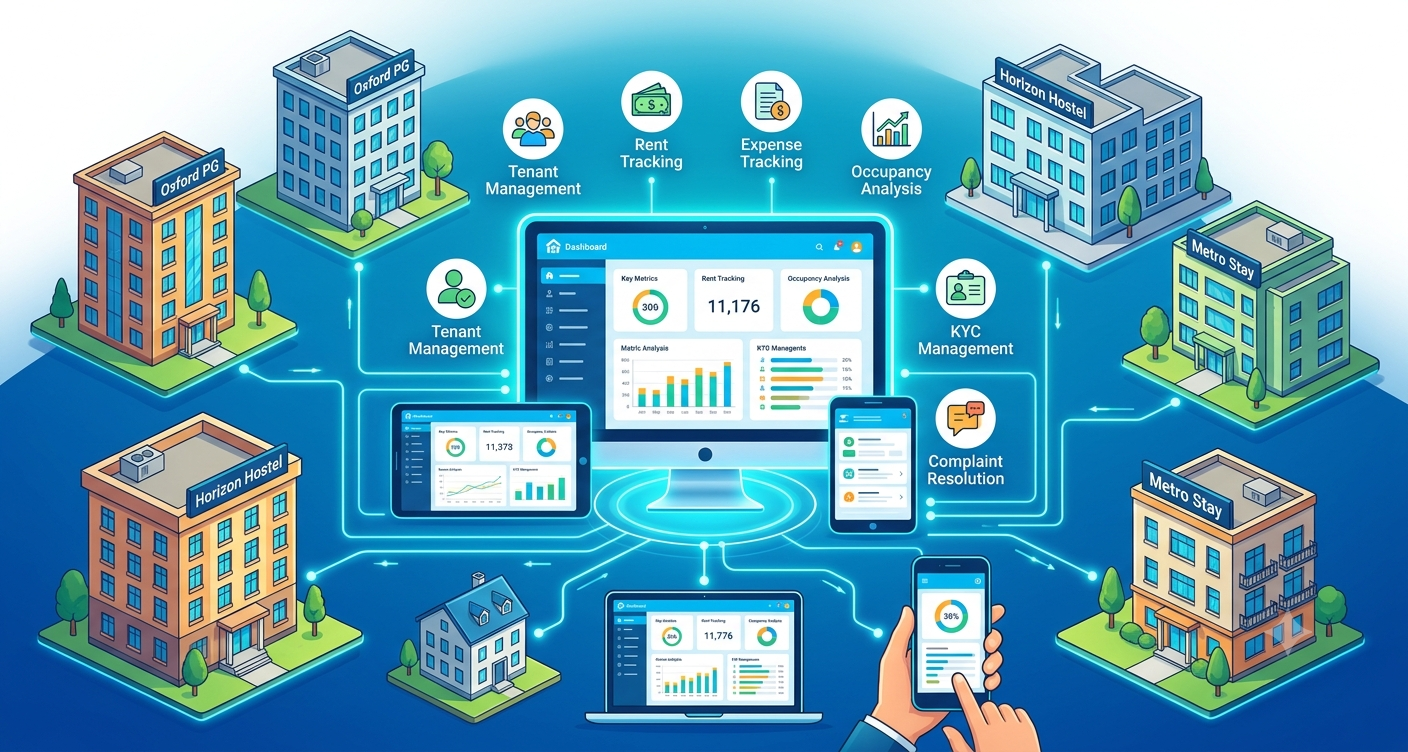
Additionally, PGCRM provides PG and hostel management software that tracks expenses, monitors occupancy, automates billing, and generates profit reports. As a result, you gain clear visibility into your financial performance and can make data-driven decisions to improve margins.
Common Cost-Cutting Mistakes to Avoid
Learning from mistakes helps you avoid costly errors.
- Cutting corners on maintenance – Neglecting upkeep leads to expensive emergency repairs. Therefore, invest in prevention.
- Reducing staff too aggressively – unhappy tenants leave, increasing vacancy costs. Therefore, maintain service quality.
- Raising rent too quickly – Aggressive price increases drive tenants away and increase turnover costs.
- Ignoring tenant satisfaction – Dissatisfied tenants leave early, creating vacancy costs that outweigh any savings.
- Not tracking expenses – Without data, you can’t identify where money leaks occur. Therefore, track everything.
- Avoiding technology upgrades – Manual systems consume time and create errors that cost money.
- Not reviewing costs regularly – Expenses change seasonally and over time. Therefore, review quarterly.
FAQ
Q1: What percentage of revenue should I spend on maintenance?
Maintenance typically consumes 5-10% of revenue. However, this varies by property age. Older properties may need 10-15%, while newer ones might need only 3-5%. Track your actual costs and adjust budgets accordingly.
Q2: How can I increase profit without raising rent?
Reduce utilities through efficiency upgrades, minimise vacancies through better marketing, optimise staffing, and add value-added services that generate extra income. Additionally, automating billing and reducing payment collection time improves cash flow.
Q3: What’s a realistic profit margin for a PG business?
Net profit margins typically range from 15-25% after all expenses. However, this varies based on location, property quality, and management efficiency. Premium locations and well-managed properties achieve 25-30% margins.
Q4: How much does a PG lose per vacant room per month?
A vacant room represents 100% lost revenue. For a ₹10,000 monthly room, one vacant room costs ₹10,000 monthly in lost profit. Therefore, reducing vacancy time from 30 days to 15 days significantly improves annual profit.
Q5: Should I invest in property upgrades to increase profit?
Yes, but strategically. Upgrades that attract premium tenants or reduce operating costs (energy-efficient ACs, LED lights, better plumbing) pay for themselves. However, expensive cosmetic upgrades may not justify the cost.
Q6: How often should I review and adjust my pricing?
Review pricing quarterly. Monitor local market rates, tenant demand, and your occupancy levels. Adjust prices by 5-10% annually to stay competitive while maximising revenue.
Conclusion
Increasing your PG business profit requires a two-pronged approach: reducing unnecessary expenses and optimising revenue. Therefore, implement cost-saving measures in utilities, staffing, and maintenance while maintaining quality standards. Additionally, optimise your pricing strategy, minimise vacancy periods, and consider value-added services for extra income. Most importantly, use data and technology to track performance and identify opportunities. Moreover, managing expenses manually creates blind spots that cost profit. Therefore, investing in PG and hostel management software provides clear visibility into costs, revenue, occupancy, and profitability. Explore PGCRM to simplify your property operations, reduce expenses, and maximise your PG business profit.