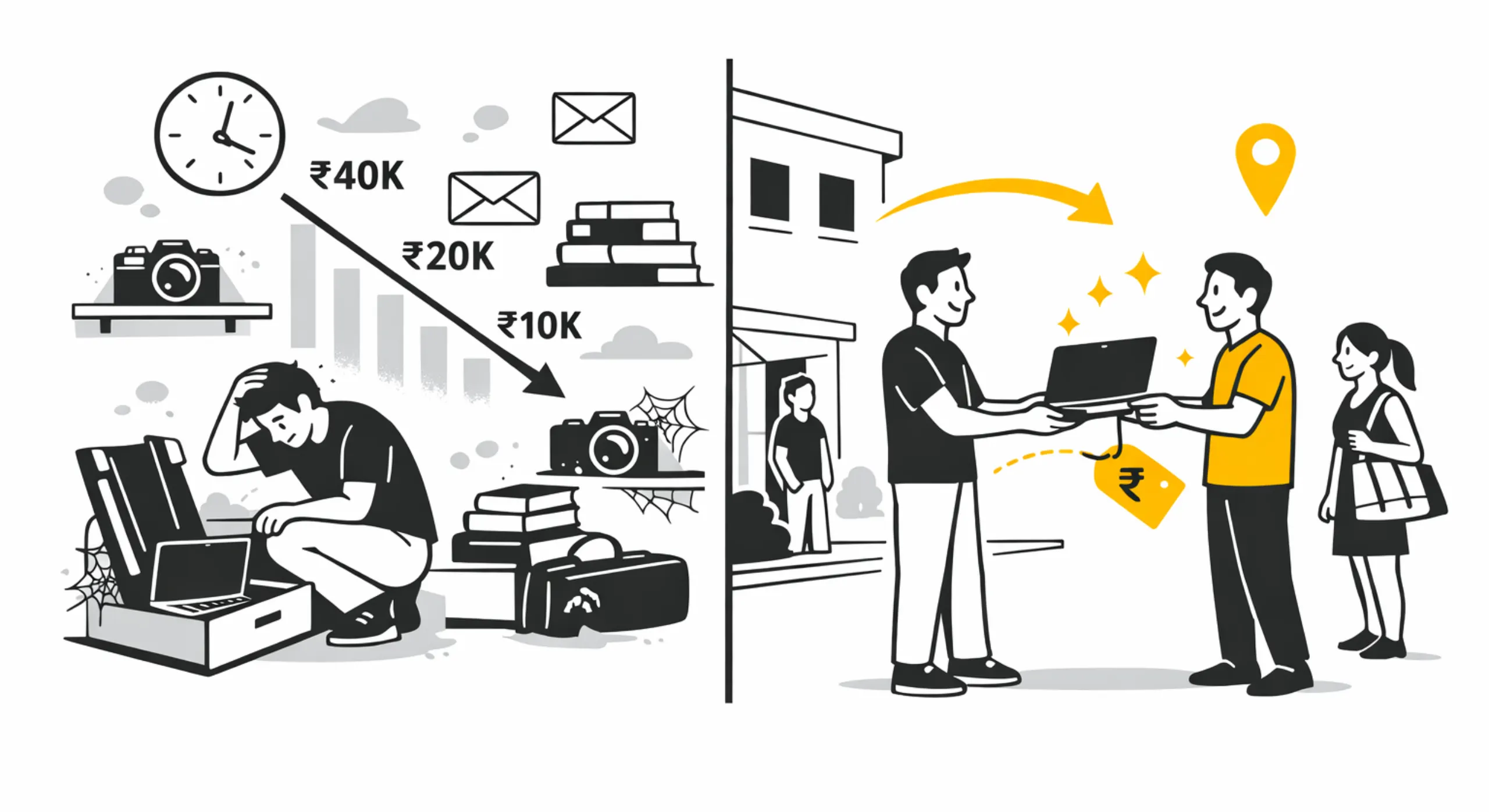



You’re writing a listing for your laptop, and you want it to sound professional and impressive.
So you describe it as “a premium computing device featuring cutting-edge specifications, pristine aesthetics, and exceptional performance capabilities for discerning users seeking optimal productivity solutions.”
It sounds sophisticated. But buyers scrolling through listings have no idea what you’re actually selling or whether it meets their needs. They move on to someone else’s listing that simply says “Dell laptop, i5, 8GB RAM, works well.”
The difference isn’t education or intelligence. It’s that one listing communicates clearly while the other makes people work too hard to understand basic information.
On local classifieds, where people browse quickly through items available nearby, simple language isn’t just easier to read it’s what actually gets your listing noticed and helps you sell items fast. Complicated words and fancy phrases don’t make items more valuable. They just make buyers skip to clearer options.
Why Sellers Overcomplicate Their Language
The urge to use complex language comes from wanting to sound credible.
You think that simple words make your listing look unprofessional or suggest the item isn’t valuable. So you reach for bigger words, technical jargon, or marketing speak that you’ve seen in advertisements.
This creates descriptions like:
- “State-of-the-art mobile communication device”
- “Premium seating solution with ergonomic features”
- “High-performance two-wheeler in immaculate condition”
- “Cutting-edge kitchen appliance with advanced functionality”
These phrases might appear in product brochures or retail websites, but they don’t work in person-to-person selling. Buyers aren’t shopping at a store they’re looking for used items from regular people in their neighbourhood.
When you buy and sell locally, buyers expect straightforward communication. They want to know what you’re selling, what condition it’s in, and why the price makes sense. Complex language creates distance and makes people suspicious rather than impressed.
The other reason sellers overcomplicate is uncertainty. If you’re not sure how to describe something, you might hide behind vague, formal language hoping it sounds good enough. But this usually backfires buyers can tell when descriptions are padding rather than informing.
What Simple Language Actually Means
Simple language doesn’t mean dumbing things down or being unprofessional.
It means using common words that communicate clearly without making people pause to decode your meaning.
Compare these examples:
Complex: “This premium telecommunications device boasts exceptional functionality”
Simple: “This phone works perfectly”
Complex: “Aesthetically pristine residential furniture solution”
Simple: “Clean dining table in good condition”
Complex: “High-performance vehicular transport with minimal usage indicators”
Simple: “Bike with low mileage, well-maintained”
Complex: “Cutting-edge electronic computing apparatus”
Simple: “Laptop, barely used”
The simple versions tell you exactly what’s being sold. The complex versions make you work to extract the same information.
Simple language is specific, direct, and honest. It uses everyday words that people actually say when talking about these items in real life.
How Clear Communication Helps Listings Perform Better
When you write listings in simple language, several things happen that increase your chances of selling quickly.
Faster comprehension
Buyers understand what you’re selling within seconds. They don’t need to reread sentences or guess what technical terms mean. This keeps them engaged instead of clicking away.
Better search matching
People search using normal words “laptop,” “bike,” “table” not marketing terms like “computing device” or “seating solution.” Simple language matches how people actually search.
More trust
Straightforward language sounds like a real person selling something they own. Fancy language sounds like a dealer or someone trying too hard, which makes buyers cautious.
Clearer expectations
When you describe items honestly in plain language, buyers know exactly what to expect when they meet you. This prevents disappointment and makes transactions smoother.
Wider audience reach
Not everyone is comfortable with English technical terms or marketing jargon. Simple language works for everyone students, working professionals, families, people from different educational backgrounds.
When you sell items fast, it’s often because your listing was easy to understand from the first glance. Complex language creates unnecessary barriers.
Writing Product Descriptions in Everyday Words
Different items need different information, but the language stays simple throughout.
For electronics
Instead of: “Premium smartphone featuring advanced photographic capabilities and extended battery longevity”
Write: “iPhone 12, camera works great, battery lasts all day”
Instead of: “High-specification portable computing device with solid-state storage”
Write: “Dell laptop with SSD, runs fast”
For furniture
Instead of: “Elegant timber-based dining ensemble with seating capacity for six individuals”
Write: “Wooden dining table, seats 6 people”
Instead of: “Ergonomic seating apparatus with adjustable parameters”
Write: “Office chair with height adjustment”
For vehicles
Instead of: “Well-maintained two-wheeler with minimal operational hours”
Write: “Honda Activa, low usage, well-maintained”
Instead of: “Recreational cycling apparatus suitable for fitness enthusiasts”
Write: “Mountain bike, good for exercise”
For appliances
Instead of: “Premium refrigeration unit with optimal cooling performance”
Write: “Samsung fridge, cools well”
Instead of: “Automated garment cleaning apparatus with multiple operational modes”
Write: “Washing machine with different wash settings”
The pattern is consistent: use the actual name of the item, describe it with common words, mention what works or matters.
Common Language Mistakes That Reduce Visibility
Certain writing patterns show up repeatedly in listings that don’t get responses.
Using marketing buzzwords
Words like “premium,” “cutting-edge,” “state-of-the-art,” “revolutionary” come from advertisements, not conversations. They sound insincere in person-to-person selling.
Vague technical terms
“Advanced features” or “high specifications” don’t tell buyers anything specific. Either mention actual features or skip the vague reference.
Unnecessary adjectives
“Absolutely stunning,” “incredibly amazing,” “exceptionally beautiful”—these add length without adding information. “Good condition” or “works well” is clearer.
Formal business language
“This item presents an excellent opportunity” or “We are pleased to offer” you’re not a company making an official statement. You’re someone selling a used phone.
Complicated sentence structures
“Having been utilized minimally during its operational period, this device maintains functionality” this is just “barely used, works fine” stretched into confusing grammar.
These mistakes don’t just make listings harder to read they make them feel untrustworthy or like they’re hiding something behind fancy words.
How Local Buyers Respond to Simple Language
When you buy and sell locally, the people viewing your listings are your neighbours, people from your city, others in your community.
They’re not looking for retail marketing copy. They want honest information from someone like them who happens to be selling something they need.
Simple language creates connection. When someone reads “Selling my laptop because I bought a new one, works perfectly, minor scratches on the lid,” they understand you’re a real person in a real situation. This builds instant trust.
Complex language creates distance. When someone reads “Premium computing apparatus available for discerning users seeking reliable performance,” they wonder who’s really behind the listing and whether this is even a genuine person-to-person sale.
Sympl classifieds work because they facilitate direct transactions between real people nearby. Language that sounds like how people actually talk reinforces this authenticity. Language that sounds like corporate marketing undermines it.
Buyers also appreciate when they can read and understand listings quickly. Most people browse on phones during commutes or breaks. Simple, clear descriptions respect their time and attention.
Writing for Different Audiences Without Overcomplicating
You might worry that simple language sounds too casual for expensive items or won’t appeal to educated buyers.
But the reality is that educated, professional buyers prefer clear communication even more than others. They’re busy and don’t want to decode unnecessarily complex descriptions.
A doctor, engineer, or teacher looking for a used car doesn’t need you to use complicated language to respect their intelligence. They need you to clearly state the make, model, year, condition, and price.
Simple language works for everything from a ₹500 book to a ₹50,000 laptop to a ₹2 lakh bike. The value comes from the item itself and honest description, not from fancy words.
The key is being specific without being complicated:
- “MacBook Pro 2020, M1 chip, 16GB RAM, excellent condition” works for anyone
- “Premium Apple computing device with advanced silicon architecture” confuses everyone
Specificity and simplicity go together. Technical specs are fine when they’re actually informative (16GB RAM, M1 chip). Vague marketing terms (premium, advanced) add no value.
When Technical Terms Are Appropriate
Sometimes you do need specific technical language, especially for items where specs matter.
For electronics, photography equipment, vehicles, or specialised hobby items, buyers expect certain details:
- Camera specs: “Canon 50mm f/1.8 lens, autofocus works perfectly”
- Computer specs: “i5 processor, 8GB RAM, 256GB SSD”
- Bike specifications: “21-speed gear system, disc brakes”
These terms are standard in their fields and buyers searching for these items understand them. They’re not marketing jargon, they’re necessary information.
The difference is between functional terminology (which informs) and decorative language (which just sounds fancy).
Functional: “Nikon D5600 DSLR, 24MP sensor, Wi-Fi enabled”
Decorative: “Premium photographic instrument with exceptional imaging capabilities”
Use the terms that buyers in that category expect and understand. Skip everything else.
Editing Your Listing for Clarity
If you’ve already written a listing and worry it might be too complex, here’s how to simplify:
Replace formal words with common ones
“Purchase” → “buy”
“Utilise” → “use”
“Residence” → “home”
“Automobile” → “car”
Remove unnecessary adjectives
“Absolutely perfect condition” → “Perfect condition” or just “Good condition”
“Incredibly powerful performance” → “Works fast”
Cut marketing phrases
Delete: “Don’t miss this amazing opportunity”
Delete: “Serious buyers only”
Delete: “Won’t find a better deal”
Make sentences shorter
“This item, having been carefully maintained throughout its operational period, continues to function optimally” → “Well-maintained, works perfectly”
Use active, direct statements
“This device can be used for various purposes” → “You can use this for…”
Or better: “Good for work and entertainment”
Read your listing aloud. If it doesn’t sound like how you’d explain the item to a friend, simplify it.
Who Benefits Most from Simple Language
Everyone benefits from clear communication, but it especially helps certain sellers.
First-time sellers
If you’ve never written a listing before, simple language is easier to get right. You don’t need to figure out the “right” marketing tone, just describe honestly.
Non-native English speakers
Simple words are easier to use correctly. Complex language increases chances of mistakes that confuse buyers.
People selling common items
When many people are selling phones, bikes, or furniture, your listing competes on clarity. Simple descriptions help yours stand out as straightforward and trustworthy.
Anyone wanting quick sales
If you need to sell items fast without endless back-and-forth, clear language attracts ready buyers who understand exactly what you’re offering.
People who value directness and efficiency will find simple language more effective than trying to sound impressive.
Practical Benefits of Straightforward Descriptions
Using everyday language in your listings creates multiple advantages beyond just being understood.
Fewer unnecessary questions
When descriptions are clear, buyers don’t need to ask basic things like “what exactly are you selling?” or “what does that mean?” You spend less time explaining and more time coordinating with serious buyers.
Better price negotiations
Clear descriptions set realistic expectations. Buyers know what they’re getting, so price discussions focus on fair value rather than clarifying what the item actually is.
Faster meetings
When both sides understand the item clearly from the listing, meetings are efficient. Buyers come prepared, knowing what to expect, and transactions complete smoothly.
Reduced no-shows
Confusion leads to no-shows. When buyers aren’t sure what they’re coming to see, they’re more likely to cancel. Clear language means people who commit to meeting actually show up.
These benefits save you time and make the selling experience less frustrating.
Moving Forward with Clearer Listings
The next time you write a listing, imagine explaining the item to a neighbour or friend.
What would you actually say? Probably something like “I’m selling my bike, it’s a Hero Splendor, runs well, has a few scratches but works perfectly.”
That’s the tone and language that works in local classifieds. Honest, clear, specific, simple.
You don’t need to impress buyers with vocabulary. You need to inform them clearly so they can decide if your item meets their needs. When language is simple, buyers understand faster, trust more easily, and contact you more readily.
When you buy and sell locally through Sympl classifieds, the entire system works better when everyone communicates plainly. Sellers describe items honestly. Buyers ask straightforward questions. Meetings happen efficiently because expectations were clear from the beginning.
This is how local buying and selling succeeds not through marketing polish or corporate language, but through real people using everyday words to communicate clearly about items they’re genuinely offering to others nearby who genuinely need them.