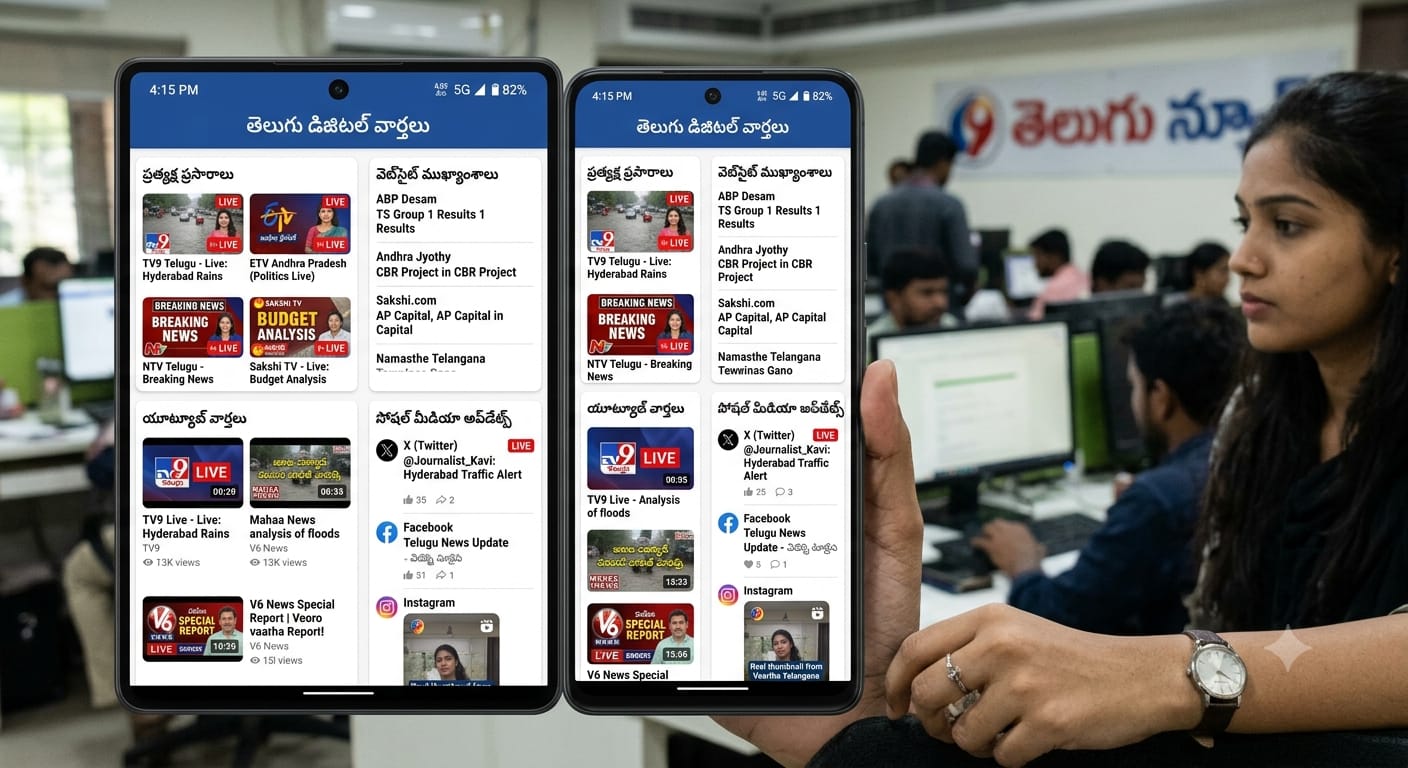


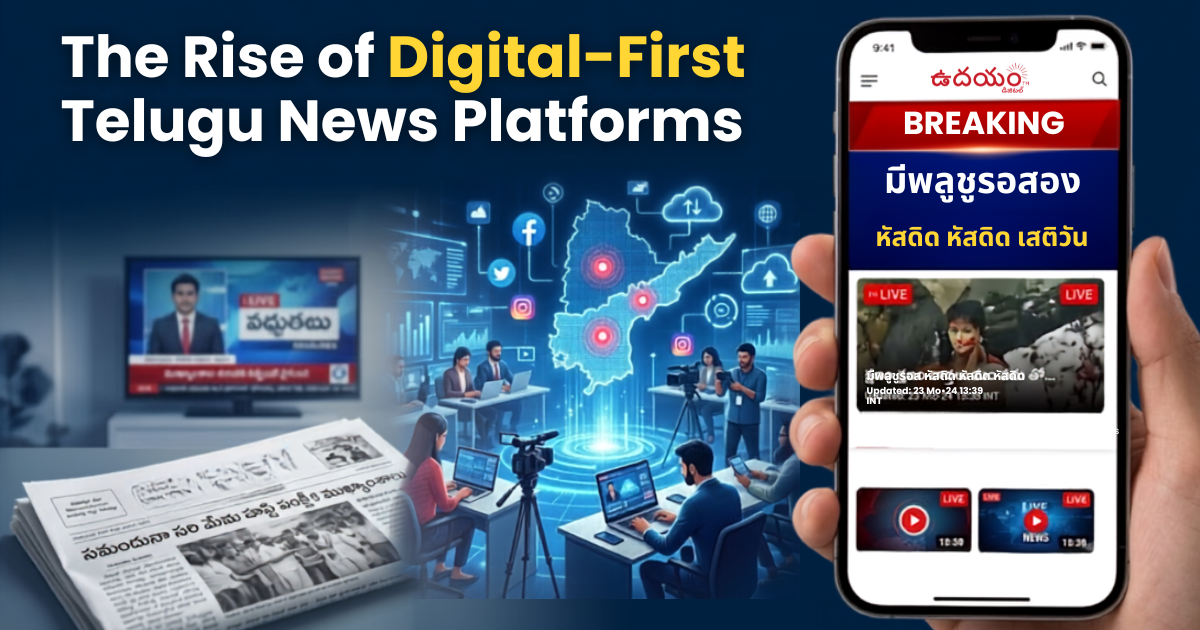
The way people consume news in India has changed dramatically over the last decade, and Telugu-speaking audiences are no exception. Once dominated by printed newspapers and television bulletins, Telugu journalism is now experiencing a digital transformation fueled by smartphones, affordable internet, and changing reader habits.
Today’s audiences expect instant access to breaking stories, live updates, short videos, and personalized news experiences. This shift has given rise to digital-first Telugu news platforms that are designed specifically for online audiences rather than being extensions of traditional newspapers.
In this article, we’ll explore how Telugu journalism has evolved, why digital-first publishing is reshaping regional media, and what the future holds for Telugu digital news.
The Traditional Telugu Media Landscape
For decades, Telugu journalism was built around two primary channels:
- Printed newspapers
- Television news channels
Morning newspapers were the primary source of information for families across Andhra Pradesh and Telangana. Readers relied on daily editions for politics, business, education, entertainment, sports, and local events.
Television later became equally influential by providing live news coverage, election updates, debates, and breaking news throughout the day.
Both formats established strong editorial standards and built trust among audiences. However, they also had natural limitations.
Print publications could only be updated once a day, while television programming depended on scheduled broadcasts and available airtime. As technology evolved, audiences increasingly sought faster and more convenient access to news.
The Arrival of Online Telugu News Websites
The expansion of internet access created new opportunities for regional language journalism.
Initially, many Telugu newspapers launched websites that simply mirrored their print editions. While this allowed readers worldwide to access Telugu news online, these websites largely followed the same publishing cycle as newspapers.
Over time, publishers recognized that online readers behaved differently.
Instead of waiting for the next day’s edition, audiences wanted:
- Breaking news within minutes
- Continuous story updates
- Searchable archives
- Multimedia content
- Mobile-friendly reading
- Instant notifications
This demand led to the growth of dedicated Telugu news platforms focused entirely on digital publishing.
Unlike traditional media organizations adapting to the web, digital-first publishers built their operations around speed, accessibility, and audience engagement.
The Smartphone and Mobile Data Revolution
Perhaps the biggest driver of Telugu digital news has been India’s smartphone revolution.
Affordable smartphones combined with low-cost mobile internet transformed how people consume information.
Instead of reading newspapers over breakfast or watching evening television bulletins, users now receive updates throughout the day directly on their mobile devices.
Several factors accelerated this transition:
- Faster mobile internet
- Affordable data plans
- Improved smartphone availability
- Expansion of 4G and 5G networks
- Growth of regional language keyboards
- Increased digital literacy
Today, millions of Telugu readers access news while commuting, working, traveling, or relaxing at home.
News has become an always-available experience rather than a scheduled activity.
What Makes a Digital-First News Platform Different?
Many people assume that publishing newspaper articles on a website makes an organization digital.
In reality, digital-first publishing involves a completely different editorial mindset.
Instead of treating websites as secondary platforms, digital-first newsrooms prioritize online publishing from the beginning.
Key characteristics include the following:
Real-Time Publishing
Stories are published as events unfold instead of waiting for scheduled editions.
Mobile-First Design
Articles are optimized for smartphones, where most readers consume content.
Multimedia Storytelling
Text is combined with:
- Videos
- Images
- Infographics
- Interactive graphics
- Photo galleries
Continuous Updates
Rather than replacing stories, journalists update them throughout the day as new information becomes available.
Audience Engagement
Readers can interact through comments, social media, polls, and live discussions.
This approach allows publishers to respond quickly while keeping readers informed with the latest developments.
The Importance of Breaking News and Live Updates
Speed has become one of the defining characteristics of Telugu digital news.
Readers increasingly expect immediate coverage of:
- Elections
- Government announcements
- Weather alerts
- Natural disasters
- Traffic updates
- Sports events
- Entertainment news
Live blogs and continuously updated articles have become common features of digital journalism.
Instead of publishing multiple separate articles, digital-first platforms update a single page with verified information as events unfold.
This improves both user experience and search engine visibility while helping readers follow developing stories in one place.
The Growing Role of Video Journalism
Video has become one of the fastest-growing formats in Telugu digital media.
Many users now prefer watching short news clips over reading lengthy articles.
Digital publishers produce:
- Breaking news videos
- Explainer videos
- Interviews
- Ground reports
- Election coverage
- Live streaming
- Documentary-style features
Social media platforms have further accelerated video consumption by making it easier to discover and share news content.
As internet speeds improve, video journalism will continue becoming a major pillar of regional language journalism.
Why Local Coverage Matters More Than Ever
One of the biggest strengths of Telugu digital news platforms is their ability to cover hyperlocal stories.
Readers often care most about developments affecting their own communities.
These include:
- District news
- Municipal announcements
- Local politics
- School updates
- Agricultural developments
- Employment opportunities
- Infrastructure projects
- Community events
Digital publishing allows local stories to reach readers instantly without waiting for space in printed editions.
This has significantly increased the visibility of grassroots journalism.
Social Media Has Changed News Distribution
News websites are no longer the only destination for readers.
Many people discover stories through:
- X
- YouTube
- Telegram
Social platforms have become powerful distribution channels that help publishers reach wider audiences.
However, they also create intense competition for attention.
Publishers must now create content that is not only informative but also engaging enough to encourage sharing while maintaining journalistic standards.
Opportunities for Telugu Digital Publishers
The rise of Telugu digital news presents several exciting opportunities.
Expanding Global Reach
Telugu-speaking communities around the world can stay connected with regional news regardless of location.
Lower Publishing Costs
Digital publishing eliminates printing and physical distribution expenses.
Better Audience Insights
Publishers can understand reader interests through analytics and improve content accordingly.
Multiple Revenue Streams
Digital media enables income through the following:
- Advertising
- Sponsored content
- Membership programs
- Premium subscriptions
- Events
- Video monetization
Faster Innovation
New storytelling formats can be introduced quickly without changing printing processes.
Challenges Facing Digital-First Telugu News Platforms
Despite rapid growth, digital publishers also face significant challenges.
Misinformation
False information spreads rapidly online, making verification more important than ever.
Revenue Sustainability
Many publishers rely heavily on advertising, which can fluctuate based on market conditions.
High Competition
Thousands of websites compete for reader attention and search visibility.
Maintaining Editorial Standards
Publishing quickly should never come at the cost of accuracy.
Technology Investments
Digital platforms require continuous investment in infrastructure, cybersecurity, mobile optimization, and content management systems.
Balancing speed, quality, and sustainability remains one of the industry’s biggest challenges.
The Importance of Trust and Fact-Checking
In today’s digital environment, trust is a publisher’s most valuable asset.
Readers increasingly seek reliable sources that prioritize verified reporting over sensational headlines.
Strong digital news organizations invest in:
- Fact-checking
- Editorial review
- Source verification
- Transparent corrections
- Ethical reporting practices
Maintaining credibility is especially important during elections, public emergencies, and rapidly evolving news events.
Long-term audience loyalty depends on consistent accuracy rather than simply being first.
Emerging Digital-First Telugu News Brands
The Telugu news ecosystem now includes a growing number of organizations built specifically for digital audiences. These platforms focus on delivering timely reporting through websites, mobile experiences, social media, and multimedia formats tailored to how modern readers consume information.
Among these emerging names, Udayam Telugu News reflects the broader movement toward Telugu digital news by publishing content designed for online readers. Alongside other regional publishers, such platforms illustrate how regional language journalism is adapting to changing audience expectations through faster publishing, broader accessibility, and multi-platform distribution.
As competition increases, success will depend not only on publishing speed but also on editorial quality, user experience, and the ability to build lasting trust with readers.
The Future of Regional Digital Journalism
The next phase of Telugu digital journalism will likely be shaped by technological innovation.
Emerging trends include:
- Artificial intelligence-assisted newsrooms
- Personalized news recommendations
- Voice-based news consumption
- Regional language search optimization
- Interactive storytelling
- Data journalism
- Live multimedia reporting
- Increased focus on mobile-first experiences
As internet access continues expanding across rural India, regional language audiences are expected to grow significantly.
Digital-first Telugu news platforms that combine technology with responsible journalism will be best positioned to serve this evolving audience.
Conclusion
The rise of digital-first Telugu news platforms marks one of the most significant transformations in regional journalism. What began as a shift from print and television to websites has evolved into a comprehensive digital ecosystem driven by smartphones, social media, video, and real-time reporting.
Today’s readers expect fast, accurate, and accessible information wherever they are. Meeting those expectations requires more than simply publishing newspaper articles online—it demands a digital-first approach centered on continuous updates, engaging storytelling, local relevance, and verified reporting.
As Telugu digital news continues to evolve, publishers that embrace innovation while maintaining strong editorial standards will play a vital role in shaping the future of regional language journalism and strengthening digital media in India.