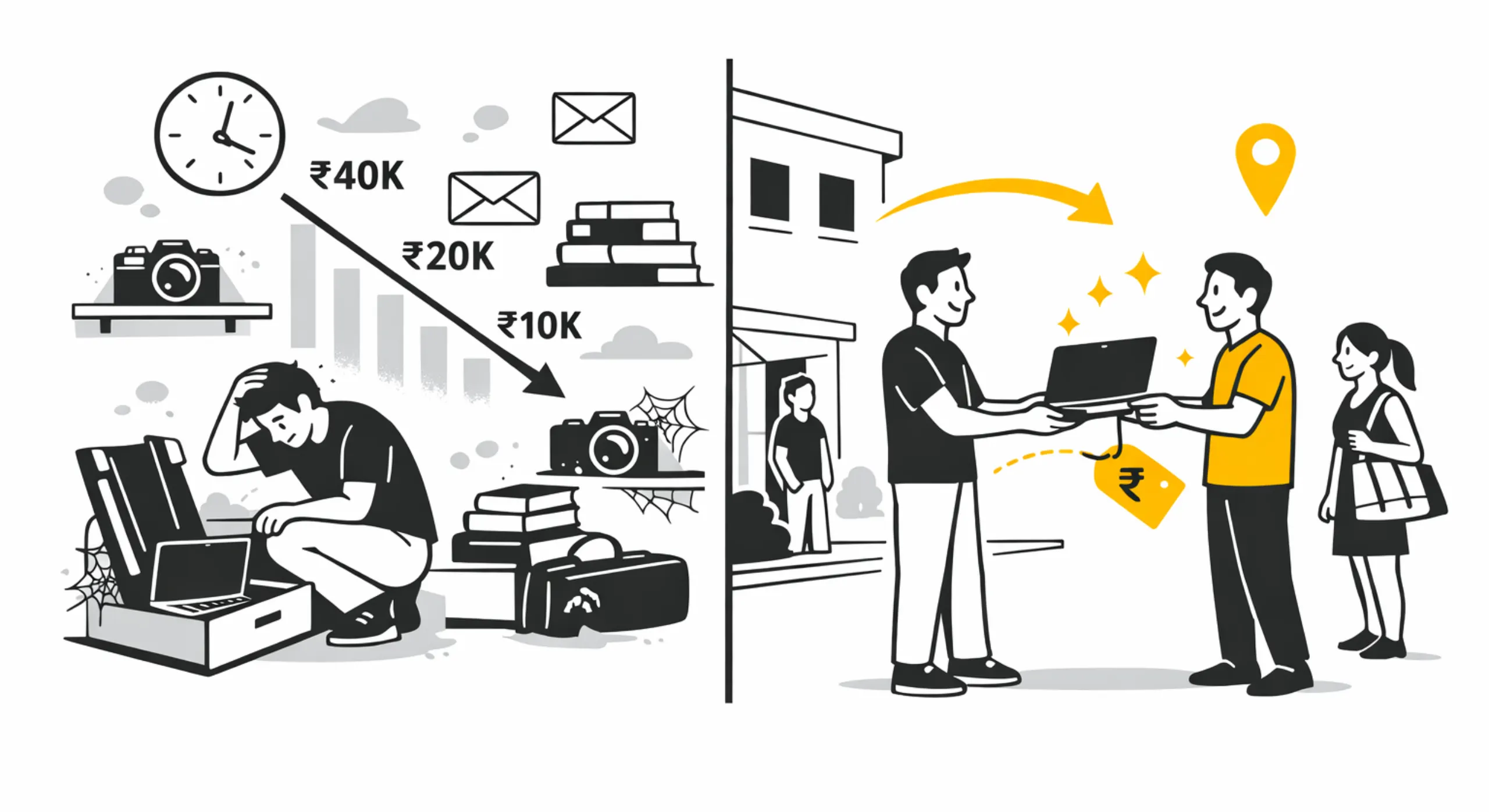



You’ve heard about buying and selling locally online, but you’ve never actually tried it.
Maybe you have an old phone sitting in a drawer that someone could use. Or you need a study table but don’t want to pay full price for a new one.
The idea makes sense. But you’re not sure where to start. Will it be complicated? Do you need to create detailed listings? How do you find serious buyers? What if something goes wrong?
Most platforms overwhelm first-time users with features, requirements, and processes. They’re built for people who already know how online buying and selling works.
Sympl takes a different approach. Simple classifieds designed for everyday people, including those trying it for the first time. No steep learning curve. No complex requirements. Just straightforward local buying and selling.
Why First-Time Users Hesitate
Starting something new always feels uncertain.
You’ve seen how complicated some platforms can be. Long registration forms. Mandatory profile details. Photo requirements. Pricing strategies. Shipping options. Payment gateways.
It feels like you need training just to sell an old chair.
Common concerns first-time users have:
- “Will I do something wrong and waste my time?”
- “What if no one responds to my listing?”
- “How do I know if a buyer is serious or genuine?”
- “What if I price things too low or too high?”
- “Is it safe to meet strangers to buy or sell?”
These are practical worries. And they’re exactly why many people never try selling items they don’t need or buying affordable second-hand goods locally.
The hesitation isn’t about capability. It’s about not knowing what to expect.
What You Actually Need to Get Started
The good news? Getting started is simpler than you think.
You don’t need professional photos. You don’t need marketing skills. You don’t need to understand algorithms or pricing strategies.
Basic requirements for local buying and selling:
Something to sell or a specific item you want to buy. That’s your starting point.
A phone with a camera. For taking basic photos of items or viewing listings.
Your location. So you can connect with local buyers and sellers.
Ability to communicate. Simple messages back and forth to arrange meetings.
That’s it. If you can take a photo and send a message, you can use Sympl effectively.
Your First Listing: Keeping It Simple
Let’s say you want to sell something. An old phone, a chair, or kitchen appliance.
Step-by-step approach:
Take a clear photo. Natural lighting works best. Show the item from the front. No need for fancy angles or staging.
Write what it is. “Samsung Galaxy M32, 6GB RAM, Black colour” or “Wooden office chair with wheels.” Straightforward descriptions work fine.
Mention the condition honestly. “Used for 2 years, works perfectly” or “Small scratch on the armrest, otherwise good.” Honesty saves time later.
Set a fair price. Check what similar items are selling locally. Price yours reasonably based on condition and age.
Add your general location. “Koramangala area” or “Near Viman Nagar.” You don’t need your exact address, just the neighbourhood.
That’s a complete listing. Nothing complicated. No need to agonise over perfect wording.
Your First Purchase: What to Look For
If you’re buying instead of selling, the process is even simpler.
How to find what you need:
Search for the item in your area. “Study table Bangalore” or “Bike Pune.” Keep searches simple.
Browse local listings. Look at photos. Read descriptions. See what’s available and at what prices.
Message sellers with specific questions. “Is this still available?” “Can I see it tomorrow?” Direct and clear works best.
Arrange a meeting. Suggest a public place convenient for both of you. Metro stations and popular cafés work well.
Inspect before buying. Check the item thoroughly. Make sure it matches the description.
Pay and take it home. Cash or UPI. Simple transaction, and you’re done.
First-time buyers often overthink this. It’s just meeting someone nearby and checking if their item suits your needs.
Understanding Direct Buyer-Seller Interaction
One thing that surprises first-time users: how direct everything is.
On Sympl, you message the seller directly. No platform acting as a middleman. No automated responses. Just person-to-person conversation.
What this means practically:
You ask questions. The seller answers. It’s a normal conversation.
You negotiate if needed. “Would you consider ₹2,500?” “I can do ₹2,700.” Direct and honest.
You coordinate meeting details. “Can we meet Sunday at 3 PM?” “Yes, near Forum Mall works for me.”
This directness feels different from impersonal e-commerce. But it’s actually easier. You get immediate answers. You build basic trust through conversation.
For local buyers and sellers, this creates clarity and speeds up transactions.
Safety Basics for First-Time Transactions
Safety concerns are normal when trying something new.
The good news: simple precautions make local buying and selling quite safe.
Practical safety tips:
Always meet in public places. Busy areas with people around. Never meet at isolated locations.
Tell someone where you’re going. Share the meeting time and location with a friend or family member.
Bring a friend if you’re nervous. Especially for first transactions. There’s safety in numbers.
Trust your instincts. If something feels off, politely cancel. Better safe than sorry.
For buyers: Inspect items thoroughly before paying. For sellers: Confirm payment before handing over items.
These aren’t complicated security protocols. Just common sense approaches that work.
Common Beginner Mistakes to Avoid
First-time users often make the same small mistakes.
Easily avoidable issues:
Vague listings. “Phone for sale” tells buyers nothing. “iPhone 12, 128GB, in good condition” is much better.
Unrealistic pricing. Listing a 3-year-old laptop for nearly new prices. Check market rates first.
Slow responses. Someone messages asking if your item is available. Responding three days later means they’ve already bought elsewhere.
Not confirming meetings. You agree to meet Saturday. Neither person confirms. Both show up at different times or not at all.
Being inflexible. “I can only meet Tuesday at exactly 2:47 PM.” Reasonableness helps close deals.
These mistakes are fixable with awareness. Most first-time users learn quickly and improve with each transaction.
Setting Realistic Expectations
Your first listing might not sell in two hours. That’s normal.
Some items sell within a day. Others take a week or two. It depends on what you’re selling, how you priced it, and local demand.
Realistic timeline expectations:
Popular items (phones, bikes, furniture) get responses within days if priced fairly.
Niche items might take longer. That’s okay. The right buyer will come along.
Some listings need price adjustments. If no one responds after a week, consider lowering the price slightly.
Local markets vary. What sells fast in Bangalore might be slower in smaller cities, and vice versa.
The key is patience and willingness to adjust. Not everything sells immediately, and that’s part of the process.
How Local Focus Helps First-Timers
Buying and selling locally reduces complexity significantly.
Why local makes things easier:
A smaller pool of people means less overwhelming. You’re not competing with sellers across India or fielding messages from everywhere.
Meetings are convenient. Both parties know the area. “Near Indiranagar Metro” makes sense to everyone locally.
Shared context builds trust faster. You’re both from the same city. That familiarity reduces anxiety.
Practical issues get resolved easily. “I can come see it today” becomes realistic when someone is 15 minutes away, not 500 kilometres.
For first-time users, this local focus removes many intimidating aspects of online transactions.
Sympl’s emphasis on connecting local buyers and sellers creates a less overwhelming environment for beginners.
Who Benefits Most from Starting Here
Sympl’s simple approach particularly helps certain groups.
Students trying to furnish hostel rooms affordably. Their first buying experience becomes practical rather than overwhelming. They find local sellers with exactly what they need.
Families clearing out unused items. First-time sellers who just want to pass things on to people who’ll use them. No pressure to become professional sellers.
Working professionals who’ve avoided online selling because it seemed complicated. They discover it’s actually straightforward when platforms don’t overcomplicate things.
People on tight budgets testing low-cost buying for the first time. They realise they can get quality items at affordable prices from nearby sellers.
If you’ve never tried selling items fast or buying second-hand locally, starting with simple classifieds makes the learning curve gentle.
Learning as You Go
The best way to learn is by doing.
Your first listing might not be perfect. Your first negotiation might feel awkward. Your first meeting might make you nervous.
That’s all normal. By the third or fourth transaction, you’ll feel comfortable.
What improves with experience:
You learn what photos work best. Simple, clear shots that show items honestly.
You get better at pricing. Understanding local market rates comes from seeing what actually sells.
You recognise serious buyers faster. Their messages sound different from casual browsers.
You become more efficient. Coordinating meetings and closing deals gets quicker.
First-time users become experienced users simply by trying it. The platform doesn’t change. Your comfort level does.
Cost and Time Benefits Even for Beginners
Even on your first transaction, the advantages are obvious.
Money saved:
Selling items recovers cash instead of letting them sit unused. Even if you price low to sell fast, it’s better than nothing.
Buying locally saves significantly versus new items. Your first purchase might save you thousands.
No platform fees or shipping charges eating into your savings.
Time saved:
Simple processes mean less learning time. You’re selling or buying within hours of deciding to try.
Local transactions close faster. No waiting for deliveries or courier scheduling.
Direct communication removes delays. Questions get answered immediately.
These benefits aren’t reserved for experienced users. First-timers get them immediately.
What Makes Sympl Beginner-Friendly
Not all platforms are equally welcoming to first-time users.
Sympl’s design choices specifically help beginners:
No complex features to learn. Create a listing, message sellers, arrange meetings. That’s the entire workflow.
No mandatory premium features. You’re not pushed to upgrade or unlock capabilities. Everything works from the start.
Free to use. First-time users can experiment without financial commitment or risk.
Local focus. Dealing with nearby people feels less intimidating than nationwide transactions.
These aren’t special beginner modes. This is how Sympl works for everyone. Simplicity helps experienced users too, but it especially removes barriers for first-timers.
Moving from First Transaction to Regular Use
Most people who complete one successful transaction continue using the platform.
Because once you’ve done it once, you realise how straightforward it is.
You sold your old phone successfully. Now you’re comfortable selling other items you don’t need.
You bought a study table locally. Next time you need something, you check local listings first before buying new.
What seemed uncertain before becomes routine. You’ve built confidence through experience.
This transition from first-timer to comfortable user happens naturally when the platform doesn’t create unnecessary obstacles.
What This Means for You
If you’ve been thinking about selling unused items or buying things locally but haven’t tried yet, there’s no complex preparation needed.
You don’t need to research strategies or watch tutorial videos. You just need an item to sell or a need to fulfill.
Sympl makes the process simple enough that first-time users can succeed without prior experience.
Take a photo. Write a description. Message someone. Meet up. Transact.
That’s the entire process. No hidden complexity. No tricks to learn. Just straightforward local buying and selling that works for everyone, including people trying it for the first time.
Your first transaction might feel like a learning experience. But by your second or third, it’ll just feel normal. And you’ll wonder why you hesitated to start.