


Introduction
Running a PG smoothly isn’t about working harder; it’s about tracking the right things consistently. Many owners lose money or tenants are not because of one big mistake, but because small details like pending rent, expiring KYC documents, or unresolved complaints slip through the cracks. This PG management checklist walks through the 15 areas every owner should monitor, whether you’re managing a single property or several. You’ll also see how PG and hostel management software can help track these items in one place instead of scattered notebooks, spreadsheets, and chat messages.
By the end, you’ll have a practical framework you can apply immediately, regardless of how many rooms or beds you manage.
Why a PG Management Checklist Matters
Direct answer: A PG management checklist matters because it prevents revenue leakage, reduces tenant disputes, and ensures compliance and safety issues are caught early instead of becoming costly problems later.
Without a structured checklist, PG owners often rely on memory or informal tracking. This works for a few tenants but breaks down quickly as occupancy grows. A checklist turns daily operations into a repeatable process — one that a manager, caretaker, or the owner can follow consistently.
The 15 Things Every PG Owner Should Track
1. Room and Bed Occupancy
Know exactly how many beds are occupied, vacant, or reserved at any time. Without this, you risk double-booking rooms or missing vacant beds that could be generating revenue.
- Track occupancy by floor, room, and bed.
- Update status immediately when a tenant moves in or out.
- Review vacancy trends monthly to spot patterns.
2. Tenant Contact and Personal Details
Maintain updated contact information, emergency contacts, and basic tenant details. This is essential for day-to-day communication and for emergencies.
3. KYC and Identity Documents
Direct answer: KYC tracking means verifying and storing tenant identity documents such as Aadhaar, PAN, or other government-issued IDs, and ensuring they’re complete before move-in.
Incomplete KYC records can create compliance issues and make it harder to resolve disputes. Keep a checklist of required documents and confirm each new tenant has submitted them.
4. Rent Due Dates
Track each tenant’s rent due date clearly. When tenants join on different dates, due dates can vary, and manually remembering each one becomes error-prone as occupancy grows.
5. Rent Payment Status
Track who has paid, who is pending, and who is overdue. This is one of the most critical items on any PG management checklist, since rent is the core revenue stream.
- Maintain a running ledger per tenant.
- Flag overdue payments early.
- Record partial payments accurately.
6. Security Deposits
Track deposit amounts collected, refund terms, and any deductions applied at move-out (such as damages). Disputes over deposits are common when this isn’t documented clearly from day one.
7. Lease or Agreement Details
Track agreement start dates, notice periods, and renewal dates. This helps you plan for vacancies in advance rather than being surprised by a tenant’s exit.
8. Move-In and Move-Out Dates
Accurate move-in and move-out tracking directly affects rent calculation, deposit refunds, and room turnover planning.
9. Complaints and Maintenance Requests
Direct answer: Complaint tracking means logging every tenant issue — from a leaking tap to a broken fan — along with its status, so nothing is forgotten and tenants see issues being resolved.
Unresolved complaints are one of the top reasons tenants leave a PG. A simple log with status (open, in progress, resolved) improves tenant satisfaction significantly.
10. Utility and Maintenance Expenses
Track recurring costs such as electricity, water, internet, and maintenance work. Without this, it’s difficult to know your actual monthly operating cost or profitability per property.
11. Staff and Caretaker Responsibilities
If you employ staff such as cooks, cleaners, or caretakers, track their responsibilities, schedules, and any recurring tasks. This avoids confusion about who is responsible for what.
12. Food and Mess Management (If Applicable)
For PGs offering meals, track menu schedules, mess charges, and tenant preferences such as dietary restrictions. This is often overlooked but affects tenant satisfaction directly.
13. Visitor and Guest Records
Maintaining a basic log of visitors, especially for security purposes, is a good practice for most PGs, particularly those housing students or working women.
14. Notice Period and Exit Formalities
Track tenants who have given notice, their exit date, and pending formalities like deposit settlement or handover of keys. This prevents last-minute confusion during move-out.
15. Overall Financial Summary
Track total rent collected, pending dues, and expenses on a monthly basis. This gives a clear financial picture instead of relying on rough estimates.
Manual Tracking vs Software-Based Tracking
| Checklist Area | Manual Tracking Challenge | Software-Based Advantage |
|---|---|---|
| Occupancy | Hard to update in real time across rooms | Centralised, updated instantly |
| Rent status | Error-prone across many tenants | Clear ledger per tenant |
| KYC documents | Easy to misplace physical copies | Stored digitally, searchable |
| Complaints | Often tracked informally or forgotten | Logged with status tracking |
| Expenses | Scattered across notebooks or apps | Centralised expense tracking |
| Reporting | Time-consuming to compile manually | Reports generated directly |
How PG Management Software Supports This Checklist
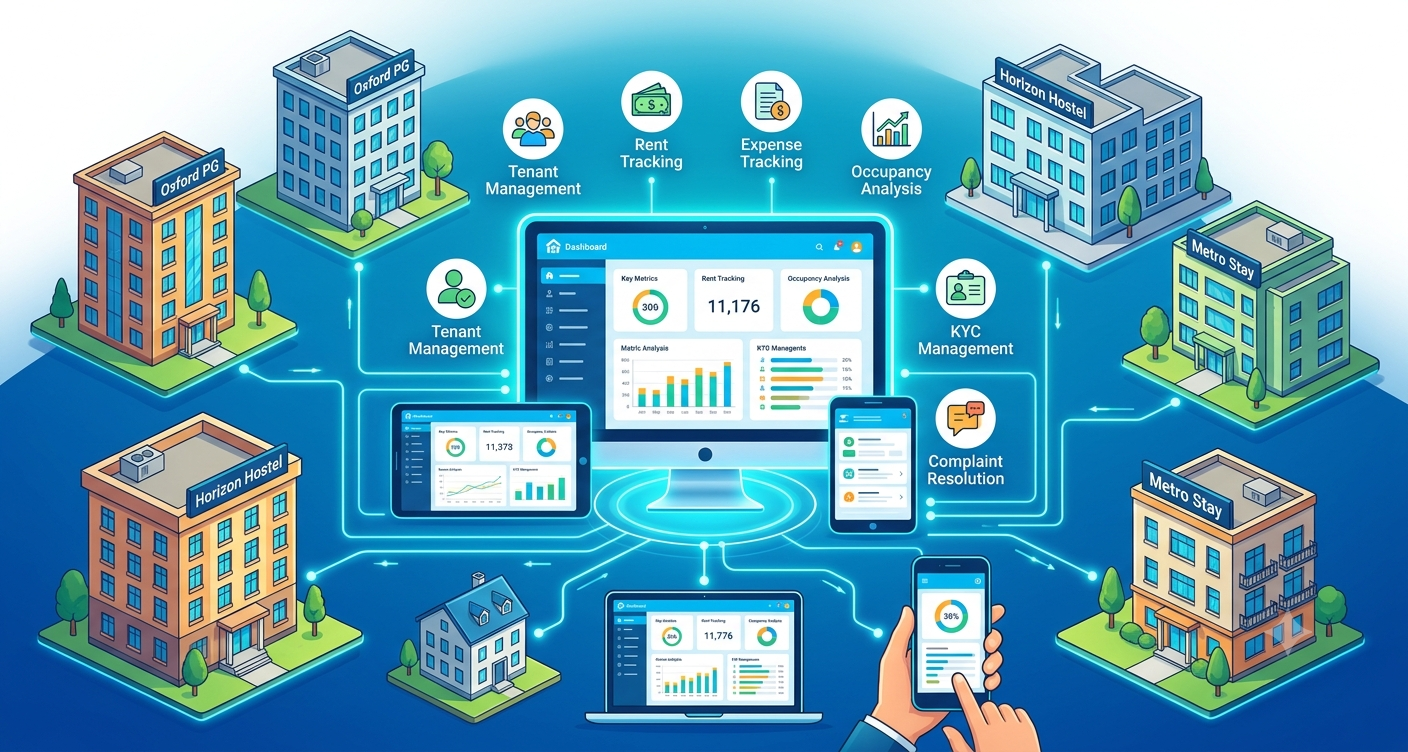
Tracking 15 different areas manually, especially across multiple rooms or properties, becomes difficult to sustain as your PG grows. Using PG management software such as PGCRM can help owners centralise tenant records, rent tracking, occupancy information, and daily operations instead of relying on separate spreadsheets, notebooks, and messages.
Specifically, this kind of PG management system can support:
- Room and bed management, so occupancy status is always current.
- Tenant management and KYC tracking, keeping documents and details in one place.
- Rent tracking and rent reminders, reducing missed or delayed payments.
- Complaint management, so maintenance issues are logged and resolved systematically.
- Expense tracking, giving a clearer view of operating costs.
- Reports and analytics, helping owners see occupancy, rent collection, and expenses at a glance.
This doesn’t replace good judgment or tenant relationships; it simply reduces the chances of something important being missed.
Building a Simple Weekly Routine Around the Checklist
A checklist is only useful if it’s reviewed consistently. Consider a simple weekly routine:
- Monday: Review occupancy and any pending move-ins or move-outs.
- Midweek: Check rent payment status and follow up on overdue accounts.
- End of week: Review open complaints and confirm resolution status.
- Monthly: Reconcile expenses and review the overall financial summary.
This kind of routine prevents small issues from accumulating into bigger operational problems.
Common Mistakes PG Owners Make Without a Checklist
- Losing track of vacant beds, resulting in lost rental income.
- Missing KYC documentation, creating compliance gaps.
- Forgetting to follow up on overdue rent, leading to prolonged non-payment.
- Ignoring recurring complaints, which often leads to tenant turnover.
- Not tracking expenses separately from rent income, making profitability unclear.
Avoiding these mistakes starts with having a clear, repeatable checklist and consistently following it.
Frequently Asked Questions
What should be included in a basic PG management checklist? A basic checklist should include occupancy status, tenant KYC details, rent due dates and payment status, security deposits, complaints and maintenance tracking, and monthly expense records. These core areas cover most day-to-day operational needs for a PG owner.
How often should a PG owner update their management checklist? Rent and occupancy status should be reviewed weekly, while complaints should be checked more frequently, ideally daily if possible. Expenses and financial summaries are typically reviewed monthly for a clear operating picture.
Is a PG management checklist necessary for small PGs? Yes. Even small PGs benefit from a checklist because informal tracking becomes unreliable as tenant turnover increases. A simple, consistent checklist helps avoid disputes and missed payments even with just a handful of tenants.
Can a PG management checklist be maintained manually? Yes, it can be maintained manually using spreadsheets or notebooks, especially for very small properties. However, as occupancy grows, manual tracking becomes time-consuming and error-prone, which is when software-based tracking becomes more practical.
What is the most commonly missed item in PG management? Complaints and maintenance tracking are commonly missed, since it’s easy to address issues verbally without logging them. This often leads to recurring problems going unresolved, which affects tenant satisfaction over time.
Does a PG management checklist help with tenant retention? Yes. Tracking complaints, rent reminders, and lease renewal dates helps owners respond proactively rather than reactively. Tenants are more likely to stay when owners address concerns promptly and keep communication organised.
Conclusion
A structured PG management checklist gives owners visibility into occupancy, rent, compliance, and tenant satisfaction — the core pillars of running a PG efficiently. Whether you track these 15 areas manually or with dedicated tools, consistency is what makes the difference. Explore PGCRM to simplify your PG and hostel management, from occupancy and rent tracking to tenant records and complaint resolution, all in one centralised system.