


A Practical Look at Second-Hand Markets, Local Deals, and Why Simpler Always Wins
Walk into any electronics store today and compare prices with what you paid two or three years ago. The difference is hard to ignore. A basic washing machine, a mid-range smartphone, even a ceiling fan everything costs more now than it did before.
For most Indian households, this is not an abstract economic problem. It is a very real, very practical one. When budgets are tight and prices keep climbing, people start looking for alternatives. And increasingly, that alternative is the second-hand market.
The interesting thing is that inflation does not just push buyers towards used goods. It also changes how those goods are priced, how fast they sell, and where the best deals actually live. Understanding this helps both buyers and sellers make smarter decisions.
If you are already exploring the best classified sites in Hyderabad to find or list used items, you are already ahead of most people. This blog explains why that instinct is the right one and how to make it work better for you.
Understanding How Inflation Changes the Used Goods Market
When the price of new goods goes up, demand for second-hand items naturally rises. More people want used alternatives. That increased demand puts upward pressure on second-hand prices too.
This is the part most people do not think about. Used goods are not immune to inflation. They are affected by it just differently.
Here is what typically happens in an inflationary period in India:
- A new refrigerator that cost ₹18,000 two years ago now costs ₹24,000 or more
- Sellers of used refrigerators start pricing higher because they know buyers have fewer options
- But the best deals still exist they are just harder to find on large, crowded platforms
The second-hand market absorbs some of the pressure from new goods inflation, but it also develops its own pricing dynamics. Sellers become more confident. Buyers become more selective.
This is where knowing how and where to buy and sell locally makes a real difference.
What This Means for Everyday Buyers in Indian Cities
For someone in Hyderabad looking to buy a used laptop, air conditioner, or sofa, inflation creates a tricky situation. New items are expensive. Used items are priced higher than before. And on large national platforms, you often cannot even tell if the seller is nearby or three states away.
The practical problems stack up quickly:
- Listings look cheap but have hidden delivery costs for heavy items
- Prices have quietly climbed on used goods platforms, tracking new goods inflation
- Buyers have less negotiating room because demand has increased
- Sellers on big platforms often wait weeks for the right buyer to appear
None of this is unique to Hyderabad. It is happening across most urban centres in India. But in a city with a dense population and active local trade, the solution is closer than most people realise.
Practical Guidance: Navigating Used Goods Pricing When Everything Is Expensive
Whether you are buying or selling, here are some grounded, practical approaches that work in an inflationary environment.
If you are buying used goods:
- Compare the second-hand price against the current new price, not the old new price. Inflation has changed the baseline.
- Factor in condition carefully. A two-year-old appliance in good condition at 60% of today’s new price is often a fair deal.
- Prioritise local listings. You save on delivery, you can inspect before buying, and you can negotiate face to face.
- Do not wait too long. In a high-demand used goods market, good items sell fast.
If you are selling used goods:
- Price based on what similar items are currently selling for locally, not what you paid originally.
- Be transparent about conditions. Honest listings attract serious buyers faster.
- List on platforms where local intent is clear where buyers are specifically looking in your city, not browsing nationally.
- Respond quickly. Interested buyers in a competitive market move on fast.
Items where this logic applies most clearly:
- Kitchen appliances:mixers, microwaves, induction cooktops
- Electronics: laptops, tablets, earphones, routers
- Furniture: study tables, beds, wardrobes
- Fitness equipment: cycles, treadmills, dumbbells
- Home comfort items: fans, coolers, small ACs
These are everyday items where inflation has made new purchases noticeably more expensive, and where the second-hand market has responded with real activity.
How Local Buying and Selling Cuts Through the Noise
Large marketplaces serve a national audience. That sounds like an advantage, but for most everyday transactions, it creates friction.
When you buy and sell locally through simple classifieds, the process becomes far more direct:
- You talk to the actual person: not a business account or reseller
- Inspection is possible: you can see the item before handing over money
- Negotiation is natural: a face-to-face conversation is easier than going back and forth over chat
- Logistics are simpler: pickup from a nearby locality removes the delivery cost problem entirely
In an inflationary market, this directness has real value. The fewer people involved in a transaction, the less markup gets added. A seller listing on a simple classifieds platform does not have a commission to recover or a storefront to maintain. The price reflects what they actually want for the item.
For buyers, this is often where the best deals survive even when overall prices are rising.
The Cost and Time Benefits of Staying Local
People underestimate how much time and money gets lost on platforms that are not designed for local transactions.
Think about what typically happens on a large national platform:
- You find a good listing, but the seller is in a different city
- Shipping a heavy item adds ₹500 to ₹2,000 to the cost
- Delivery takes days, sometimes longer
- If something is wrong with the item, returns are complicated
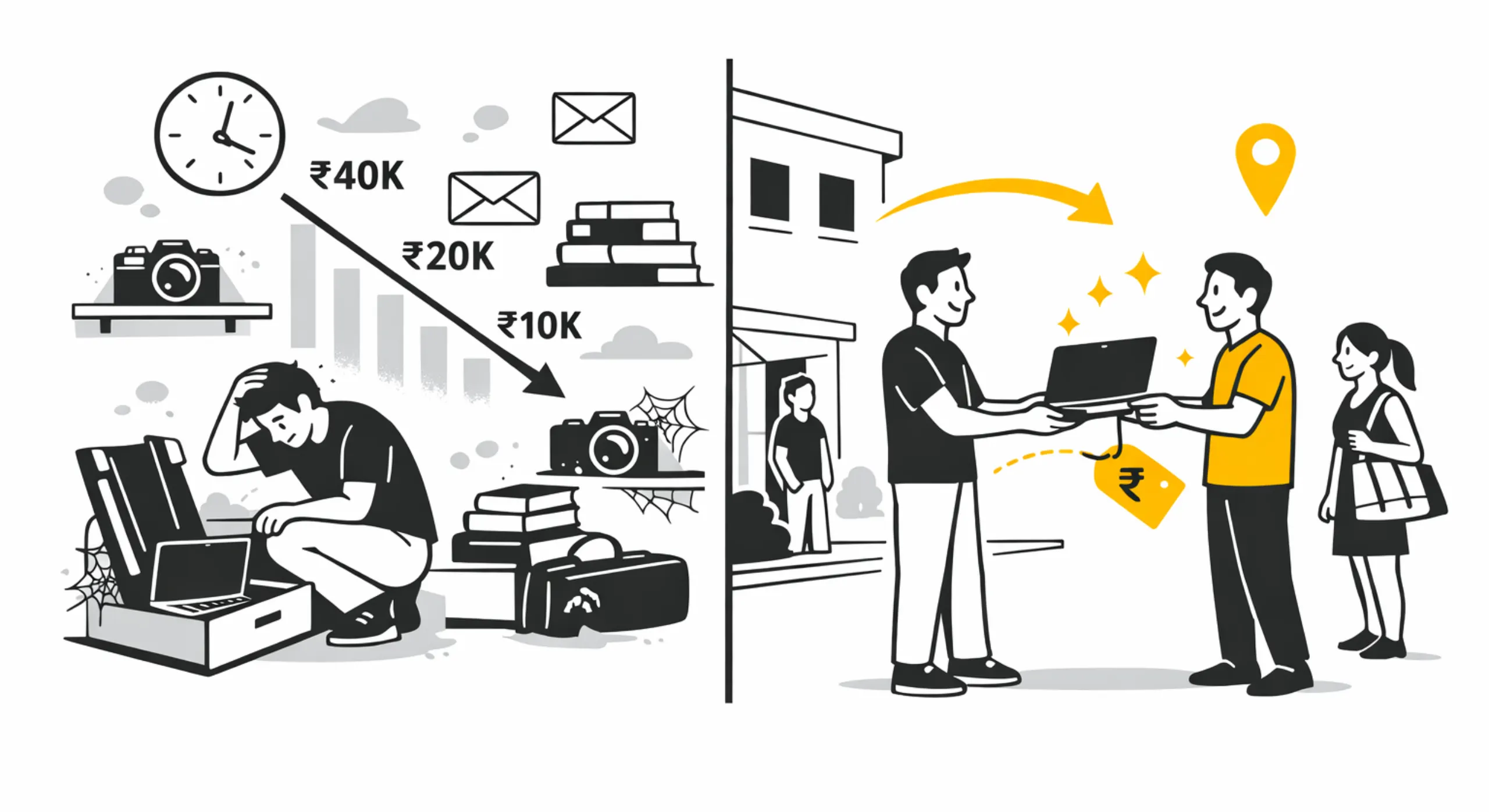
Now compare that to buying the same item from someone two kilometres away through a local classified:
- You inspect it the same evening
- You pay what was agreed, nothing more
- You take it home that day
- If there is an issue, you can contact the seller directly
This is low-cost buying in the most literal sense. No added logistics fees. No packaging costs for the seller. No waiting. The transaction is complete quickly, and both sides benefit.
In a market where inflation is pushing prices upward, removing these hidden costs matters more than ever.
Who This Approach Works Best For
Students: renting accommodation or setting up a room on a budget. Buying a used study table, fan, or laptop locally is far more practical than ordering new items online.
Families: manage household expenses carefully. When a washing machine breaks down and replacement costs have climbed, a good second-hand option from a nearby seller is genuinely useful.
Working professionals: who move between cities for jobs. Selling furniture and appliances locally before a move and buying locally after arriving makes financial sense and saves enormous logistical effort.
First-time sellers: who have unused items at home but have never sold anything online. A straightforward local classified removes the intimidation of setting up a seller account, managing listings, and handling courier coordination.
Anyone who prefers direct, honest transactions: without platform complexity. Some people simply want to post a listing, get a call from a nearby buyer, agree on a price, and be done.
All of these people benefit from the same thing: a simple, local way to connect with buyers and sellers in their own city.
The Takeaway: Inflation Makes Local Trust More Valuable, Not Less
Inflation does not make the second-hand market worse. In many ways, it makes it more important.
When new goods are expensive and budgets are stretched, the ability to buy and sell locally quickly, directly, without unnecessary cost becomes genuinely useful. Not as a workaround, but as the practical first choice.
Sympl is built around this idea. The Best Classified Sites in Hyderabad are not always the ones with the most features. They are the ones that make local transactions easy for regular people, students, families, professionals who just want a fair deal without the complexity.
Prices may keep rising. But the value of a direct, local transaction with no middlemen, no shipping delays, no inflated platform markups stays steady.
That is what Sympl is here for. Simple, local, and built for the way most people actually prefer to buy and sell.