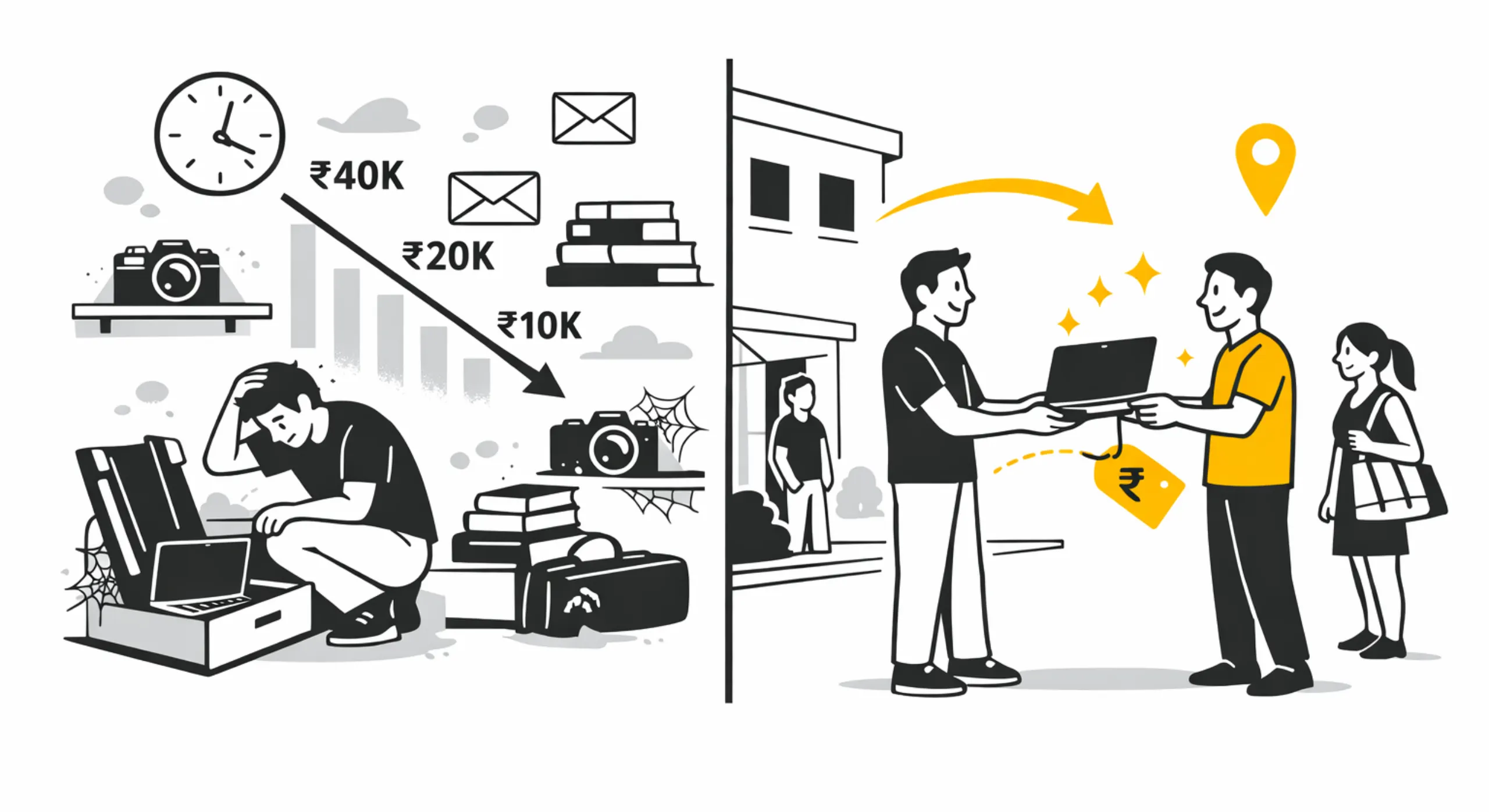



In Bangalore, Priya lists her old laptop on a classifieds platform. Within three hours, five people messaged her. She schedules back-to-back viewings at a nearby Starbucks and sells it by evening.
In Nashik, Rajesh lists a similar laptop. He gets one inquiry after two days. The buyer lives 15 kilometres away. They struggle to find a mutually convenient meeting spot and finally settle on a local temple everyone knows.
Same platform. Same item. Completely different experiences.
Urban and semi-urban users approach local buying and selling differently—not because one is better than the other, but because their cities work differently. Population density, infrastructure, mobility, and community structures shape how people buy and sell.
Platforms like Sympl work for both because they focus on simple classifieds that adapt to local context rather than forcing one model everywhere.
Why One Platform Can’t Work the Same Everywhere
Most large marketplaces design for metros and assume smaller cities will adapt.
This creates mismatches.
Volume expectations differ
Urban platforms expect dozens of listings and responses within hours. In smaller cities, one good response in a day might be normal.
Meeting logistics vary
Metro users default to cafés, malls, or metro stations. Semi-urban users might choose temples, main market areas, or well-known intersections.
Transaction speed differs
In dense urban areas, buyers show up within hours. In spread-out towns, scheduling might take days due to distance and transportation.
Communication preferences vary
Urban buyers might prefer text-based initial contact. Semi-urban buyers often call directly, preferring voice over messaging.
Trust mechanisms differ
Cities rely on platform features like ratings. Smaller towns rely more on personal networks and community reputation.
Neither approach is wrong. They’re just different. Platforms need to work for both instead of optimizing for one and tolerating the other.
How Urban Users Approach Local Classifieds
Metro city users Bangalore, Mumbai, Delhi, Pune, Hyderabad have specific patterns shaped by their environment.
High listing volume
Thousands of people in a small radius means lots of sellers and buyers. Competition is intense but so is demand.
Speed matters most
The first person to respond often gets the deal. Urban users expect instant replies and same-day meetups.
Convenience locations essential
Meeting spots need to be accessible via metro, near major roads, or at well-known landmarks everyone can reach easily.
Higher turnover
People move frequently for jobs. They’re constantly buying and selling as they relocate, upgrade, or downsize.
Anonymity preferred initially
Many urban users prefer messaging before calling. They value privacy and control over when they engage.
Price consciousness varies
Some urban buyers prioritize speed over bargaining. Others negotiate hard. The mix creates diverse expectations.
When you sell items fast in cities, it’s often because sheer volume means someone nearby wants exactly what you’re offering right now.
How Semi-Urban Users Approach Local Classifieds
Tier-2 and tier-3 city users Nashik, Mysore, Coimbatore, Jaipur, Indore operate differently.
Lower but more committed volume
Fewer listings and buyers, but people who reach out are often serious. Less browsing, more intent.
Patience expected
Transactions might take longer to materialize, but both parties accept this. Rushing feels unnatural.
Familiar locations matter
Meeting spots are often community landmarks, temples, main markets, coaching centers, well-known shops everyone recognizes.
Relationship-building common
Buyers and sellers might chat beyond the transaction. Future dealings happen because of established trust.
Direct communication preferred
Phone calls over messages. Voice feels more personal and trustworthy in communities where everyone knows everyone.
Word-of-mouth powerful
Recommendations from friends or family carry more weight than platform ratings.
When you buy and sell locally in these areas, transactions feel more personal and less transactional.
Real-Life Usage Differences
Selling a bike in Mumbai vs. Raipur
In Mumbai, Karan lists his bike. He gets seven responses in four hours. Three people want to see it today. He meets the first serious buyer at a nearby mall parking lot during lunch break. Sold by evening.
In Raipur, Amit lists his bike. He gets one inquiry the next day. The buyer asks detailed questions over a phone call, visits Amit’s home two days later with his father, takes a long test ride, discusses price over chai, and completes the purchase after a second visit. The transaction takes five days but both parties feel satisfied.
Buying furniture in Bangalore vs. Vadodara
In Bangalore, Neha browses furniture listings during her commute. She messages five sellers, gets three responses within an hour, visits one apartment that evening, and buys a bookshelf. Total time: six hours from search to purchase.
In Vadodara, Suresh looks for a dining table. He finds one listing, calls the seller, learns they’re from his neighbourhood, discovers they know mutual acquaintances, visits their home over the weekend, meets the family, and buys the table. The transaction feels like visiting relatives.
Neither experience is better. They’re just shaped by different urban contexts.
What Both Groups Value
Despite differences, urban and semi-urban users share core needs.
Fair pricing
Everyone wants good deals. No one likes feeling cheated, whether in a metro or a small town.
Honest descriptions
Both groups expect items to match their listings. Misrepresentation annoys everyone equally.
Safe transactions
Whether meeting at a Starbucks or a temple, safety matters to all users.
Respect for time
Urban users might measure it in hours, semi-urban users in days, but no one wants their time wasted.
Local convenience
Proximity matters everywhere. No one wants to travel across their city, regardless of city size.
Platforms like Sympl succeed by focusing on these universal needs rather than assuming one usage pattern fits all.
How Infrastructure Shapes Behaviour
Physical infrastructure creates different buying and selling patterns.
Metro cities
Public transport makes wide geographic coverage practical. Buyers can travel 10 kilometres easily for the right item. This expands potential markets.
Smaller cities
Limited public transport means buyers prefer items within auto-rickshaw distance or walking zones. Markets are more hyperlocal.
Urban parking challenges
Meeting at homes is less common in cities due to visitor parking issues. Public spots become default.
Semi-urban accessibility
Home visits are more common and acceptable. Parking isn’t an issue, and hospitality norms encourage welcoming buyers.
City congestion
Traffic in metros makes distance less important than time. Someone 5 kilometres away during rush hour might be harder to reach than someone 10 kilometres away off-peak.
Town navigation
Smaller cities have simpler layouts. “Near the old bus stand” or “opposite the main temple” pinpoints locations everyone knows.
Effective local buying and selling adapts to these infrastructure realities rather than fighting them.
Communication Style Differences
How people prefer to communicate varies between urban and semi-urban users.
Urban preferences
- Initial contact via messages (WhatsApp or platform chat)
- Quick, transactional conversations
- Minimal small talk, focused on item details
- Phone calls for final coordination only
Semi-urban preferences
- Direct phone calls preferred from the start
- Longer conversations including context and background
- Building rapport before discussing price
- Multiple interactions expected before meeting
Neither is inefficient. They reflect different social norms and relationship expectations.
Platforms that enable both messaging and calling serve diverse users better than those forcing one communication style.
Trust Building Varies by Location
How trust develops differs between metros and smaller cities.
In urban areas
Trust comes from:
- Platform features (ratings, verification)
- Public meeting locations
- Quick, professional interactions
- Clear transaction terms
In semi-urban areas
Trust comes from:
- Mutual connections and references
- Knowing the neighbourhood or community
- Extended conversations and rapport
- Meeting families or visiting homes
Both systems work. They’re just calibrated differently based on community structure.
Simple classifieds that don’t over-engineer trust mechanisms let these natural patterns emerge.
Price Negotiation Patterns
Bargaining behavior differs between urban and semi-urban users.
Urban negotiation
Often happens quickly via messages. “Your asking price is ₹5,000. Will you take ₹4,500?” Quick yes/no. Deal moves forward or doesn’t.
Semi-urban negotiation
Often happens face-to-face during inspection. Discussion includes item history, condition justification, buyer’s need, and mutual respect. Price emerges through conversation.
Urban fixed prices
Some urban sellers list “fixed price” and expect less negotiation. Buyers accept or move on.
Semi-urban flexibility
Negotiation is almost always expected and part of the relationship-building process. Both parties enjoy the interaction.
Understanding these differences helps set realistic expectations for how quickly deals close.
Item Categories Popular in Different Areas
What people buy and sell varies somewhat by location.
Urban hot items
- Electronics (phones, laptops) due to frequent upgrades
- Furniture (constant moving and apartment changes)
- Fitness equipment (space constraints drive turnover)
- Books and courses (competitive exam culture)
Semi-urban popular items
- Bikes and scooters (primary transport mode)
- Home appliances (longer usage cycles, more space)
- Agricultural or business equipment
- Wedding and occasion items (shared community events)
Both markets exist everywhere, but proportions differ. Local classifieds work because they adapt to what’s actually being bought and sold in each area.
Time Expectations and Transaction Speed
When deals close varies significantly.
Urban timeline
List today → Responses within hours → Meeting tomorrow → Sold within 2-3 days.
Semi-urban timeline
List today → Response after 1-2 days → Phone conversation → Meeting scheduled for weekend → Sold within 7-10 days.
Neither is slow. They reflect different rhythms of life.
Urban users operate on compressed timelines driven by fast-paced lifestyles. Semi-urban users allow more time for proper evaluation and relationship-building.
Platforms that work for both don’t pressure users into unnatural speed.
Cost Considerations Across Locations
Budget consciousness exists everywhere but manifests differently.
Urban cost factors
Higher cost of living means people are more willing to pay for convenience. Time saved is money saved.
Semi-urban cost factors
Lower cost of living means people might spend more time finding the best price. Saving ₹500 through patient searching makes sense.
Urban transport costs
Auto/cab fares add up. Buyers factor in transport when deciding if a deal is worth pursuing.
Semi-urban transport costs
Usually lower. Buyers are more willing to check out items even if ultimately not interested.
Low-cost buying appeals to both groups, just with different definitions of “low-cost” based on local economics.
Who Benefits Most From Flexible Platforms
Urban users benefit from
- Fast listing creation for quick turnaround
- Location filters showing immediate vicinity
- Messaging for initial filtering
- Public meetup spot coordination
Semi-urban users benefit from
- Direct calling without platform restrictions
- Broader location ranges (whole city vs. specific areas)
- Patient transaction timelines
- Home visit options
Platforms like Sympl that support both usage patterns serve India’s diversity better than one-size-fits-all solutions.
Language and Communication
Language preferences vary by location.
Metro cities
Mix of English, Hindi, and regional languages. Code-switching is common. Listings often in English.
Smaller cities
Stronger preference for regional languages. Comfort with voice over text partly driven by language.
Voice vs. text
Urban users are comfortable typing in English or Hinglish. Semi-urban users might prefer speaking in their mother tongue.
Platforms that enable phone calls naturally accommodate language diversity without complex translation features.
Community Dynamics
How community affects transactions differs.
Urban anonymity
Less likely to know the buyer/seller personally. Transactions are independent events.
Semi-urban connections
Higher chance of mutual acquaintances. Transactions happen within social networks.
Urban repeat business
Might buy from the same seller again, but it’s rare. Too many options.
Semi-urban repeat business
More common. Good experiences lead to ongoing trusted relationships.
Urban reviews matter
Platform ratings carry weight since personal reputation isn’t at stake.
Semi-urban word-of-mouth
Community reputation matters more than platform features.
Both systems keep transactions honest, just through different mechanisms.
Final Thoughts
Urban and semi-urban users don’t need different platforms. They need platforms that respect different ways of using the same tools.
Fast-paced metro transactions and relationship-focused small-town dealings both work when platforms stay simple and flexible.
When you buy and sell locally through platforms like Sympl, whether you’re in a metro rushing between meetings or in a smaller city taking time to build trust, the core value remains the same: connecting nearby people who want to exchange items fairly.
That’s not about urban versus semi-urban. It’s about recognizing that India’s diversity demands platforms that work for everyone, not just one type of city or one type of user.
The best approach isn’t optimizing for the fastest transaction or the most personal one. It’s enabling both by keeping things simple and letting local context shape how people use the tools.