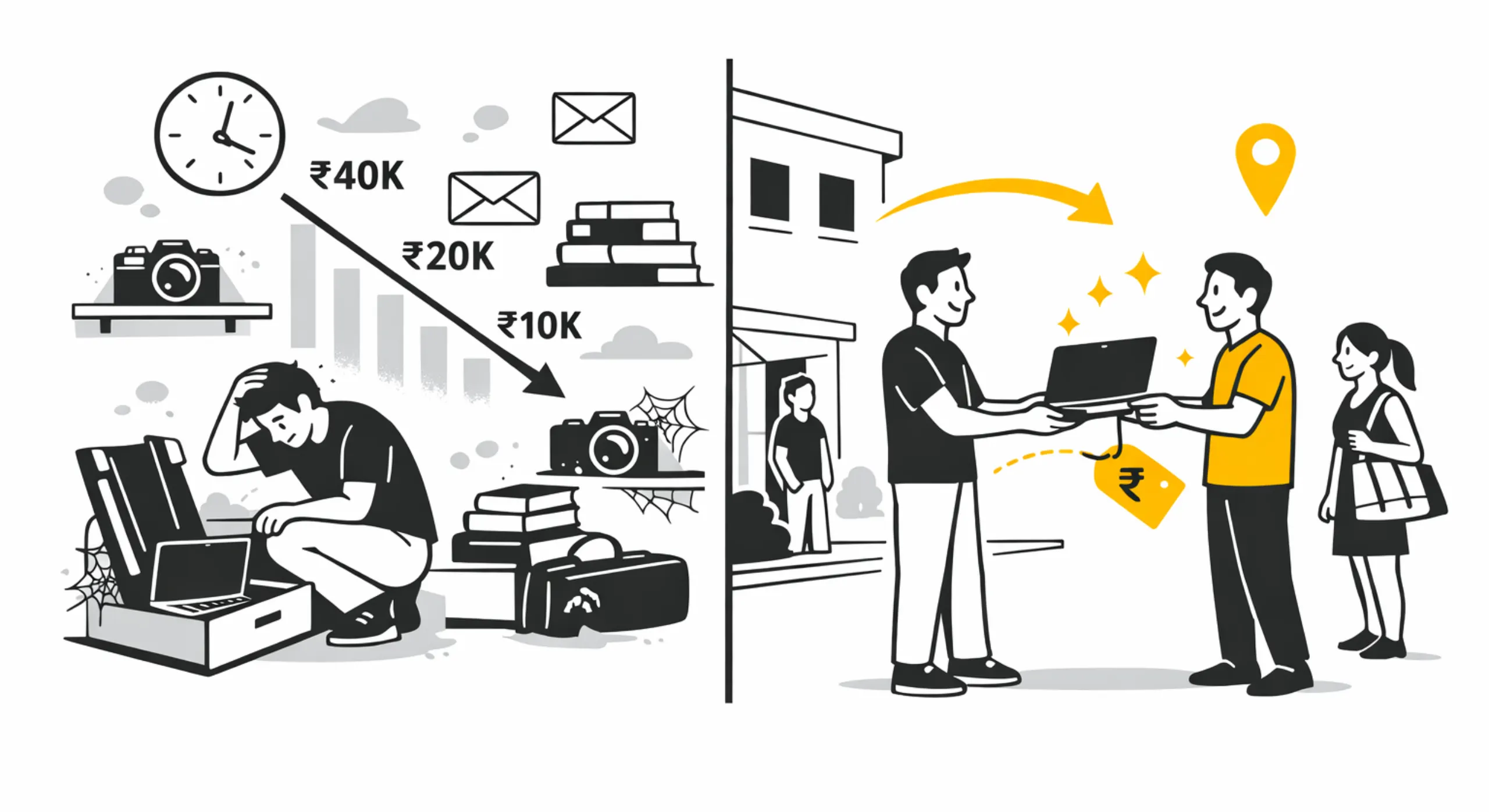



Introduction: When a Good Deal Starts to Feel Wrong
You are browsing listings for a second-hand laptop. The price is reasonable. The photos look real. The seller responds quickly and seems friendly. Everything feels fine until they ask you to pay in advance before you can come and see the item.
Something does not sit right. But you are not sure if you are overthinking it.
This is the moment that matters most in any online classified transaction. That small sense of doubt is worth paying attention to. Fraud in online classifieds does not usually look dramatic or obvious. It looks like a slightly too-good deal, a slightly unusual request, or a seller who seems just a little too eager to skip the normal steps. Knowing what to look for changes everything. It turns that vague feeling of doubt into a clear, informed decision. If you are exploring the best classified sites in Hyderabad or anywhere else to buy and sell locally, understanding common fraud patterns is one of the most practical things you can do before your next transaction.
Understanding the Core Problem: Why Online Classifieds Attract Fraud Attempts
Online classifieds work because they are open and accessible. Anyone can post a listing, and anyone can respond to one. That openness is exactly what makes them useful for local buyers and sellers.
But it also means that some people try to take advantage of that trust.
Fraud in local classifieds tends to be opportunistic rather than sophisticated. It targets people who are in a hurry, unfamiliar with the process, or simply too trusting. It does not require technical skills. It just requires someone willing to exploit the natural goodwill between buyers and sellers. In India, where a large number of people are turning to online platforms for the first time to sell items fast or find affordable second-hand goods, awareness of these patterns is still developing. Many people only learn about common fraud tactics after they have experienced one. That is a difficult way to learn.The patterns themselves are not complicated. Once you know what they look like, they are surprisingly easy to spot.
Practical Guidance: Common Fraud Patterns and How to Spot Them
These are the patterns that appear most often across online classifieds in India. Recognising them is the first step to avoiding them entirely.
Advance Payment Requests Before Any Meeting
This is the most common fraud pattern for buyers. A seller lists an item, often at an attractive price, and then asks for a partial or full payment before you can come to inspect it. They may say the item has multiple interested parties and payment holds it for you. Genuine sellers of second-hand goods do not need advance payment before an in-person meeting. If someone is asking for money before you have seen the item, walk away.
Listings Priced Far Below Market Value
A phone that typically sells for a certain amount is listed at nearly half the price. A barely used washing machine is going for far less than similar listings. These prices are designed to create urgency and cloud judgement. Before responding to any listing, check what similar items are going for on other local platforms. If the price looks significantly lower than everything else, treat it as a signal worth investigating before proceeding.
Sellers Who Refuse to Meet in Person
A seller who is willing to communicate at length over messages but consistently avoids agreeing to a physical meeting is a pattern worth noting. Common excuses include being out of the city, having the item in storage, or claiming they will courier it to you. For local classifieds, the whole point is that buyers and sellers are nearby. A seller who will not meet in person is not using the platform in the way it is intended.
Unusual Payment Method Requests
Any request to pay through a method that is difficult to trace or reverse is a warning sign. This includes asking for payment via informal transfers to personal accounts, wallet transfers to numbers not linked to a verified identity, or any method that sits outside what you would normally use. Standard payment methods for local transactions are simple and familiar. If a buyer or seller is pushing for something unusual, ask yourself why.
Fake Payment Screenshots
This one affects sellers more than buyers. A buyer agrees to your price, says they have made the transfer, and sends a screenshot as proof. They then ask you to hand over the item immediately while you check your account. The screenshot may look completely genuine. Always verify that the money has actually arrived in your account before handing over any item. A screenshot is not a payment.
Pressure and Artificial Urgency
Phrases like “I have another buyer ready,” “this offer is only valid for today,” or “if you do not confirm in the next hour I will move on” are designed to make you act before you have thought things through. Genuine buyers and sellers in local transactions do not need to manufacture urgency. If someone is pushing you to decide faster than feels comfortable, slow down rather than speed up.
How Local Buying and Selling Reduces Your Exposure to Fraud
One of the quieter advantages of using simple classifieds for local transactions is that they naturally limit some of the risk. When you buy and sell locally, you are dealing with people in the same city, often the same area. That proximity creates a layer of accountability that large national platforms cannot always offer. Both sides know that the other person is nearby and reachable. Platforms like Sympl are built around direct interaction between local buyers and sellers. Fewer steps in the process mean fewer opportunities for something to go wrong between listing and exchange. You communicate, you agree, you meet in a public place, and the transaction is done. That straightforward structure is itself a form of protection. Fraud tends to thrive in complexity, in long chains of communication, distant transactions, and processes that involve too many steps and too much waiting.
Cost and Time Benefits: Why Awareness Protects More Than Just Money
Spotting a fraud attempt early saves you more than the amount you might have lost.
It saves time you would never recover: Pursuing a fake listing, waiting for a seller who never shows up, or trying to get a refund on a payment that cannot be reversed all consume hours of effort that should never have been necessary.
It keeps your trust in local selling intact: One bad experience can put people off the process entirely. That is a real cost, because local buying and selling remains one of the most practical ways to find good deals and move unused items quickly.
It protects your data as well as your money: Some fraud attempts are not about money at all. They are about getting you to share personal information, your address, your phone number, or your payment details, under the cover of a legitimate transaction. Low-cost buying and selling depends on both sides behaving honestly. Recognising fraud patterns means you are never the one who makes it easier for the dishonest minority to operate.
Who Needs to Know This Most
Students: buying second-hand electronics, cycles, or furniture on a limited budget are often targeted because they are price-sensitive and may be less experienced with online transactions. Knowing these patterns before they start browsing protects them from the moment they post or respond to their first listing.
Families: looking for affordable appliances, home goods, or children’s items may be approached by sellers offering prices that seem like a genuine stroke of luck. A basic understanding of what genuine listings look like helps them make better decisions without unnecessary anxiety.
Working professionals: who sell items quickly to clear space or upgrade often deal with a volume of buyer enquiries. Recognising low-intent or suspicious contacts early keeps their process efficient and stress-free.
First-time buyers and sellers: are the group most likely to encounter a fraud attempt before they have built up any instinct for spotting one. These patterns, once learned, stay with you across every platform you use.
A Quick Reference: Signs Worth Taking Seriously
Keep this in mind the next time something feels off:
- Seller or buyer asks for advance payment before meeting
- Price is significantly lower than all comparable listings
- Person refuses to meet in person despite being supposedly local
- Request to use an unusual or informal payment method
- Payment screenshot sent before funds appear in your account
- Conversation feels rushed or artificially urgent
If more than one of these appears in the same transaction, trust that instinct and step back.
Conclusion: Awareness Is the Most Practical Safety Tool You Have
Fraud in online classifieds is not inevitable. It is also not invisible once you know what to look for.
The patterns are predictable. The warning signs appear early. And the habits that protect you are easy to build and quick to apply. Checking prices, insisting on in-person meetings, verifying payments before handing over items, and slowing down when someone creates urgency. These steps cost nothing and protect a great deal. Local buying and selling works best when it stays simple, direct, and grounded in common sense. The Best Classified Sites in Hyderabad and across India serve thousands of genuine transactions every day. Adding basic fraud awareness to your approach means you get the full benefit of that convenience without unnecessary risk. Sympl is built to support straightforward, local transactions between real people. Knowing how to protect yourself within that process is what makes every exchange genuinely worth it.