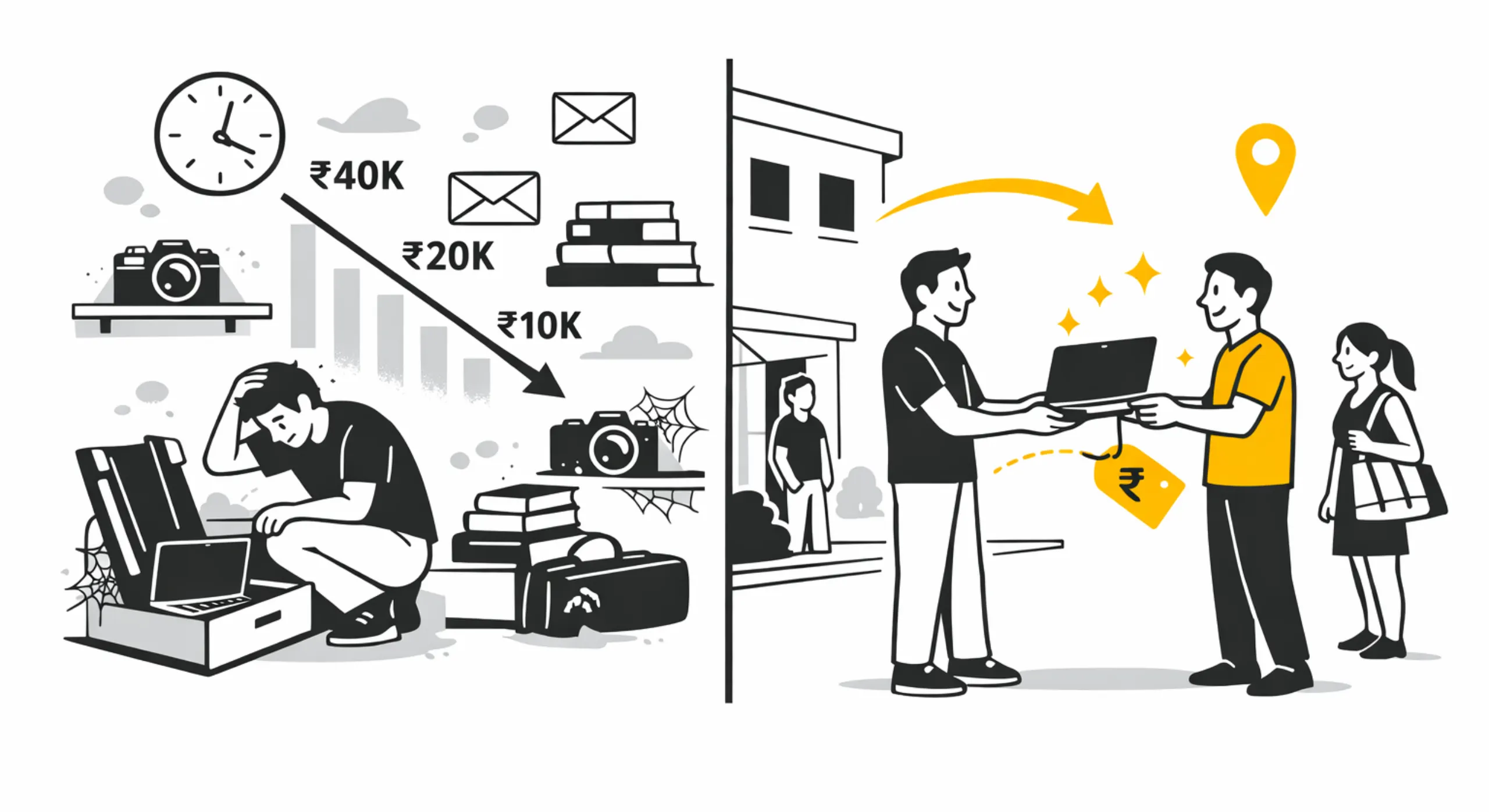



You listed your old phone for sale. A buyer messages within the hour, agrees to your price without any back and forth, and then explains they are out of town and will arrange a courier to collect the item. All they need from you is a small packaging fee or a refundable security deposit sent in advance. This is one of the most common scams targeting sellers on local classifieds platforms in India right now. It is convincing because it uses familiar language, real-sounding logistics, and a sense of urgency that makes the request feel routine. If you have listed items on any of the best classified sites in Hyderabad or any local platform to buy and sell locally, knowing how this scam works and what to do instead can save you from a loss that is very hard to recover. This blog explains the courier pickup scam in plain terms, how to spot it early, and why keeping transactions local protects you far more effectively than any other precaution.
Why Courier-Based Scams Target Local Classifieds Sellers
Local classifieds attract genuine buyers and sellers looking for practical deals on everyday items. That same openness, where anyone can contact a seller directly, is what makes the platform attractive to bad actors as well.
The courier pickup scam works specifically because it removes the in-person meetup from the transaction. Once a seller agrees to ship an item instead of meeting locally, several things change. The seller cannot verify the buyer face to face. Payment cannot be confirmed in real time. And once the item is handed to a courier, recovering it is nearly impossible if the deal turns out to be fraudulent. The items targeted most often include mobile phones, laptops, cameras, small appliances, and other portable electronics. These are easy to ship, high in resale value, and commonly listed by everyday sellers who are not always aware of how the scam plays out.
How the Courier Pickup Scam Actually Works
Understanding the pattern in detail is the best way to recognise it before it causes harm.
The scam typically follows this sequence:
A buyer contacts you shortly after your listing goes live. They express strong interest and agree to your asking price quickly, sometimes immediately. This feels positive but is actually the first sign that something is off. Genuine buyers negotiate or at least ask questions. The buyer then explains they cannot meet in person because they are in another city, stationed in a different state, or travelling for work. They say they will arrange a trusted courier or logistics company to collect the item from your home. Shortly after this, you receive a message, sometimes appearing to come from a courier company, sometimes directly from the buyer, asking you to pay a small fee. The reason given varies. It might be called a packaging deposit, a verification charge, an insurance amount, or a refundable handling fee.
Once you pay this amount, communication stops. The courier never arrives. The buyer stops responding. The money is gone. In some versions of this scam, the fake courier company sends you a payment link or a QR code to scan. Scanning it or clicking the link results in money being deducted from your account rather than added to it.
Practical Steps to Protect Yourself as a Local Seller
These habits are straightforward and effective. They apply whether you are selling a second-hand bicycle, a washing machine, or a barely used camera.
Warning signs to watch for from the start:
- A buyer who agrees to full price without any negotiation or questions about the item
- Someone who immediately mentions they are out of town and cannot meet
- Any request for advance payment from your side before the item is collected
- Messages from unfamiliar courier company names asking for fees or deposits
- Payment links or QR codes sent by the buyer or a third party claiming to be logistics
What to do instead:
- Make in-person meetup a firm condition of the sale from the beginning
- If a buyer insists on courier, require full payment into your bank account before the item leaves your hands
- Never pay any amount as a deposit, fee, or verification charge to receive payment
- Search the courier company name online if contacted by one. Most fake courier names are not real businesses
- If a buyer stops being interested the moment you insist on meeting locally, that tells you everything
For added safety during any sale:
- Keep communication within the platform for as long as possible
- Do not share your home address until the deal is confirmed and the buyer is verified
- For high-value items, prefer meeting at a public location rather than at home
How Local Buying and Selling Removes the Courier Problem Entirely
The simplest way to avoid a courier pickup scam is to not use courier at all.
When you buy and sell locally, the entire transaction happens in person. The buyer comes to a location you choose, inspects the item, and pays on the spot. There are no packaging fees, no logistics companies, and no need to trust someone you have never met with a payment sent in advance. Platforms like Sympl are built around exactly this kind of direct, nearby transaction. When local buyers and sellers can connect within the same city or neighbourhood, in-person meetups are the natural default, not an extra step you have to push for. This removes the conditions that make courier scams possible. No remote payment. No item shipped before payment was confirmed. No unknown third parties involved in the handover. Direct interaction between buyer and seller, with fewer steps in between, is both faster and significantly safer for everyone involved.
Recognising Fake Courier Companies and Payment Requests
Scammers have become more sophisticated about making their courier requests look genuine. But there are still reliable ways to identify them.
Things that indicate a fake courier setup:
- The company name is slightly misspelled or very generic, such as “India Parcel Express” or “SafeShip Logistics”
- The contact number is a personal mobile, not a business landline or customer service line
- There is no verifiable website, or the website looks recently created with limited content
- The fee is asked via UPI to a personal ID, not a business payment gateway
- The communication is entirely over WhatsApp or SMS rather than email with a company domain
Genuine courier companies collect payment from the sender at the time of booking, not from the receiver in advance. And they certainly do not require the seller to pay anything to have an item collected on behalf of a buyer.
If any part of the courier arrangement asks for money from you as the seller, it is a scam.
Cost and Time Benefits of Keeping It Local
Beyond safety, there is a straightforward practical advantage to completing transactions locally rather than arranging shipping. Selling locally means you sell items fast without packaging, labelling, or dropping items at a courier facility. No waiting for pickup confirmations. No tracking numbers to follow up on. No uncertainty about whether the item arrived and in what condition. For buyers, low-cost buying through local classifieds means no added shipping charges built into the price. You pay for the item itself, nothing more. And you get to inspect it before handing over any money. Nearby buyers and sellers reduce transaction time from days to hours. When a deal happens face to face on the same day, there is no window for courier-based complications or scams to enter the picture. Simple classifieds that focus on local connections make this the standard experience rather than something you have to specifically arrange.
Who Is Most Likely to Encounter This Scam
Students: selling electronics between semesters are frequently targeted because they list phones and laptops, both of which are high in demand among scammers, and may be less familiar with how these schemes work.
Families: selling appliances or household items may receive courier requests for items that seem too bulky for easy pickup, but scammers adapt their story to whatever is listed.
Working professionals: doing a quick sale during a move or upgrade may be in a hurry and more likely to accept a convenient arrangement without examining it carefully.
First-time sellers: who have not sold online before are the most vulnerable because they have no previous experience to compare the situation against.
Anyone listing higher-value items: in any category should treat courier requests with extra caution, since the potential gain for a scammer is higher.
Conclusion
Courier pickup scams are designed to sound completely reasonable. They use familiar language, create a sense of helpfulness, and move quickly enough that sellers do not pause to question them. The protection is knowing the pattern before you encounter it. The most reliable way to buy and sell locally without courier risk is to make in-person transactions the standard rather than the exception. Meet nearby. Confirm payment in real time. Hand over the item only when the money is showing in your own account. Platforms that connect local buyers and sellers within the same city make this practical approach easy to follow consistently. There is no need for shipping, no fees to anyone, and no unknown parties involved. If you are looking for a focused and straightforward space to sell your items safely, starting with The Best Classified Sites in Hyderabad is a sensible step. Sympl is built to support direct local transactions between real people, where the deal happens nearby, clearly, and on your own terms.
Keep it local, stay in person, and the courier scam has no room to operate.