


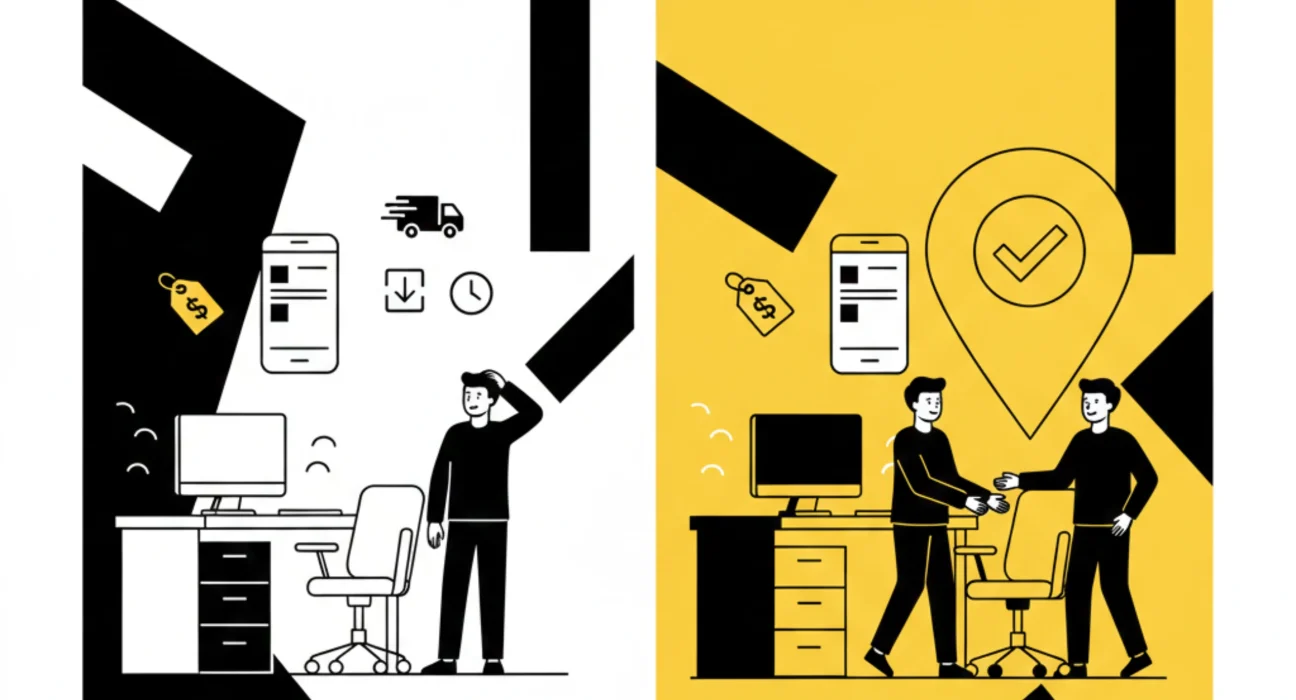
The pandemic changed how you work. Your home office, once a temporary setup, became permanent. But now you’re left with equipment you no longer need an extra desk, an unused printer, a second monitor, an office chair gathering dust. These items are too good to throw away but take up valuable space. You know someone working from home would happily buy them, but finding that person feels unnecessarily complicated. Large marketplaces show your listing to people across the country who can’t realistically buy a desk or chair from you. Shipping furniture is expensive and impractical. Scrap dealers offer insultingly low prices for functional equipment. Meanwhile, professionals in your neighborhood are setting up home offices right now. They need exactly what you’re selling and would gladly pick it up today.
This disconnect is frustrating but solvable. When you buy and sell locally through simple classifieds like Sympl, you connect directly with local buyers and sellers who can inspect items in person and arrange immediate pickup. No shipping complications, no lowball scrap offers just straightforward transactions between people in the same area.
Why Office Equipment Sits Unsold
The main challenge is that office furniture and equipment are bulky, location-specific items.
Shipping costs make online sales impractical
A desk might sell for ₹3,000, but shipping could cost ₹1,500 or more. This eliminates the buyer’s savings and your profit.
Items are heavy and awkward to transport
Office chairs, filing cabinets, and desks aren’t something couriers handle easily. Damage during shipping creates disputes.
Condition assessment requires in-person viewing
Photos don’t show if a chair squeaks, if a desk wobbles, or if drawers stick. Buyers need to test functionality.
Market is limited to people working from home
Not everyone needs office equipment. You need to reach the specific audience setting up or upgrading home offices.
Perceived value is often low
People underestimate what used office equipment is worth, leading to underpricing or holding onto items too long.
Timing matters
Office equipment sells best when people are relocating, starting new jobs, or reorganizing spaces not continuously.
These factors make local selling the most practical option for office furniture and equipment.
Understanding What Sells and What Doesn’t
Not all office items have equal market demand.
High-demand items:
Office chairs (especially ergonomic ones), computer desks, standing desks, monitors, printers, filing cabinets, bookshelves, desk lamps.
Moderate-demand items:
Office tables, desk organizers, whiteboards, keyboard trays, footrests, cable management accessories.
Lower-demand items:
Very specific branded items, outdated technology (old printers, CRT monitors), heavily worn furniture, items missing parts.
Location-dependent demand:
In cities with many remote workers, home office items sell quickly. In areas with fewer home-based professionals, demand is lower.
Understanding demand helps you price realistically and set appropriate expectations for how quickly items will sell.
Preparing Office Equipment for Sale
Proper presentation makes a significant difference in selling speed and price.
Clean everything thoroughly
Dust off surfaces, wipe down chairs, clean desk drawers. Office equipment often accumulates dust when unused.
Test all functionality
Verify that chair adjustments work, desk drawers slide smoothly, printer prints, monitor displays properly.
Tighten loose screws and hinges
A wobbly desk or squeaky chair reduces value. Simple tightening improves perceived quality.
Fix minor issues if easy
Replace missing knobs, oil hinges, touch up small scratches. Small efforts improve saleability significantly.
Gather original accessories
Cables, manuals, mounting hardware having complete sets adds value.
Disassemble if transport-friendly
Some buyers prefer items that fit in cars. If furniture can be easily disassembled, mention this.
Remove personal or company branding
Take off company stickers or personal identifiers unless they add value (like branded ergonomic chairs).
Well-prepared items sell faster because buyers see you’ve maintained them properly.
Creating Effective Listings for Office Items
Your listing determines the quality of buyer responses.
Write clear, descriptive titles
“Ergonomic Office Chair Adjustable Height, Lumbar Support, Black Mesh, Excellent Condition” tells buyers everything upfront.
Include specific details
Brand, model, dimensions, weight capacity, adjustment features, material, color.
Describe condition honestly
“Well-maintained, minor scuff on armrest, all adjustments working smoothly, recently cleaned.”
Mention key features
For chairs: lumbar support, armrest adjustability, tilt mechanism.
For desks: dimensions, drawer count, cable management, weight capacity.
For electronics: connectivity, compatible systems, included accessories.
State reason for selling
“Returned to office full-time” or “upgraded to standing desk” sounds genuine.
Specify dimensions accurately
Buyers need to know if items fit their space. Length, width, height all three dimensions.
Be clear about pickup logistics
“Available for pickup from the third floor, elevator access available” or “Can help load into vehicles.”
Set realistic prices
Research what similar items sell for locally. Office furniture typically sells for 30-60% of original price depending on condition and brand.
Detailed listings reduce unnecessary questions and attract buyers who genuinely need what you’re selling.
Taking Photos That Build Buyer Confidence
Good photos dramatically improve response rates for furniture.
Photograph from multiple angles
Front, sides, back for furniture. Show items from angles buyers would see them in use.
Include close-ups of features
Adjustment mechanisms on chairs, drawer interiors on desks, connection ports on electronics.
Show items in use or set up
A desk with a laptop on it or a chair at a desk helps buyers visualize using it.
Capture any wear or damage honestly
Scratches, stains, or worn areas should be visible. Honesty prevents wasted viewings.
Photograph brand labels or model numbers
This verifies what you’re selling and helps buyers research specifications.
Include measurements with a tape measure visible
Photos showing dimensions with a measuring tape build trust in your stated measurements.
Use good lighting and clean backgrounds
Natural light in an uncluttered space. Avoid dark rooms that hide details.
Take 8-12 photos per item
More photos mean fewer questions and more confident buyers.
Clear, comprehensive photos answer most buyer questions before they even ask.
Pricing Office Equipment Realistically
Accurate pricing is crucial for selling without frustration.
Research current market rates
Check what similar items in similar condition are actually selling for in your city.
Consider original purchase price and age
A two-year-old chair that cost ₹15,000 new might sell for ₹6,000-8,000. A five-year-old one drops to ₹3,000-4,000.
Brand matters significantly
Herman Miller, Steelcase, Haworth chairs hold value better than generic brands.
Factor in condition honestly
Excellent condition with minimal wear commands higher prices. Visible wear or functional issues justify lower pricing.
Ergonomic features add value
Adjustable lumbar support, seat depth adjustment, good armrests these features justify premium pricing.
Leave small negotiation room
Price slightly higher than your minimum acceptable amount, as most buyers expect some negotiation.
Bundle related items for better value
Desk plus chair, or printer plus paper tray, often sells faster than individual items.
Don’t overprice hoping someone will pay
Overpriced items sit unsold while taking up space. Price to sell within weeks.
When you buy and sell locally, competitive pricing matters because buyers can compare options easily.
Finding the Right Buyers
Office equipment sells fastest when marketed to the right audience.
Target remote workers and freelancers
People setting up or upgrading home offices are your primary market.
Use local professional networks
LinkedIn groups, local business WhatsApp groups, co working community forums.
Post in neighborhood groups
Many residential communities have active buy-sell groups where neighbors transact.
List on local classifieds
Platforms focused on local buying and selling connect you with nearby buyers who can actually pick up items.
Time listings strategically
January (New Year resolutions), March-April (financial year-end), and September (post-summer) see increased home office setups.
Mention suitability for specific uses
“Perfect for home office,” “Ideal for students,” or “Great for freelancers” helps buyers identify relevance.
Respond quickly to inquiries
Working professionals often search during their limited free time. Fast responses keep them engaged.
Platforms like Sympl make this straightforward by focusing on local connections rather than national reach that doesn’t help with bulky items.
Arranging Viewings and Demonstrations
Most office equipment sales require in-person inspection.
Schedule viewings at convenient times
Evenings or weekends work for most working buyers. Be flexible when possible.
Prepare the space
Have items accessible and clean. If selling a desk, clear it so buyers can examine it properly.
Demonstrate functionality
Show chair adjustments, test printer with a sample print, demonstrate monitor connections.
Let buyers test thoroughly
Allow them to sit in chairs, check desk height, examine drawer mechanisms. Hands-on testing builds confidence.
Be honest about any quirks or issues
If something requires specific handling or has minor problems, mention it upfront.
Discuss transport logistics
Talk about how they’ll move it. Do they have a vehicle? Will it fit? Do they need help dismantling?
Have measurements ready
Buyers often want to verify dimensions against their space. Have a measuring tape available.
Be ready for reasonable negotiation
If buyers point out issues or want multiple items, some price flexibility helps close deals.
Local transactions make demonstrations easy because buyers can visit the same day or within a few days.
Handling Logistics and Pickup
Office equipment requires coordination for successful handover.
Clarify pickup responsibility upfront
Buyers typically arrange their own pickup, but confirm this in advance.
Provide clear pickup instructions
Which floor, elevator or stairs, parking availability, best time to avoid building congestion.
Offer assembly/disassembly help if needed
For items that disassemble, offering to help can facilitate sales. Charge a small fee if it’s significant work.
Ensure clear pathways
Make sure items can be moved out easily. Measure doorways if furniture is large.
Have tools available
Allen keys, screwdrivers whatever might be needed for dismantling or adjusting items.
Photograph items before pickup
Quick photos document the condition in which items left your possession.
Coordinate parking for buyers
If they’re bringing a vehicle, ensure there’s parking or loading space available.
Be flexible with timing
If buyers need to come outside standard hours due to work schedules, accommodate if possible.
Smooth logistics make the difference between completed sales and abandoned deals.
Payment Safety for Home Transactions
Ensuring secure payment when selling from home.
Prefer digital payments
UPI, bank transfers create immediate records and confirmation. Both parties can verify instantly.
For cash, count carefully
Verify the amount and check for counterfeit notes, especially for larger transactions.
Payment before removal
Items shouldn’t leave your premises until payment is confirmed and cleared.
Provide simple receipts
A basic receipt with item description, price, date, and both parties’ names protects everyone.
For expensive items, consider meeting at banks
High-value transactions can be completed at bank branches for added security.
Avoid complicated payment arrangements
No post-dated payments, no “I’ll pay after setting it up at home.” Payment happens during pickup.
Keep transaction records
Digital payment confirmations or cash receipt copies for your records.
Local, in-person transactions make payment verification straightforward.
How Local Selling Benefits Office Equipment Sales
When you buy and sell locally through classifieds, office furniture transactions become practical.
Buyers inspect before committing
They test chairs, examine desks, verify conditions eliminating post-sale disputes.
No shipping complexity
Furniture is picked up directly. No packaging, no courier coordination, no delivery damage concerns.
Immediate transactions
Meet, demonstrate, receive payment, hand over items. Everything completes in one interaction.
Connect with people who can actually use items
Local focus means reaching nearby professionals who need home office equipment now.
Build trust through direct interaction
Face-to-face transactions create accountability both parties appreciate.
Platforms like Sympl support this by keeping things straightforward connecting local buyers and sellers without complicated systems.
Cost and Time Benefits of Selling Locally
Selling office equipment locally saves hassle and maximizes returns.
No shipping costs to absorb
Furniture shipping is prohibitively expensive. Local pickup eliminates this entirely.
No platform commissions
Simple classifieds don’t take cuts from your sales. You keep the full amount.
Faster transactions
List this week, sell next week. No waiting for national shipping or payment processing.
Less time with unserious buyers
People willing to pick up locally are more committed than those just browsing nationwide listings.
Avoid scrap dealer lowballing
Direct selling to users gets you fair value instead of scrap prices.
Clear space quickly
Fast local sales mean reclaiming your living space without items sitting around for months.
These advantages make local selling clearly superior to alternatives.
Who Benefits Most From Selling Office Equipment Locally
Remote workers downsizing setups
People returning to offices or upgrading equipment need to clear space.
Professionals relocating
Moving cities makes taking bulky furniture impractical. Selling locally before moving makes sense.
Freelancers upgrading
As home offices evolve, earlier equipment gets replaced. Selling locally funds upgrades.
Families reclaiming space
When temporary home offices become unnecessary, families want rooms back.
Anyone with unused equipment
Extra monitors, unused printers, redundant desks selling locally turns clutter into cash.
Why Simple Classifieds Work for Office Items
Complex marketplaces add unnecessary friction.
Direct local connections
Furniture buyers need to see and pick up items. Local focus makes this practical.
No dealer or bulk seller competition
Your listing isn’t buried under commercial furniture sellers.
Straightforward communication
Direct messaging with buyers speeds scheduling and builds trust.
No unrealistic shipping expectations
Local classifieds set appropriate expectations about pickup and transport.
Transparent pricing
You set prices based on research and condition, not algorithm-driven valuations.
When you buy and sell locally through platforms like Sympl, the process stays focused on practical connections between nearby people. Selling office equipment from home doesn’t require complicated processes or accepting lowball scrap offers. Clean and prepare your items. Photograph them comprehensively. Price them fairly based on local market research. Create detailed listings that answer buyer questions upfront. Connect with local buyers through simple classifieds, arrange viewings at convenient times, demonstrate functionality honestly, and complete straightforward transactions. When you sell items fast through local platforms, you avoid shipping impossibilities, platform fees, and the frustration of dealing with buyers who can’t actually complete purchases.
Office equipment naturally works best through local transactions. Buyers need to test chairs, measure desks, and verify conditions before buying. Sellers need to avoid the cost and complexity of shipping bulky items. Local selling makes this natural match happen efficiently. You get fair prices, buyers get needed equipment, and transactions complete quickly without unnecessary complications. Clear your space, recover reasonable value, and help someone else set up their home office with equipment you no longer need. It’s practical, straightforward, and benefits everyone involved.