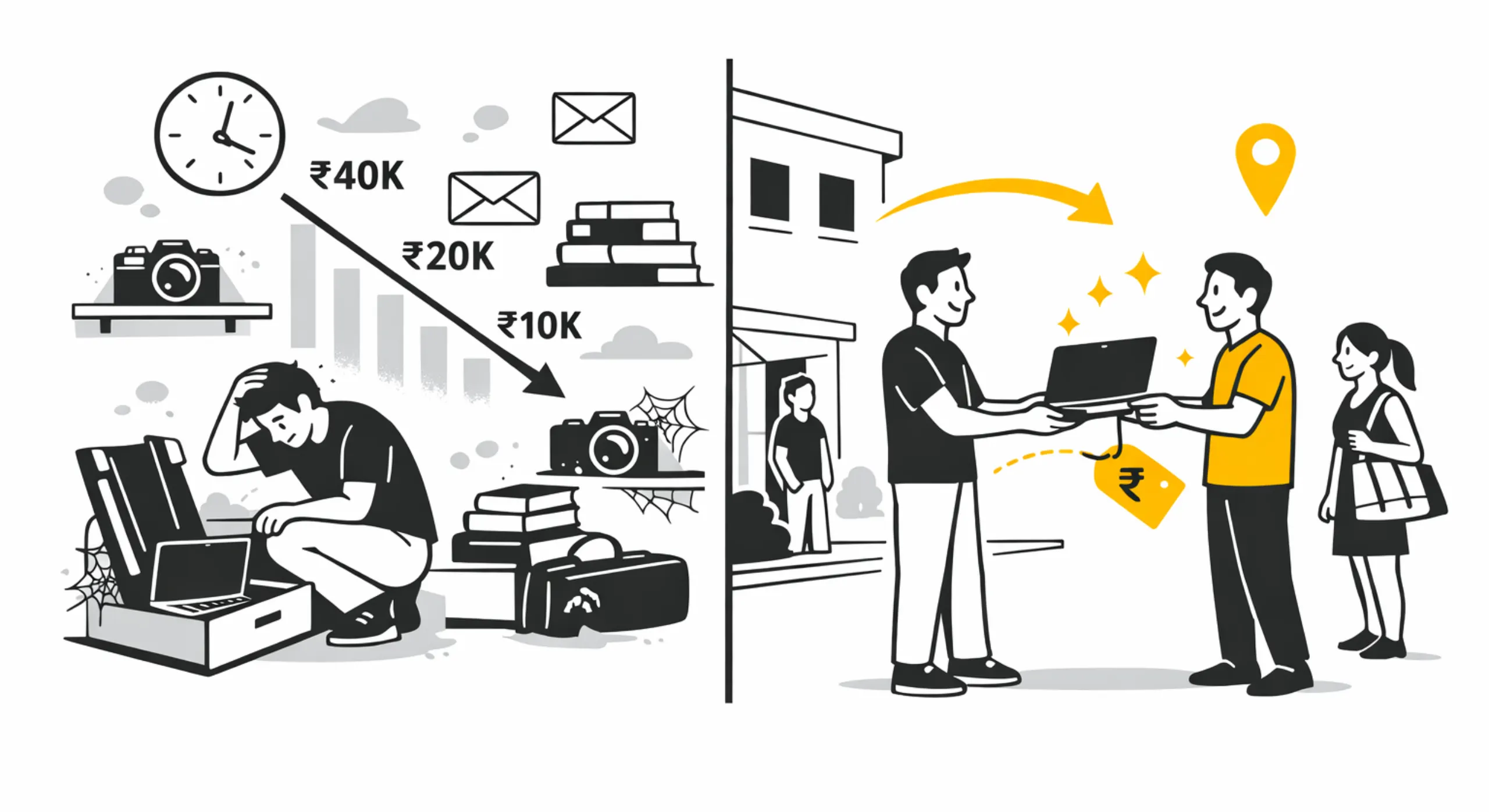



You’ve listed your laptop at ₹25,000 on a national marketplace. Within hours, you get messages offering ₹15,000, ₹12,000, even ₹10,000 all without anyone seeing the laptop. The haggling is aggressive, impersonal, and based purely on trying to get the lowest possible price. Meanwhile, your friend listed a similar laptop locally.
A buyer came to see it, tested it, asked about battery life and condition, and negotiated ₹23,000 based on what they observed. The conversation was respectful, face-to-face, and resulted in a fair deal both felt good about.This difference isn’t coincidental.
The way people negotiate changes dramatically between national platforms and local ones. National platforms encourage aggressive, price-focused haggling with strangers you’ll never meet. Local platforms and Sympl Classifieds foster face-to-face negotiation based on actual inspection and mutual respect. Understanding these dynamics helps you navigate both types of platforms more effectively.
How Negotiation Works on National Platforms
National marketplaces create specific negotiation patterns.
Everything happens through messages: You’re negotiating via text with someone you can’t see, who hasn’t seen your item in person.
Buyers start extremely low: It’s common to get offers 50-60% below your asking price. Buyers do this to multiple sellers simultaneously, hoping someone accepts.
No accountability: The buyer is from another city, messaging dozens of sellers. If you reject their offer, they simply move to the next listing.
Shipping adds complexity: Negotiations include who pays shipping, packaging requirements, delivery timelines all adding friction.
Impersonal tone: Messages are often curt, transactional, sometimes rude. There’s no social pressure to be courteous.
Endless back-and-forth: Negotiations stretch over days with messages like “15k final” followed by “16k max” followed by “okay 17k but you cover shipping.”
Many negotiations go nowhere: After extensive haggling, buyers often disappear without explanation.This creates a frustrating experience where you spend energy on negotiations that rarely close successfully.
Why National Platform Negotiations Feel Aggressive
The structure of national platforms encourages certain behaviors.
Distance removes social accountability: When you’re negotiating with someone you’ll never meet, there’s no social pressure to be reasonable or respectful.
No inspection before negotiation: Buyers are negotiating blindly, so they lowball to protect themselves from overpaying for items that might not match descriptions.
Volume strategy: Buyers contact many sellers with the same low offer, assuming someone will accept. It’s a numbers game.
Comparison shopping is easy: With hundreds of similar listings, buyers use aggressive negotiation to differentiate purely on price.
Platform culture: Over time, aggressive haggling becomes normalized. Everyone does it, so it feels acceptable.
No relationship expectation: It’s a one-time transaction with a stranger. Neither party expects to interact again, removing incentive for courtesy.
These factors combine to create negotiation experiences that often feel hostile and transactional.
How Local Platform Negotiations Are Different
When you buy and sell locally, negotiation dynamics change fundamentally.
Face-to-face context: Most negotiation happens in person after the buyer has inspected the item. They’ve seen it, tested it, and know its actual condition.
Social accountability: You’re meeting someone from your city or neighborhood. Social norms of courtesy apply more naturally.
Inspection-based offers: Instead of blind lowballing, buyers negotiate based on the observed condition: “I noticed the screen has some scratches. Would you take ₹22,000?”
Mutual respect: Both parties understand they’re real people with legitimate interests, not faceless usernames.
Single transaction focus: The buyer came to see your specific item, not messaging dozens of sellers. They’re more invested in reaching agreement.
Faster resolution: Negotiation happens in one conversation, often concluding in minutes rather than days of messaging.
Reasonable expectations: Buyers know they’re negotiating for a fair local deal, not trying to get the absolute lowest price in India.
This creates negotiation experiences that feel more professional and respectful.
Real Example: Same Item, Different Negotiation Experiences
A working professional in Bangalore sold two identical office chairs using different approaches.
National Platform Negotiation:
- Listed at ₹4,000
- First message: “2000 final”
- Second message: “2500 including delivery to Mumbai”
- Third message: “bro 3000 but you ship”
- Over 5 days: 15+ messages with offers ranging from ₹2,000 to ₹3,200
- All wanted shipping included
- Most stopped responding when he declined
- Final outcome: No sale after two weeks of haggling
Local Platform (Sympl) Negotiation:
- Listed at ₹4,000
- Buyer messaged: “I’m interested, can I come see it this weekend?”
- Met Saturday morning, buyer tested the chair
- Buyer: “It’s good but the armrest has a small tear I noticed. Would you consider ₹3,700?”
- Seller: “I can do ₹3,800 it’s otherwise in excellent condition”
- Buyer: “That works for me”
- Total negotiation time: 2 minutes in person
- Final outcome: Sale completed same day at ₹3,800
The difference is striking, respectful, quick, based on reality rather than blind haggling.
Why Inspection Changes Negotiation Dynamics
Seeing items in person transforms how negotiation works.
Evidence-based discussion: Buyers negotiate based on what they observe, not speculation. “The battery drains faster than expected” is specific, not a generic lowball.
Reasonable requests: When buyers have physically verified an item’s condition, their offers reflect actual value, not hopeful guesses.
Seller confidence: You can defend your price by demonstrating the item’s quality in person rather than through messages.
Immediate resolution: Both parties see the same thing and can reach agreement quickly based on shared reality.
Trust building: Letting someone inspect builds trust, making them more willing to pay fairly.
Local platforms facilitate this by making in-person meetings the norm, not the exception.
How Proximity Affects Negotiation Behavior
Geography influences how people negotiate in subtle but important ways.
Local reputation matters: In your own city, there’s a small chance you might encounter this person again, or know mutual contacts. This encourages fair dealing.
Effort investment: When a buyer has traveled to meet you, they’re invested in reaching agreement, not just seeing how low you’ll go.
Community norms: Local marketplaces develop norms around fair pricing and respectful negotiation that users internalize.
Visible alternatives: Both parties know other local options exist, creating natural price equilibrium without aggressive tactics.
Face-to-face courtesy: Most people are more courteous in person than behind screens. This softens the negotiation tone.
These proximity effects make local negotiations feel more collaborative than adversarial.
Common Negotiation Tactics and How They Differ
Let’s compare specific tactics across platform types.
The Opening Offer
National platforms: “Will you take 10k?” (for ₹25k listing) aggressive lowball
Local platforms: “I’m interested in seeing it, what’s your best price?” opens dialogue respectfully
Justification for Lower Price
National platforms: “Found it cheaper elsewhere” or “It’s too old” often untrue, just negotiation tactics
Local platforms: “I noticed the hinge is loose. Can you adjust the price?” based on inspection
Counter-offers
National platforms: “15k final price” followed by “okay 16k but that’s really final” insincere ultimatums
Local platforms: “I was thinking ₹22k given the condition is there any flexibility?” genuine discussion
Closing the Deal
National platforms: Days of back-and-forth, then often ghosting
Local platforms: Agreement reached in minutes, handshake, transaction completed
The local approach is faster, more honest, and more likely to actually result in a sale.
Who Benefits from Local Negotiation Style
Different groups appreciate the local negotiation dynamic.
Students who aren’t comfortable with aggressive haggling. Face-to-face discussions feel more natural and less stressful.
Families selling household items who prefer respectful, straightforward transactions over combative messaging.
First-time sellers who find aggressive lowballing demotivating. Local negotiations feel more encouraging.
Working professionals with limited time. Quick, in-person negotiations fit their schedules better than endless message chains.
Anyone selling quality items: When buyers can see and verify conditions, they’re willing to pay fairly rather than lowballing blindly.
The respectful tone and efficiency of local negotiations suit people who value their time and dignity.
Price Outcomes: Local vs National Negotiations
Interestingly, local negotiations often result in better final prices for sellers.
National platforms:
- Heavy lowballing forces defensive pricing
- Sellers often list higher anticipating haggling
- Final prices reached after exhausting negotiation
- Many transactions fail, forcing eventual price drops
Local platforms:
- Realistic initial pricing since buyers will inspect
- Buyers pay fairly for items that match descriptions
- Quick agreement on reasonable prices
- Higher completion rate means less need to drop prices over time
When buyers see items in person, they’re more confident paying fair prices. This benefits sellers despite lower initial haggling.
Time Invested in Negotiation
Time costs matter when comparing negotiation approaches.
National platform typical timeline:
- Day 1: List item, receive 10 lowball offers
- Days 2-4: Back-and-forth messaging with multiple buyers
- Days 5-7: A few negotiations progress slowly
- Week 2: Most negotiations dead, might get one serious offer
- Total negotiation time: Hours spread over weeks
Local platform typical timeline:
- Day 1: List item, receive 3-5 genuine enquiries
- Days 2-3: Arrange viewing times
- Day 4: Buyer visits, 5-minute negotiation, deal closed
- Total negotiation time: 20 minutes total
The efficiency difference is massive, especially for people with jobs, studies, or families to manage.
How to Navigate National Platform Negotiations
If you must use national platforms, here are practical approaches.
Price strategically: List slightly higher than your target, expecting haggling.
Ignore extreme lowballs: Don’t engage with offers below 60% of asking price, they’re rarely serious.
Be firm but polite: “My price is fair for the condition. I’m open to reasonable offers after you see it in person.”
Offer local inspection: “You’re welcome to come see it and we can discuss the price after you’ve checked it.”
Set boundaries: “I won’t be covering shipping, but the item is in excellent condition as described.”
Know when to walk away: If negotiations become disrespectful or endless, move on to other buyers.
These tactics help maintain sanity on platforms where aggressive negotiation is common.
How to Handle Local Platform Negotiations
Local negotiations require different skills.
Price fairly from the star:. No need to inflate buyers will see the item and expect honest pricing.
Welcome inspection: Confidently invite buyers to check everything. It builds trust and justifies your price.
Acknowledge observed issues: If a buyer points out wear you mentioned, acknowledge it: “Yes, that’s why I priced it at ₹X instead of ₹Y.”
Negotiate reasonably: If someone offers ₹3,800 for your ₹4,000 item after inspection, consider meeting at ₹3,900.
Be prepared to hold firm: If your price is truly fair and the buyer is being unreasonable, politely decline: “I think ₹4,000 is fair given the condition.”
Close decisively: Once you agree on a price, complete the transaction immediately. Don’t leave room for second thoughts.
These approaches work because local negotiations are collaborative, not adversarial.
How Sympl Classifieds Support Better Negotiations
Platforms like Sympl are designed around local, face-to-face transactions.
This naturally encourages better negotiation behavior. Buyers know they’ll meet sellers in person, so they’re more respectful in messages. Sellers know buyers will inspect items, so they price honestly.
The platform doesn’t facilitate shipping or long-distance transactions, eliminating that entire category of negotiation complexity.
This simplicity leads to faster, more respectful negotiations that conclude successfully more often.
When National Platform Negotiation Makes Sense
There are situations where national platform negotiation styles are unavoidable.
Rare items: If you’re selling specialized equipment with few buyers, you might need to negotiate with distant interested parties.
Willing to ship: If you’re comfortable with logistics, national negotiations come with the territory.
Professional selling: Businesses selling multiple items develop systems for handling aggressive negotiation.
But for most individuals selling everyday items furniture, electronics, appliances, local negotiations are more pleasant and effective.
Conclusion:
Negotiation experiences differ dramatically between national and local platforms, and understanding why helps you choose the right approach. National marketplaces encourage aggressive, impersonal haggling through messages with strangers you’ll never meet. Local platforms and Sympl classifieds foster respectful, face-to-face negotiations based on actual inspection and mutual accountability.
For students, families, and working professionals who want fair, efficient transactions without the stress of combative messaging, local buying and selling through platforms like Sympl offers a better way. Negotiations happen in person, conclude quickly, and result in deals both parties feel good about not exhausting battles of attrition that often end in nothing.